An afternoon energy dip after lunch can interrupt work, caregiving, or plans you were looking forward to. Why Your Energy Crashes After Meals in midlife often reflects several influences, not a personal failing or an inevitable part of ageing. It makes sense to want a clear explanation, especially when online advice turns ordinary tiredness into a warning sign or recommends rigid food rules.
This article looks at common reasons energy shifts after eating, including meal size and composition, sleep, stress, and daily routines. Notice whether dips follow particular meals, happen at a similar time, or show up even after a restful night. A brief note about what you ate, how you slept, and when the dip began can help you spot patterns without tracking every detail.
You’ll also find flexible ways to support your energy while keeping meals realistic for your schedule and preferences. We’ll cover when recurring or intense fatigue deserves a conversation with a healthcare professional, and how a Registered Dietitian supports nutrition planning alongside your care team.
Key Takeaways
- Why Your Energy Crashes After Meals in midlife often involves several overlapping influences. Notice when dips happen and how sleep, stress, and meal routines fit the pattern.
- Distinguish a short-lived sleepy feeling from fatigue that keeps returning, worsens, or disrupts daily life.
- Review meal size, pace, timing, and satisfaction without labelling foods or following rigid rules.
- Choose one manageable routine change at a time, then observe whether your energy shifts.
- A Registered Dietitian helps organize nutrition questions and meal routines. Bring recurring or disruptive symptoms to your healthcare team.
Why energy crashes after meals happen, and what the feeling means
A sudden drop in energy after lunch can disrupt work, caregiving, or plans for the rest of your day. It’s understandable to look for a clear explanation, especially when online searches raise alarming possibilities. Why Your Energy Crashes After Meals in midlife depends on more than age or one food choice. The timing and length of the dip, your sleep, daily routine, meal context, and health history all provide useful details.
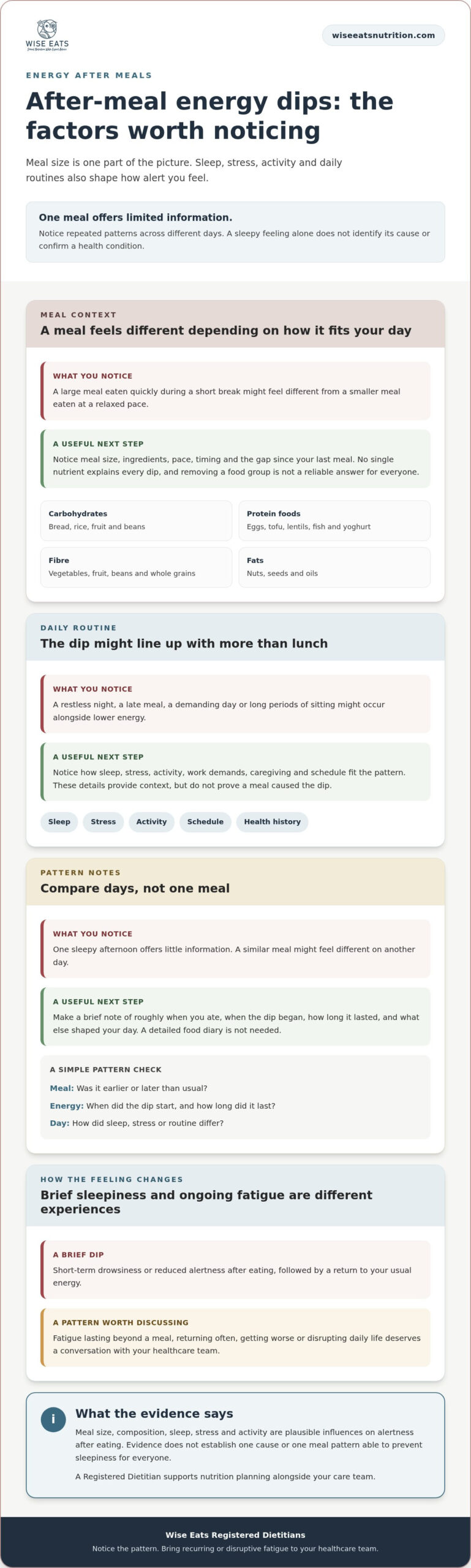
Post-meal sleepiness describes a short-term feeling of drowsiness or reduced alertness after eating. It differs from persistent fatigue, which continues beyond a meal or appears at other times. The feeling alone doesn’t identify its cause or confirm a health condition. Alertness also shifts naturally during the day.
For a short overview of the term, watch this video:
How to describe an energy dip after eating
You might notice heavy eyelids after breakfast, slower thinking during an afternoon meeting, or an urge to sit down after dinner. These experiences fit the everyday meaning of postprandial somnolence, a term for drowsiness following a meal. People also use “food coma” informally to describe a similar feeling.
Describe the sensation in your own words. Does your focus fade, or does your body feel tired? Does the feeling pass, or continue into the evening? These details help explain your experience, but no single sensation points to one cause. A busy morning, a late lunch, or a restless night might also shape how you feel.
Why one meal does not explain the whole pattern
A single sleepy afternoon offers limited information. You might feel drowsy after a quick lunch on a day with poor sleep, long periods of sitting, or an unusually late meal. On another day, a similar lunch might fit comfortably into your routine. The meal is one detail among several, not a verdict on your food choices.
Look for repeated patterns across different days before drawing conclusions. Note roughly when you ate, when the dip began, how long it lasted, and what else shaped your day. Your usual schedule matters too. An early breakfast followed by a long gap before lunch creates a different routine from meals spaced around a workday.
Midlife brings varied experiences, and age alone doesn’t explain every change in energy. Health history and other symptoms also provide context. Repeated observations offer a clearer starting point for a conversation with your healthcare team than one episode. A brief dip after a meal, on its own, doesn’t establish a diagnosis.
How meals, sleep, and midlife changes influence energy
Meal routines are one part of the picture. Meal size, ingredients, eating pace, and timing might affect how alert you feel afterwards. Sleep, stress, movement, and daily schedules also shape energy. These influences overlap, so an afternoon dip rarely points to one clear cause.
Meal patterns and the body’s energy response
Carbohydrates provide energy. You’ll find them in foods such as bread, rice, fruit, and beans. Protein foods, including eggs, tofu, lentils, fish, and yoghurt, offer other nutrients. Fibre from vegetables, fruit, beans, and whole grains supports digestion. Fats in nuts, seeds, and oils add flavour and contribute to meal satisfaction.
How these foods fit together, along with meal size, forms part of your eating context. A large meal eaten quickly during a short break might feel different from a smaller meal eaten at a relaxed pace. The time of day and the gap since your last meal matter too. No single nutrient explains every dip, and removing a food group isn’t a reliable answer for everyone.
Meal size, composition, sleep, stress, and activity are plausible influences on post-meal alertness. Current evidence does not establish one cause or one meal pattern able to prevent sleepiness for everyone. For people living with diabetes, Canada’s Food Guide offers general guidance on including vegetables and fruit, whole grains, and protein foods in meals. A sleepy feeling alone doesn’t reveal your blood sugar level.
Midlife, sleep, and changing routines
Midlife is a broad life stage, not one health experience. Work demands, caregiving, shifting schedules, health history, and sleep changes might coincide with energy changes. Some people also experience menopause-related sleep disruption. Experiences differ, and evidence linking midlife changes directly to post-meal sleepiness remains limited. A change in energy deserves attention without assuming age explains it.
Sleep affects daytime alertness. A night interrupted by caregiving, discomfort, or a changing schedule might leave you tired before lunch. Stress and long periods of sitting or activity also shape how you feel after eating. These factors don’t prove a meal caused the dip. Notice which ones tend to occur together in your routine.
To make sense of Why Your Energy Crashes After Meals in midlife, compare days rather than judging one meal. Note whether you slept differently, ate later than usual, or had a more demanding day. Those details offer a useful starting point for considering practical changes or talking with your healthcare team.
If you’d like support reviewing meal patterns and preferences, book a nutrition appointment.
How to tell a brief post-meal dip from a pattern worth discussing
A short spell of sleepiness, followed by a return to your usual energy, differs from fatigue that keeps returning, worsens, or disrupts daily life. No single time limit separates an ordinary dip from a health concern. Consider whether the experience is new for you, how it affects your routine, and whether other changes have appeared alongside it.
Patterns to note before drawing conclusions
You don’t need a detailed food diary to explain your concern. Instead, think about how the experience has changed over time. Is it becoming more intense, happening in more situations, or making familiar tasks harder? Has a recent change in health, routine, stress, or medication coincided with the shift? These broad details offer useful context without asking you to count or control food.
If you speak with a healthcare professional, describe the effect in plain terms. For example, “I’ve started needing to stop work and rest after lunch” tells them how fatigue affects your day. Mention any new symptoms or medication changes as well. Don’t stop or adjust prescribed medication on your own. A clinician can review those details alongside your health history.
When tiredness deserves a broader conversation
Arrange a conversation with a healthcare professional if fatigue happens often, grows worse, lasts beyond mealtimes, or interferes with work, caregiving, or everyday activities. Persistent or disruptive fatigue deserves attention because sleep, health conditions, and medications require assessment in context. Post-meal tiredness alone doesn’t identify a condition.
The table offers a way to distinguish a passing experience from a change worth raising. It supports observation, not self-diagnosis. The descriptions are guides, not medical thresholds. You don’t need to wait for a certain number of episodes before asking for support if the change concerns you.
| What to consider | Brief dip | Worth discussing |
|---|---|---|
| Timing | Limited to a short period after eating | Continues well beyond meals or appears at other times |
| Frequency | Occasional and familiar | Repeated often or becoming more frequent |
| Daily impact | Usual activities remain manageable | Work, caregiving, or routine tasks become difficult |
| Associated changes | No new concerns alongside the dip | Other symptoms or health changes appear too |
If you’re unsure whether a change matters, you’re allowed to ask. A healthcare professional can assess the broader picture and help decide what follow-up, if any, makes sense.
Practical ways to support steadier energy after meals
You don’t need to overhaul your meals to learn more about your energy. Start with a small, flexible experiment. Notice the pattern, review your routine, then choose one change to try. Keep what fits your preferences, schedule, budget, and health needs. A change offers information, not a promise of a particular result.
- Notice: Briefly note when the dip happens and what else shaped your day, such as sleep or a rushed lunch.
- Review: Consider meal timing, how comfortable you felt eating at your usual pace, and whether you had a long gap between meals.
- Choose: Try one manageable adjustment, then see how you feel. Avoid changing several things at once, so you have a clearer sense of what suits you.
Small meal and routine experiments
A satisfying meal often includes foods from different groups, but there’s no single combination that suits everyone. For example, whole-grain toast with eggs and sliced tomato brings together carbohydrate, protein, and fibre. If those foods don’t work for you, choose familiar alternatives that fit your preferences, culture, appetite, and health needs.
Try sitting down for a more comfortable pace when your schedule allows, or plan a meal or snack around a long stretch between meals. Keep water within reach and drink to thirst, following any hydration guidance from your healthcare team. A gentle walk after eating, if comfortable and accessible, might suit your day. It isn’t a way to earn food or a guaranteed solution.
Sleep routines matter too. A consistent wind-down routine or a calmer pause before bed might support rest, though sleep needs and barriers differ. Treat food, hydration, movement, and sleep as supportive habits, not cures. If a change feels stressful or doesn’t fit your life, choose another option.
If a health condition affects your meals, nutrition support for medical conditions can help you consider food routines alongside your care team’s guidance.
When to seek help
Some concerns deserve compassionate support. Reach out to a healthcare professional if you notice any of these signs:
- Restrictive eating, binge eating, or compensatory behaviours, such as trying to make up for eating.
- Persistent physical symptoms or fatigue interfering with daily life.
- Increasing isolation around food or meals, such as avoiding shared meals or withdrawing from people you care about.
You deserve support without blame. A healthcare professional can help assess symptoms, and a Registered Dietitian at Wise Eats Registered Dietitians can work with you on nutrition questions and meal routines.
How a Registered Dietitian can support energy concerns in midlife
Recurring energy dips can leave you sorting through conflicting advice. A Registered Dietitian offers a collaborative space to review your food routines, preferences, symptoms, and questions without blame or rigid food rules. Together, you can look at what fits your workday, family responsibilities, culture, budget, and health needs.
An RD provides nutrition support, not medical diagnosis or direction about medication. If fatigue or other symptoms call for broader assessment, your dietitian can help you organize nutrition questions to discuss with your healthcare team. Keep taking medication as prescribed, and talk with the prescriber about medication concerns.
What personalized nutrition support may cover
In a session, you might talk through when you eat, how meal breaks fit your schedule, and what foods feel satisfying and practical. For example, a shift worker, a caregiver, and someone working from home have different routines. A Registered Dietitian can help consider options that suit your day rather than prescribe one meal pattern for everyone.
Support can include reviewing the notes you’ve made about energy changes, considering your food preferences, and discussing manageable meal adjustments. An RD can also help you prepare nutrition questions for your care team if a health concern needs wider support. Learn more about working with a Registered Dietitian and what collaborative nutrition care involves.
Online dietitian support in Alberta and British Columbia
WISE EATS Nutrition offers online sessions for people in Alberta and British Columbia, along with in-person sessions. Rachel McBryan, RD, is licensed with the College of Health and Care Professionals of BC. Sheirry Poposka, RD, is licensed with the Alberta College of Registered Dietitians. Rachel sees clients in her Parksville office and by video across BC. Sheirry provides online support in Alberta and BC. The team’s local communities include Calgary, Edmonton, Nanaimo, Parksville, Vancouver Island, and Qualicum Beach.
Online appointments offer a way to discuss your routines and nutrition questions without travelling to an office. You can bring a few notes about when energy dips happen, changes in sleep or schedule, and questions you want to raise with your healthcare team. There’s no need to track every meal or arrive with a complete explanation. Your RD will work with your preferences and concerns to consider practical nutrition options.
If you’re exploring Why Your Energy Crashes After Meals in midlife, dietitian support can help put meal patterns into context without treating food as the only explanation. Your RD can focus on nutrition planning and coordinate questions with your care team, while medical assessment and medication decisions remain with the appropriate healthcare professionals.
Take a thoughtful next step
Make your next step small and specific. Choose the change in your energy you most want to discuss, such as an afternoon dip, reduced focus at work, or tiredness affecting your plans. Naming its effect helps keep the conversation centred on your day and your needs.
Why Your Energy Crashes After Meals in midlife deserves a thoughtful response, without blame or assumptions. You don’t need a perfect record or a theory before asking for support. Start with the concern you want addressed, then talk with your healthcare team about what deserves a closer look.
If nutrition questions are part of your next step, a Registered Dietitian offers space to discuss practical options that respect your preferences and care needs. The aim is to find an approach that fits your life, not to follow rigid rules. Speaking with a registered dietitian can help you develop a balanced, flexible approach to eating and meet your nutritional needs.
Frequently Asked Questions
Is it normal to feel sleepy after eating in midlife?
Occasional sleepiness after a meal happens to people at different ages, including in midlife. It doesn’t automatically point to a health problem. Why Your Energy Crashes After Meals in midlife often involves more than the meal itself, so notice whether tiredness also follows a short night or a demanding day. If the feeling becomes frequent, worsens, or disrupts your routine, discuss it with your healthcare professional.
What happens if I feel tired after every meal?
If tiredness follows nearly every meal, arrange a conversation with your healthcare professional, especially if it affects work, driving, caregiving, or other daily activities. Note when the feeling starts, how long it lasts, and whether it happens after snacks as well as meals. Include other changes, such as sleep disruption or new symptoms. This information helps your care team assess the full picture without assuming food is the cause.
How does menopause relate to energy changes after eating?
Menopause symptoms might affect energy indirectly if they interrupt sleep or change your daily routine. For example, waking at night with hot flashes might leave you less alert the next day, including after meals. Research on menopause as a direct cause of post-meal sleepiness is limited, and experiences differ. If energy changes began alongside other symptoms, share the timing with your healthcare professional rather than attributing them to menopause alone.
Can dehydration contribute to feeling tired after meals?
Not drinking enough fluids might contribute to tiredness, though it doesn’t explain every post-meal dip. Consider whether you’ve had regular access to drinks during a busy shift, while travelling, or during caregiving. Water is a practical choice for many people. Follow any fluid guidance from your healthcare team, especially if a health condition affects how much you should drink. If fatigue continues, don’t assume hydration is the only factor.
Does feeling tired after eating mean I have diabetes?
No. Feeling tired after eating alone doesn’t confirm diabetes or show what your blood glucose level is. If you’re concerned about diabetes, or notice other health changes, talk with a healthcare professional about whether assessment is appropriate. They can consider your health history and symptoms. Avoid trying to diagnose yourself from a meal-related feeling or making major food changes based on online information.
Should I change my medication if I feel tired after meals?
Don’t stop, skip, or change a prescribed medication on your own. If the tiredness began after starting a medication or changing how you take it, record when the symptoms occur and contact the prescribing professional or pharmacist. Share the medication name, dose, timing, and any other changes. They can review possible medication effects and advise you on safe next steps.
What should I tell a Registered Dietitian about post-meal fatigue?
Share what the tiredness feels like, when it tends to start, and how it affects your day. A recent example helps, such as feeling drowsy during an afternoon shift after a late lunch. Mention your usual meal schedule, food preferences, sleep routine, health concerns, and questions for your care team. Bring medication or supplement details if relevant. You don’t need a detailed food diary to begin the conversation.

Article by
Rachel McBryan, Dietitian
Rachel McBryan is a licenced Dietitian in British Columbia offering comprehensive nutrition counselling as virtual and/or in-person counselling sessions to suit your needs and preferences. With a Bachelor of Science in Nutrition and Food Science, Rachel has over 20 years experience helping people address their health through nutrition. She was awarded Human Nutrition and Food Science BSc.from University of Alberta followed by post-grad course work at UBC in guidance counselling.
An eating disorder is a serious mental health illness.
If you are in immediate distress or crisis, please contact emergency services by dialing 911 or calling Vancouver Island Crisis Line: 1-888-494-3888.