Your choice to offer your baby traditional foods like bison, berries, or char is a profound act of cultural reclamation. You want the best for your little one. Often, the advice you receive feels disconnected from your heritage. It’s frustrating when healthcare spaces ignore the wisdom of your Elders. Some parents feel judged for wanting to introduce land-based foods alongside store-bought staples. This guide on Métis & Inuit Infant Feeding: Culturally Safe Nutrition Tips in Canada helps you bridge the gap between ancestral knowledge and modern paediatric guidelines.
You deserve to feel confident as you introduce solids. We understand the pressure to get everything right. Our team of Registered Dietitians supports your journey with evidence-informed advice tailored to your family’s needs. We look at how to safely incorporate iron-rich meats and traditional plants. We support your baby in meeting growth milestones. You will find practical ways to communicate with your healthcare providers so your traditions are always respected. We explore how to nourish your baby to honour your history and support their future health.
Key Takeaways
- Understand why iron and vitamin D are essential for your baby’s growth and bone health.
- Use these Métis & Inuit Infant Feeding: Culturally Safe Nutrition Tips in Canada to blend traditional land-based foods with modern guidelines.
- Recognize physical signs your baby is ready for solid foods around six months of age.
- Follow specific food safety steps for harvested meats and avoid honey for infants under one year.
- Work with a Registered Dietitian to create a custom meal plan incorporating your family’s favourite traditional recipes.
Understanding Culturally Safe Nutrition for Métis and Inuit Families
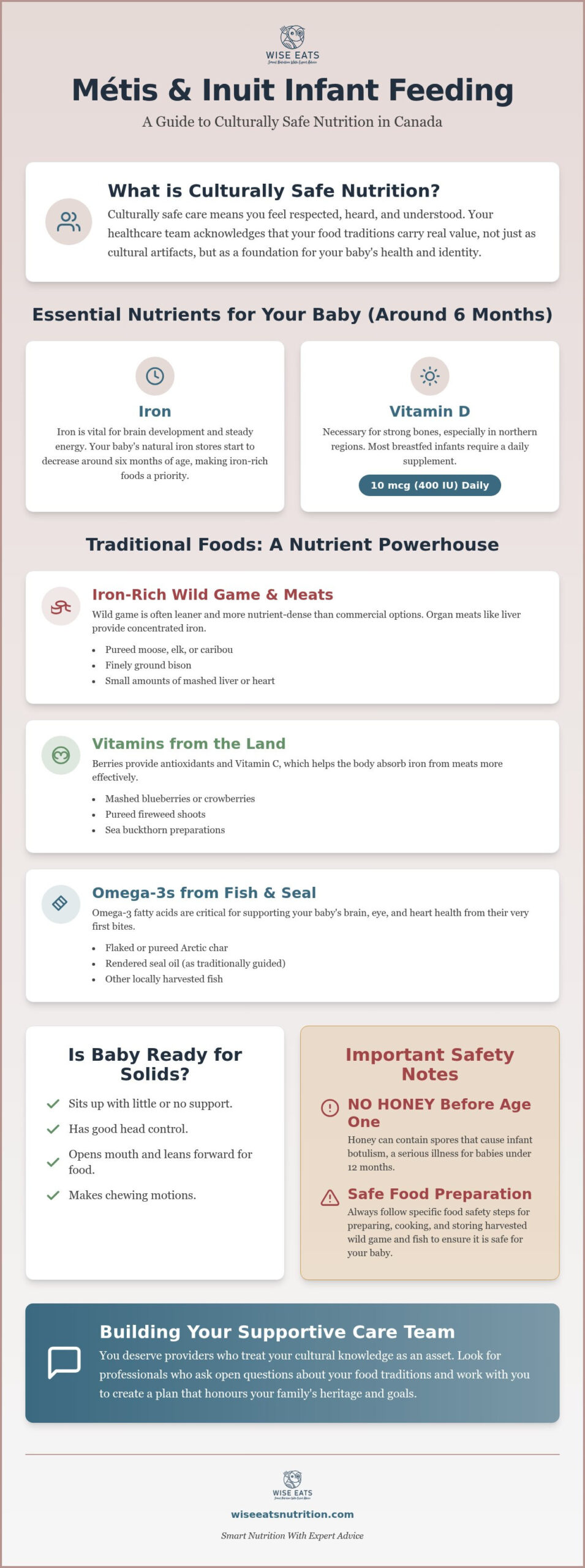
Culturally safe care is straightforward to define: you feel respected, heard, and understood by the people looking after your family. It means your healthcare team acknowledges that your food traditions carry real value, not just as cultural artifacts, but as a foundation for your baby’s health. When that respect is missing, parents often stop asking questions or stop showing up altogether. That’s a problem we want to help you avoid.
Food choices for your baby are never just about nutrients. They reflect who you are, where your family comes from, and what you want to pass forward. Introducing your infant to bison, bannock, char, or wild berries is also an act of teaching. You’re showing your child, even at six months old, that their heritage belongs at the table. These Métis & Inuit Infant Feeding: Culturally Safe Nutrition Tips in Canada are built on the understanding that nutrition and identity are inseparable.
The Role of Traditional Knowledge in Infant Health
Elders hold knowledge about food preparation, harvesting seasons, and safe storage that has been refined across generations. That knowledge is clinically relevant. Traditional Inuit Foods like caribou, seal, and Arctic char are dense in iron, zinc, and omega-3 fatty acids, nutrients that directly support infant brain development and immune function. Honouring Elder guidance on how these foods are prepared isn’t separate from good nutrition practice. It is good nutrition practice.
It’s also worth naming something directly: colonization disrupted food access for many Indigenous families, and those effects are still felt today. A care team that understands this history won’t question why a family is working to reclaim land-based foods. They’ll support it.
Building a Supportive Care Team
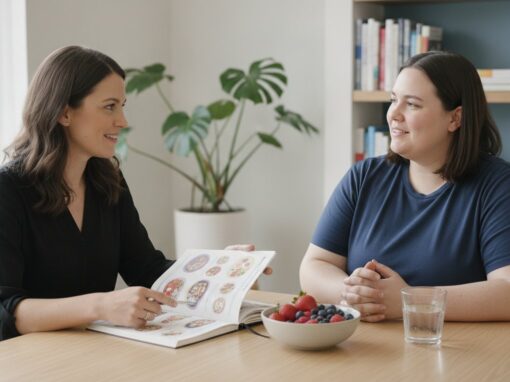
You deserve providers who treat your cultural knowledge as an asset, not an obstacle. Look for healthcare professionals who ask open questions about your food traditions rather than defaulting to generic infant feeding pamphlets. A Registered Dietitian who takes time to understand your family’s goals can help you build a meal plan that integrates traditional foods alongside modern paediatric guidance.
At Wise Eats Nutrition, Rachel McBryan, RD, and Sheirry Poposka, RD, offer custom meal planning that starts with your family’s values, not a one-size-fits-all template. Your instincts as a parent matter here. A good care team listens to them.
Essential Nutrients and Traditional Foods for Baby
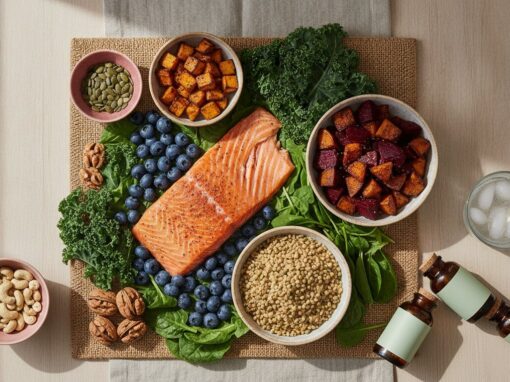
Around six months, your baby’s natural iron stores start to decrease. Iron supports brain development and keeps energy levels steady. Traditional meats like elk and moose offer excellent sources of this mineral. Wild games provide high-quality protein without additives often found in store-bought options. Fish oils also play a vital role. They support eye and heart health from the first bites. Research into Métis infant nutritional habits shows how integrating land-based foods early creates a strong health foundation.
Vitamin D is necessary for strong bones. This is especially true in northern regions of Canada. Sunlight is limited for much of the year in these areas. While traditional diets provide some, most infants require a daily supplement. The current recommendation for breastfed infants is 10 micrograms (400 IU) of Vitamin D every day. Discussing Vitamin D drops with your nutrition team ensures your baby stays on track.
Iron-Rich Traditional Options
Offer pureed wild game like caribou or deer. These meats are often leaner and more nutrient-dense than commercial beef. Organ meats like liver provide concentrated sources of iron and essential vitamins. Introduce these foods early. Doing so supports your baby’s increasing needs for growth. Wild game often contains higher levels of minerals because the animals eat a natural, varied diet. If you feel unsure about preparation, speaking with a professional helps you walk through safe textures together. You might consider these options:
- Pureed moose or elk heart for a mild flavour.
- Finely ground caribou mixed with a little broth.
- Small amounts of mashed liver once or twice a week.
Vitamins from the Land
Berries offer more than sweetness. Crowberries and blueberries provide antioxidants and Vitamin C. Vitamin C helps your baby’s body absorb iron from meats more effectively. Sourcing local plants adds variety and flavour to their diet. It connects them to the land from their first meals. Using these Métis & Inuit Infant Feeding: Culturally Safe Nutrition Tips in Canada helps you balance gifts from the land with modern health standards. Local plants like fireweed shoots or sea buckthorn also offer unique nutrients. These additions introduce your baby to the diverse tastes of their heritage while supporting their immune system. Traditional knowledge often guides which berries are best for young ones. Consulting with Elders ensures you choose the safest, most nutrient-dense options for your specific region.
Introducing Solid Foods with Indigenous Traditions
Around six months of age, your baby shows signs of readiness for solids. They sit up with little help. They track your fork with their eyes. They might reach for your plate or make chewing motions with their mouth. This transition is a celebration of growth. Starting solids is about more than calories. It builds a lifetime of healthy eating habits. Family meal times strengthen bonds. Your baby learns by watching you eat harvested foods. Responsive feeding means you watch for cues. Does your baby lean in for a spoon? Do they turn their head away when full? Respecting these signals helps your baby develop a healthy relationship with food. These Métis & Inuit Infant Feeding: Culturally Safe Nutrition Tips in Canada ensure your approach stays rooted in tradition.
Texture progression is a natural part of this journey. Most infants begin with smooth purees. As they get comfortable, you move to soft mashed pieces. This progression helps them learn to chew and swallow safely. You might notice your baby enjoys the unique flavours of your traditional kitchen. Sharing these moments at the table connects your child to their community from their first bites.
Preparing Traditional Foods for Infants
Safety is your priority when handling wild meats. Ensure all harvested game reaches a safe internal cooking temperature. Use a food thermometer to check for 74 degrees Celsius (165 degrees Fahrenheit). Puree traditional stews to a smooth consistency for beginners. Thick soups with root vegetables and meat blend well. Always remove bones and tough skin from fish before serving. Arctic char and salmon provide essential fats. However, small bones pose a risk. Straining purees through a fine mesh sieve adds an extra layer of safety. This careful preparation allows your baby to enjoy land-based flavours without worry.
Blending Modern and Heritage Foods
You don’t have to choose between store-bought and harvested items. Flexibility makes daily life easier. Mix pureed traditional meats with iron-fortified infant cereals. This combination provides a double dose of the iron necessary for brain health. Add mashed berries to plain yogurt for a natural snack. Crowberries or blueberries offer antioxidants. This Métis & Inuit Infant Feeding: Culturally Safe Nutrition Tips in Canada guide encourages using available items. Some days you have fresh caribou. Other days you rely on a jar of pureed vegetables. Both choices provide nourishment. Personalized meal planning helps you find the right balance for your household. It respects your time and your heritage.
Safety Guidelines and When to Seek Professional Help
Keeping your baby safe involves careful handling of both store-bought and harvested items. Food safety is vital when you prepare wild meats and fish. Bacteria thrive in improperly stored food. Always refrigerate or freeze harvested game immediately after processing. Thaw meats in the refrigerator rather than on the kitchen counter. These Métis & Inuit Infant Feeding: Culturally Safe Nutrition Tips in Canada help you protect your little one’s developing immune system. One specific rule involves avoiding honey for any infant under one year old. Honey contains spores which lead to infant botulism. It is a serious illness affecting the nervous system. Even small amounts in baked goods are risky for babies this age. Stick to plain, whole foods to keep things simple and safe.
Proper storage prevents many common illnesses. Use clean, airtight containers and wash your hands often with warm, soapy water. If you have leftovers from a meal, put them away within two hours. When you reheat traditional stews or purees, ensure they reach a full boil to kill potential bacteria. Let the food cool to a safe temperature before offering it to your baby. Safety also means trusting your gut. If a food smells off or looks unusual, discard it. Your peace of mind is worth more than a single meal. Providing safe nourishment allows your baby to explore new flavours with confidence. Learning these skills takes time, but they become part of your daily routine.
When to Seek Help
Feeding your baby should feel like a time of connection. If it becomes a source of daily stress, reaching out for support is a positive step. Watch for these red flags in your baby’s feeding journey:
- Difficulty with consistent weight gain or meeting expected growth milestones.
- Avoiding entire food groups or showing intense fear of specific textures.
- Signs of physical distress, such as arching their back, crying, or coughing during meals.
- Sudden changes in appetite or a refusal to try any new traditional foods.
These signs often indicate an underlying challenge. They are not a reflection of your parenting. Early intervention helps your baby get back on track comfortably. Our team provides a supportive space to discuss these concerns without judgment.
Overcoming Feeding Challenges
Feeding problems feel overwhelming for new parents. You might worry your baby isn’t getting enough nutrients for their brain and body. Professional support helps identify the root cause of these difficulties. A Registered Dietitian looks at the whole picture, including your cultural traditions and family lifestyle. A compassionate approach reduces anxiety around meal times. We work together to find solutions fitting your specific needs. You don’t have to manage these hurdles alone. Our goal is to help your baby meet their growth milestones while you feel respected by your nutrition team.
Professional Nutrition Support for Indigenous Families
Finding a dietitian who genuinely understands your family’s food traditions makes a real difference. Generic advice rarely accounts for the role that harvested foods, Elder guidance, and land-based eating play in your household. That’s where working with a Registered Dietitian who builds a plan around your life, not a standardized template, changes the experience entirely.
At Wise Eats Nutrition, Rachel McBryan, RD, registered with the College of Health and Care Professionals of BC, and Sheirry Poposka, RD, registered with the Alberta College of Registered Dietitians, offer care that starts with listening. Both bring clinical expertise across all ages and medical conditions. Both understand that a family’s nutrition goals are shaped by more than what’s on a grocery store shelf.
The Benefits of Personalized Counselling
A personalized approach to these Métis & Inuit Infant Feeding: Culturally Safe Nutrition Tips in Canada means your dietitian accounts for what’s actually available to your family. If caribou is accessible seasonally and store-bought iron-fortified cereal fills the gaps, your plan reflects that reality. If your baby is showing slower weight gain or avoiding certain textures, a Registered Dietitian looks at the full picture before drawing conclusions.
Custom meal planning through Wise Eats integrates your preferred traditional recipes alongside evidence-informed guidance on infant growth and nutrient needs. You receive practical suggestions you can actually use, not a list of foods disconnected from how your family eats. Parents often describe this kind of support as reducing the mental load around feeding, because questions get answered and the guesswork fades.
Accessing Care in Your Community
Virtual appointments make it easier to connect with expert support without travelling long distances. Families across British Columbia work with Rachel McBryan, RD, from home, fitting sessions around nap schedules and busy days. Alberta families access the same quality of care through Sheirry Poposka, RD, who brings focused expertise in supporting diverse family needs across the province.
A few things a dietitian helps you work through include:
- Building a flexible feeding rhythm that honours both traditional and store-bought foods
- Identifying specific nutrients your baby needs at each stage of solid food introduction
- Preparing for appointments with your paediatrician so your cultural food choices are part of the conversation
- Adjusting your approach as your baby grows and their needs shift
Speaking with a Registered Dietitian gives you a balanced, flexible approach to your baby’s nutrition, one that respects where your family comes from and supports where they’re headed. You don’t have to sort through conflicting information alone. Reach out to the Wise Eats team and take the next step with people who are genuinely in your corner.
Empower Your Family with Traditional Wisdom and Modern Care
Feeding your baby is a beautiful way to pass down your culture while supporting physical growth. You now have tools to introduce iron-rich wild meats and Vitamin D supplements with confidence. By using these Métis & Inuit Infant Feeding: Culturally Safe Nutrition Tips in Canada, you ensure your child grows up connected to the land and their community.
Professional support removes the confusion of balancing store-bought items with harvested foods. Rachel McBryan, RD, of the College of Health and Care Professionals of BC, and Sheirry Poposka, RD, of the Alberta College of Registered Dietitians, partner with your family. We build personalized meal plans using the EatLove system. These plans celebrate your favourite traditional recipes. Our team replaces worry with a sense of clarity for your baby’s future.
Your intuition as a parent is a reliable guide. We are here to support your journey with respect and clinical expertise.
Frequently Asked Questions
How do I safely introduce wild game to my baby?
Start with small amounts of well-cooked, pureed wild game around six months of age. Use a food thermometer to confirm the meat reaches 74 degrees Celsius before pureeing. Introduce one new protein at a time and wait two to three days before adding another. This approach helps you spot any reactions quickly. If you’re unsure about textures or preparation, a Registered Dietitian can walk you through the steps specific to your family’s traditional foods.
Is it safe to give my infant traditional herbal teas?
Most herbal teas are not recommended for infants under one year old. Babies this age get their fluids from breast milk or formula, and adding other liquids can interfere with their nutrient intake. Some herbal preparations contain compounds that aren’t appropriate for developing systems. If your family has a tradition involving specific plant-based preparations, speak with your healthcare provider or a Registered Dietitian before offering anything beyond breast milk, formula, or water after six months.
What are the best traditional foods for iron?
For Métis and Inuit infant feeding, culturally safe nutrition tips in Canada consistently point to organ meats as the most concentrated iron sources available. Liver from caribou, moose, or bison offers a particularly high amount of iron alongside zinc and B vitamins. Finely pureed heart meat is another strong option with a milder flavour. Pairing any of these with foods containing Vitamin C, like mashed crowberries, helps your baby’s body absorb the iron more effectively from each meal.
How do I handle food safety with harvested fish?
Remove all bones and skin before preparing fish for your baby. Arctic char and salmon should be cooked thoroughly, not served raw, for infants. Freeze harvested fish before cooking when possible, as this reduces the risk of parasites. Store fresh fish in the refrigerator and use it within two days, or freeze it immediately after harvest. Puree cooked fish through a fine mesh sieve to catch any remaining small bones before serving.
Which berries are safe for a six-month-old infant?
Crowberries and blueberries are among the safest options for babies starting solids. Both are soft enough to mash easily and offer antioxidants alongside Vitamin C, which supports iron absorption from meats. Always mash or puree berries thoroughly at this age to reduce any choking risk. Avoid berries with large seeds or tough skins until your baby is older and managing varied textures comfortably. Consulting with an Elder familiar with your region helps you identify the best seasonal options locally.
Do I need to give my baby Vitamin D drops if we eat traditional fish?
Yes, a daily Vitamin D supplement is still recommended for breastfed infants even when traditional fish is part of the diet. The current recommendation for breastfed infants is 10 micrograms (400 IU) of Vitamin D daily. While fatty fish like Arctic char and salmon do contain some Vitamin D, the amounts from food alone are generally not enough to meet an infant’s needs, particularly in northern regions of Canada where sunlight is limited for much of the year.
What should I do if my baby refuses traditional textures?
Texture refusal is common and doesn’t mean your baby won’t accept these foods over time. Repeated, low-pressure exposure helps more than pushing through resistance. Try offering a familiar traditional food alongside something your baby already accepts. Adjusting the consistency, making a puree slightly smoother or adding a small amount of broth, often makes a difference. If refusal is consistent across many foods or your baby isn’t gaining weight as expected, connecting with a Registered Dietitian gives you a practical path forward without guesswork.
Are there specific Inuit traditions for first foods?
Inuit communities have long introduced infants to pre-chewed or finely prepared animal foods early in life, with seal, caribou, and fish among the first tastes offered. These practices reflect generations of knowledge about nutrient-dense foods suited to northern environments. While modern food safety guidelines shape how these foods are prepared today, the underlying principle of offering iron-rich, land-based proteins from the start aligns well with current paediatric nutrition guidance. Applying Métis and Inuit infant feeding culturally safe nutrition tips in Canada means honouring these traditions alongside safe preparation practices.

Article by
Rachel McBryan, Dietitian
Rachel McBryan is a licenced Dietitian in British Columbia offering comprehensive nutrition counselling as virtual and/or in-person counselling sessions to suit your needs and preferences. With a Bachelor of Science in Nutrition and Food Science, Rachel has over 20 years experience helping people address their health through nutrition. She was awarded Human Nutrition and Food Science BSc.from University of Alberta followed by post-grad course work at UBC in guidance counselling.
An eating disorder is a serious mental health illness.
If you are in immediate distress or crisis, please contact emergency services by dialing 911 or calling Vancouver Island Crisis Line: 1-888-494-3888.