What if your first appointment with a dietitian felt less like a clinical exam and more like a supportive conversation with a knowledgeable partner? Many people arrive at their first visit feeling overwhelmed by conflicting advice or anxious that they might be judged for their eating habits. You might be wondering, what does a nutrition assessment involve, and will it feel like a test? It’s completely normal to feel a bit lost when you hear technical terms like biochemical data or anthropometry. We are here to help you make sense of it all.
This guide will show you exactly what happens during your visit, stripping away the mystery so you can feel prepared. You’ll discover how we look at your unique health history and lifestyle to create a strong foundation for your success. We will walk through the common steps of the process and explain how this data leads to a custom meal plan designed just for you. By the end, you’ll see that this is a collaborative journey where we work together to find a flexible approach to eating that feels right for your body.
Key Takeaways
- Learn why a nutrition assessment is a comprehensive look at your health history and lifestyle rather than just a simple food journal.
- Understand the “ABCD” model and how body measures, lab work, and eating patterns help us build a plan that truly works for your body.
- Get clarity on exactly what does a nutrition assessment involve during a typical 60 to 90-minute session so you can feel calm and prepared.
- See how your assessment data can lead to a custom meal plan and a personalized approach to supplements that fits your unique needs.
- Find out how to organize your health information before your visit, whether you are meeting in person or using telehealth services in Edmonton or on Vancouver Island.
Defining the Nutrition Assessment: More Than Just a Food Journal
A nutrition assessment is much more than a simple review of what you ate yesterday. It is a detailed, evidence-informed look at your health through the lens of your unique lifestyle and food choices. If you are considering working with a dietitian, this assessment is the very first step we take together. It acts as a foundation for everything that follows. We start by gathering the pieces of your health puzzle to see the full picture of your physical needs and personal goals.
When people ask what does a nutrition assessment involve, they often expect a simple critique of their lunch. In reality, it’s a collaborative mapping of your biology. You might have encountered a nutrition screening before, which is a quick check often used in hospitals to see if a patient is at risk of malnutrition. A full assessment is a deep dive. It includes a thorough Nutrition analysis of your intake, but it also considers your medical history, your relationship with food, and even your energy levels. We aren’t just looking for what is missing; we are looking for the best way to support your body’s needs without the stress of rigid rules.
The Role of a Registered Dietitian in Canada
In Canada, the title “Registered Dietitian” (RD) is protected by law to ensure you receive safe, reliable care. In British Columbia, RDs are regulated by the College of Health and Care Professionals of BC, while in Alberta, they are overseen by the Alberta College of Registered Dietitians. This regulation is vital. It means your provider must meet strict educational and ethical standards to practice. While anyone can call themselves a “nutritionist” in British Columbia, only a dietitian has the clinical training to provide medical nutrition therapy. You can learn more about our team’s credentials and our commitment to weight-inclusive care on our about page.
Why You Might Need an Assessment
There are many reasons why someone might seek out a professional evaluation. You might be managing a chronic condition like diabetes or high blood pressure, or perhaps you are looking for relief from the discomfort of IBS. Some people reach out during eating disorder recovery to find a more balanced, flexible relationship with food. Whatever your reason, this process is never about judgment or shame. We view the assessment as a tool for clarity. It helps us cut through the noise of conflicting internet advice and focus on what your body actually requires. It is about moving forward with a plan that feels manageable, supportive, and entirely yours.
The Four Pillars of a Comprehensive Nutrition Assessment
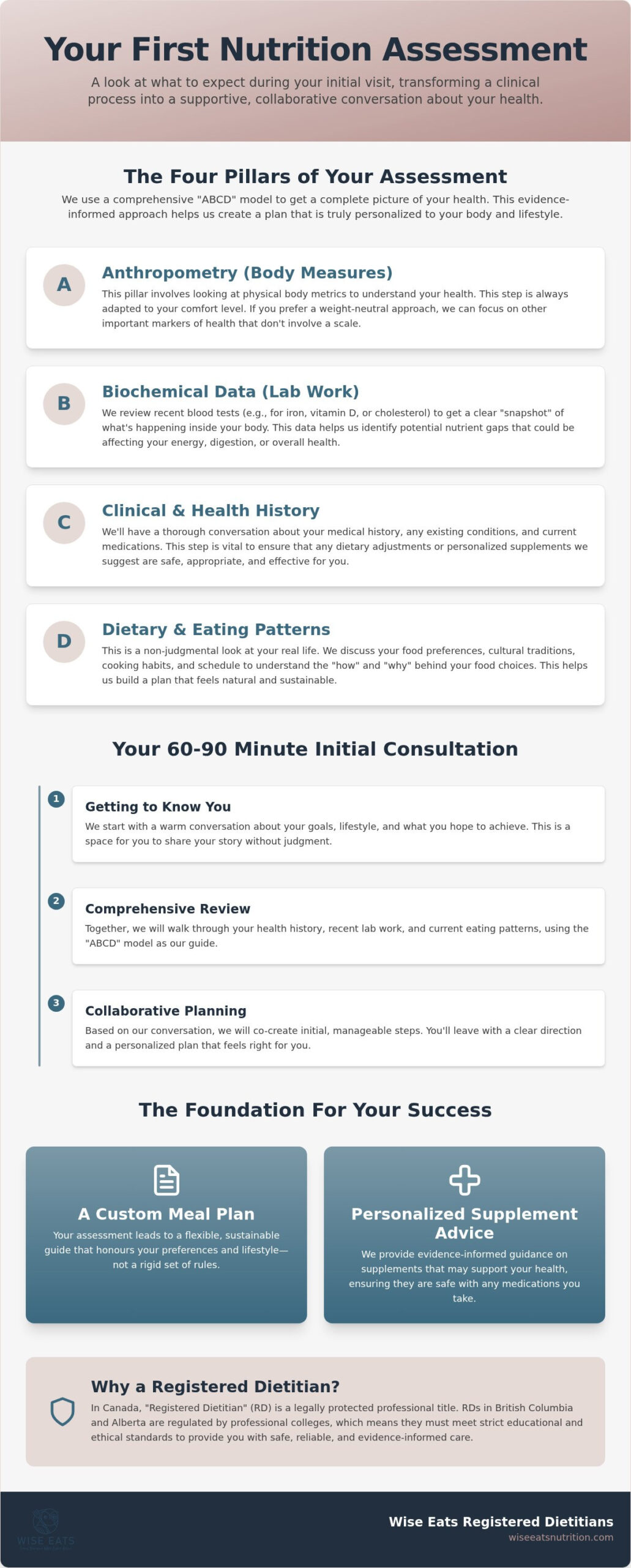
To build a plan that truly fits your life, we look at four main areas. These are often called the “ABCD” model in the clinical world. We translate these into plain language: Body measures, Lab work, Health history, and Eating patterns. By looking at these four pillars, we can see how your body is currently functioning and what it might need to feel its best. This organized approach helps us realize your health goals without using rigid restrictions or “one-size-fits-all” advice.
It’s important to know that your assessment is flexible. For instance, if you prefer a weight-neutral approach, we can focus on other markers of health instead of the scale. When you ask what does a nutrition assessment involve, the answer is always tailored to your comfort level and clinical needs. We use this data to create a supportive map for your journey, ensuring every recommendation is based on your unique biology.
Reviewing Your Health History and Lab Work
We look at your medical history and recent blood tests to get a clear picture of your internal health. Blood tests for things like iron, vitamin D, or cholesterol levels provide a helpful “snapshot” of what’s happening inside your body. This helps us identify potential nutrient gaps that might be affecting your energy or digestion. We also discuss any existing medical conditions and the medications you take. This step is vital to ensure that any dietary shifts or personalized supplements we suggest are safe and won’t interact with your current treatments.
Understanding Your Current Eating Patterns
This pillar is where we move beyond the numbers and look at your real life. We want to understand the “how” and “why” behind your food choices. We talk about your food preferences, cultural traditions, and even your kitchen setup. Do you have a busy work schedule that makes meal prep difficult? Do you have certain foods that bring you joy? We want to capture your actual routine, not a “perfect” version of it. Understanding your lifestyle allows us to build a custom meal plan that feels natural and sustainable. If you’re ready to see how these pillars can support your health, you can book an initial consultation to get started with a professional who understands your needs.
Step-by-Step: What to Expect During Your Initial Consultation
Walking into your first appointment, you might feel a mix of nerves and hope. Is this going to be a lecture? Not at all. A typical initial consultation lasts between 60 and 90 minutes. This time is dedicated entirely to you. While we bring the clinical expertise, you are the true expert on your own life. We act as your knowledgeable partner to centre your needs and values from the very beginning. It’s a space where your experiences are validated and your concerns are heard without judgment.
If you’ve been searching for clarity on what does a nutrition assessment involve, it helps to see it as a smooth transition from gathering information to building a supportive strategy together. We aren’t here to tell you what’s “wrong” with your eating habits. Instead, we are looking for ways to make your life easier and your body feel better. This shift from curiosity to action is what turns a clinical assessment into a roadmap for your future.
The Information Gathering Phase
We start with an interview style that feels like a comfortable chat. Instead of a rigid checklist, we use open-ended questions to learn about your world. How are your energy levels throughout the afternoon? Do you experience digestive comfort after meals, or is there often bloating? We also talk about your sleep patterns and stress. We want to understand your unique challenges, such as a high-pressure work schedule or the chaos of school pickups, so our suggestions actually fit into your day. This phase ensures that the data we collect is grounded in your reality.
Setting Collaborative Health Goals
Once we have the full picture, we move from data to action. This is a collaborative effort. We don’t just hand you a list of rules; we create goals that feel achievable and flexible. These are often called SMART goals. These are specific, measurable, and realistic steps that respect your lifestyle and your culture. This collaborative foundation is what makes nutrition counselling for medical conditions so effective. It ensures the plan is something you actually want to follow, rather than another chore on your to-do list. We work with you to find the path of least resistance toward the health outcomes you deserve.
Beyond the Basics: Advanced Tools for Personalized Care
Once the initial conversation is complete, we move into the phase where data becomes a practical strategy. We don’t just hand you a summary of your habits; we use your specific information to build tools that simplify your daily choices. This is where we bridge the gap between knowing what your body needs and actually making it happen in your kitchen. By using nutrient analysis, we can identify specific gaps in your diet that might be affecting your vitality or digestive health.
This process is the direct result of understanding what does a nutrition assessment involve. It’s about taking the biological markers we’ve discussed and turning them into a clear path forward. We prioritize accuracy and safety, ensuring that every recommendation is rooted in your unique health profile rather than generic trends. This precision-based approach is used in other dieciplines; for example, Emagene Life offers a functional medicine assessment Malaysia that uses an assessment to help individuals manage stress and optimize longevity. An assessment ensures that you are getting personal recommendations.
Custom Meal Planning and Analysis
How do we translate lab results and personal preferences into a reality that tastes good? We create a custom meal plan that acts as a balanced, flexible eating guide. This plan isn’t a rigid set of rules; it’s a tool designed to account for your specific energy needs and micronutrient requirements. We look at the data from your assessment to ensure you are getting the right balance of proteins, fats, and carbohydrates to support your goals. For those seeking professional management of their health journey, weight loss meal plans can provide a structured yet adaptable way to realize your objectives without the stress of restrictive dieting.
Personalized Supplement Reviews and VitaminLab
Many people feel overwhelmed by the sheer number of supplements available today. We use your assessment data to determine if supplements are actually necessary for your specific situation. Instead of guessing with a generic multivitamin, we perform a professional review to ensure safety and efficacy. If we find that targeted support is helpful, we can use VitaminLab to consolidate multiple needs into a single daily formula. This formula is created based on your blood work and health history, ensuring you only take what your body truly requires. Please note that while we offer this personalized service, a purchase of VitaminLab products is not required for your care.
Preparing for Your Assessment in British Columbia or Alberta
Preparing for your first visit shouldn’t be a source of stress. In fact, it’s the first step toward finding the clarity you’ve been seeking. When you understand what does a nutrition assessment involve, you can walk into your session with a sense of relief. You aren’t being tested; you are being supported. Whether you are meeting us in person or using our telehealth services from Vancouver Island or Edmonton, our goal is to provide a steady hand as you navigate your health journey. Taking a few moments to organize your thoughts can help us make the most of our time together.
Before your appointment, we encourage you to think about your “why.” What do you hope to achieve in the long term? Perhaps you want more energy to play with your grandchildren, or maybe you want to manage a digestive condition without fear. Realizing your deeper motivations helps us tailor our strategy to your real-life goals. We are here to act as your partner, filtering out misinformation and focusing on evidence-informed steps that respect your unique body. You don’t have to navigate these changes alone.
How to Get the Most Out of Your Session
A little bit of preparation goes a long way. Having your information ready allows us to spend more time discussing your goals and less time searching for data. Here is a simple checklist to help you feel organized before we meet:
- Gather recent lab results from your doctor, especially blood work from the last six months.
- Make a list of all current medications and any supplements you are taking.
- Write down 2 or 3 specific questions you want to ask your dietitian.
- Reflect on your current energy levels and any digestive health patterns you’ve noticed lately.
Connecting with Wise Eats Registered Dietitians
Our team is here to guide you with professional expertise and warm encouragement. Rachel McBryan is a Registered Dietitian regulated by the College of Health and Care Professionals of BC, and Sheirry Poposka is a Registered Dietitian regulated by the Alberta College of Registered Dietitians. We are committed to providing non-judgmental, weight-inclusive care that centres your health and peace of mind. You can contact us today to start the process and take the first step toward a more balanced, flexible relationship with food.
When to Seek Help
While general education is a helpful start, certain signs may indicate that you could benefit from professional support sooner rather than later. Please consider booking a consultation if you experience:
- Persistent digestive discomfort that interferes with your daily activities or your ability to enjoy food.
- Significant changes in your energy levels or mood that seem related to your eating patterns.
- Feeling increasingly overwhelmed or anxious when making choices about what to eat.
About the Authors: Rachel McBryan is a Registered Dietitian regulated by the College of Health and Care Professionals of BC. Sheirry Poposka, RD, is a Registered Dietitian regulated by the Alberta College of Registered Dietitians. Together, they provide evidence-informed nutrition support across British Columbia and Alberta, specializing in digestive health and medical nutrition therapy.
Your Path to a Balanced Relationship with Food
A nutrition assessment is the bedrock of a plan that actually fits your life. It transforms complex health data and personal history into a clear, supportive roadmap. By looking at the four pillars of your health, we move past the confusion of internet myths and focus on what your body truly requires. Now that you understand what does a nutrition assessment involve, you can approach your first visit with confidence and peace of mind.
Our team members are regulated by the College of Health and Care Professionals of BC and the Alberta College of Registered Dietitians. We prioritize an evidence-based, non-judgmental approach that respects your unique needs and culture. Speaking with a registered dietitian can help you develop a balanced, flexible approach to eating that lasts a lifetime.
You deserve to feel supported and heard as you navigate your health. We are here to act as your knowledgeable partner every step of the way. Let’s work together to find a path that feels right for you.
Frequently Asked Questions
How long does a typical nutrition assessment take?
A typical initial session usually takes between 60 and 90 minutes. This length of time is necessary because what does a nutrition assessment involve is a deep dive into your unique health history and goals. It ensures we have enough space to listen to your concerns and build a supportive partnership without feeling rushed.
Do I need a doctor’s referral for a nutrition assessment in Canada?
You do not need a doctor’s referral to book a private consultation with a dietitian in British Columbia or Alberta. You can reach out to us and book your appointment directly. However, it is a good idea to check if your specific insurance provider requires a referral for you to be reimbursed for the cost of the session.
Will my insurance cover the cost of a dietitian visit?
Many extended health insurance plans in Canada cover the cost of seeing a Registered Dietitian. While private dietitian services are not covered by provincial plans like the Medical Services Plan (MSP) in BC or Alberta Health Care Insurance Plan (AHCIP), most workplace benefit packages include coverage for our services. Contact your insurance provider to confirm your specific coverage details.
What should I bring to my first appointment?
It is helpful to have a list of your current medications and any supplements you take. If you have recent blood work or lab results from your doctor, please bring those along too. Writing down two or three specific questions you want to ask ensures we cover the topics that matter most to you during our time together.
Is a nutrition assessment only about weight management?
No, these assessments cover a wide range of health needs beyond the scale. While we offer support for weight management, we also focus on digestive health, managing medical conditions like diabetes or high blood pressure, and eating disorder recovery. The goal is to see the whole picture of your health and find a balanced approach to eating.
What happens after the assessment is finished?
After the assessment, you will have a clear set of collaborative goals and a plan for your next steps. This often includes a custom meal plan or a schedule for follow-up visits to adjust your strategy. We use the information we gathered to help you realize your health goals through a flexible and supportive strategy.
Can a nutrition assessment help with digestive issues like IBS?
Yes, understanding what does a nutrition assessment involve is key to managing digestive concerns like IBS. We use your health data and history to help identify potential food triggers and suggest evidence-based changes to improve your comfort. This process helps us build a plan that supports your gut health without the stress of rigid rules.
Do I have to keep a food diary before my first visit?
You don’t necessarily have to keep a food diary before we meet. While a record of what you eat can provide some insight, our conversation focuses more on your long-term patterns and your overall relationship with food. We want to understand your real-life routine and your preferences rather than just one specific day of eating.
Article by
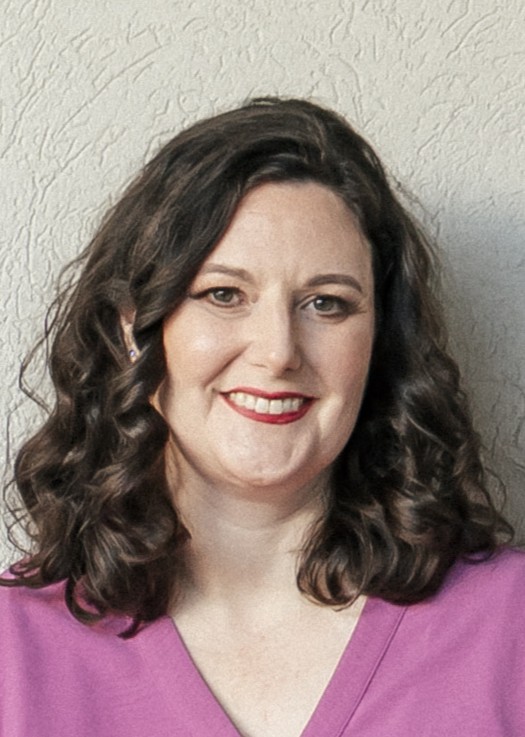
Rachel McBryan, Dietitian
Rachel McBryan is a licenced Dietitian in British Columbia offering comprehensive nutrition counselling as virtual and/or in-person counselling sessions to suit your needs and preferences. With a Bachelor of Science in Nutrition and Food Science, Rachel has over 20 years experience helping people address their health through nutrition. She was awarded Human Nutrition and Food Science BSc.from University of Alberta followed by post-grad course work at UBC in guidance counselling.
An eating disorder is a serious mental health illness.
If you are in immediate distress or crisis, please contact emergency services by dialing 911 or calling Vancouver Island Crisis Line: 1-888-494-3888.
This article is educational information only, not professional diagnosis or treatment. This health education content is heavily AI augmented and parts or all of this article may not have been reviewed yet for accuracy. AI generated content is prone to error.
Please note that we partner with VitaminLab and financially gain if you purchase supplements. You are under no obligation to use VitaminLab products and whether you supplement your diet with VitaminLab or another product of your choice will not impact your nutrition care.