
Fat soluble vitamins A, D, E, and K dissolve in dietary fat and are absorbed during digestion. Your body stores some of these vitamins in tissues, so high-dose supplements deserve careful review, especially with long-term use or when you take medication.
Advice about taking vitamins with meals or choosing supplements can feel confusing. Each vitamin has a different role and food sources, and the right approach depends on your health needs, eating pattern, medications, and current products.
This guide explains how your body absorbs and stores vitamins A, D, E, and K, and highlights foods that provide them. You’ll also learn what to review before adding a supplement, including medication interactions and the Natural Product Number on Canadian labels. A supplement review with a Registered Dietitian offers a practical way to discuss your products, eating habits, and questions alongside your healthcare team.
Key Takeaways
- Fat soluble vitamins A, D, E, and K dissolve in fat, but each has a distinct role in the body.
- Familiar food sources include orange vegetables, fish, nuts, seeds, and leafy greens.
- Absorption and storage differ by vitamin. High-dose or long-term supplement use deserves an individualized review.
- Before discussing supplements, list your products, read their labels, and note your medications.
- A Registered Dietitian can review your eating pattern and supplement routine as part of your nutrition support.
Fat-soluble vitamins A, D, E, and K: what they are and what they do
Fat-soluble vitamins dissolve in dietary fat and are absorbed during digestion. The four are vitamins A, D, E, and K. Each has a distinct role, so a food or supplement containing one does not replace the others.
What does fat-soluble mean?
During digestion, dietary fat helps your body absorb these vitamins. A meal does not need a large serving of fat. Eggs, fish, nuts, seeds, and oils naturally contain fat, and everyday meals often provide several nutrients together. By comparison, water-soluble vitamins dissolve in water. This difference helps explain why fat-soluble vitamins follow a different path through the body, including how some are stored. For a broader overview, see Fat-soluble vitamins.
What are vitamins A, D, E, and K known for?
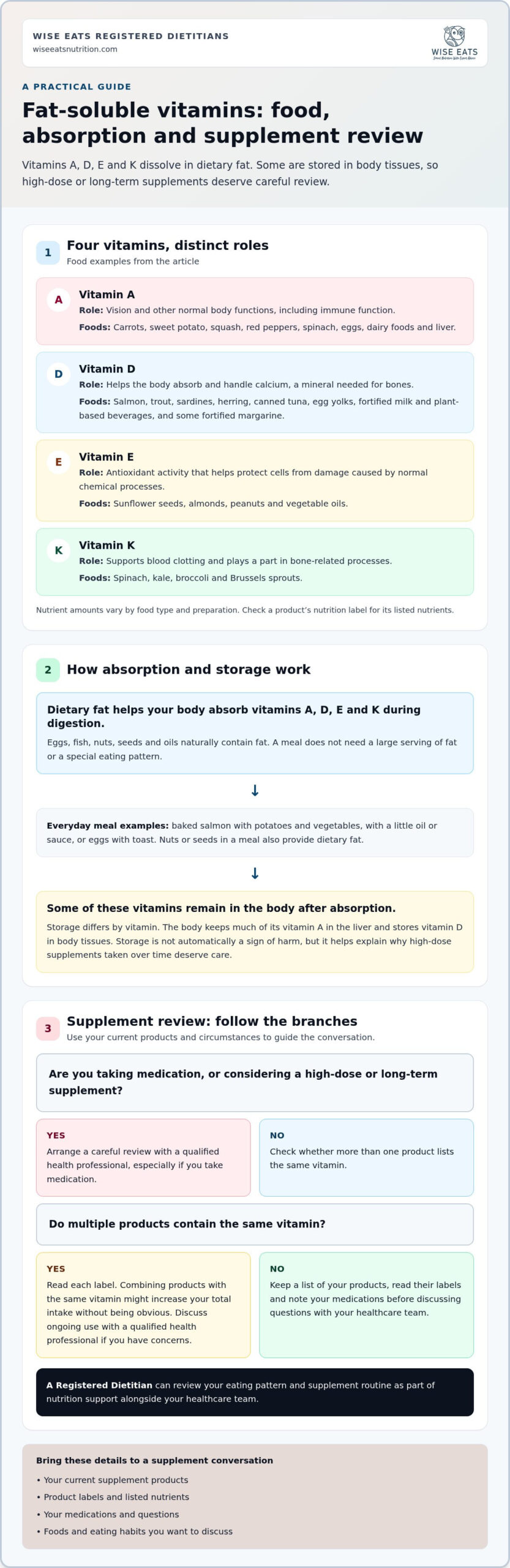
Each vitamin supports different normal body functions. Vitamin A supports vision and other processes, including immune function. Vitamin D helps the body absorb and handle calcium, a mineral needed for bones. Vitamin E acts as an antioxidant, helping protect cells from damage caused by normal chemical processes. Vitamin K supports blood clotting and plays a role in bone-related processes. These descriptions explain nutrient roles, not promise a particular health result.
Food is a useful starting point. Vitamin A occurs in animal foods as retinol and in some plant foods as carotenoids, including beta-carotene. The body converts some carotenoids into vitamin A. The table lists familiar examples. Nutrient amounts vary by food type and preparation.
| Vitamin | General role | Familiar food sources |
|---|---|---|
| Vitamin A | Vision and normal body functions | Carrots, sweet potato, spinach, eggs, dairy foods, liver |
| Vitamin D | Calcium handling and bone health | Salmon, trout, egg yolks, fortified milk and plant-based beverages |
| Vitamin E | Antioxidant activity helping protect cells | Sunflower seeds, almonds, peanuts, vegetable oils |
| Vitamin K | Blood clotting and bone-related processes | Spinach, kale, broccoli, Brussels sprouts |
Plant sources of vitamin A include orange vegetables such as carrots and sweet potato, along with dark leafy greens. Animal sources provide preformed vitamin A, also called retinol. Fortified foods, including some milk and plant-based beverages, offer another source of vitamin D in Canada. Check the nutrition label to see which nutrients a product contains.
How fat-soluble vitamin absorption and storage work
Dietary fat helps your body absorb fat-soluble vitamins during digestion, and some of these vitamins are stored in body tissues for later use. The term describes how the vitamins enter the body and how the body handles amounts it does not use right away.
Does a meal need fat for vitamin absorption?
After you eat, food moves through your digestive system and breaks down, making nutrients available for absorption. Dietary fat helps vitamins A, D, E, and K pass through this process and enter the body. You do not need to add a large serving of fat or follow a special eating pattern at every meal.
For example, baked salmon with potatoes and vegetables, dressed with a little oil or served with a sauce, includes dietary fat alongside other nutrients. Eggs with toast or a meal with nuts or seeds also includes fat. These are everyday examples, not required pairings. Your usual eating pattern and health circumstances matter more than matching each vitamin with a specific food at every meal.
Some digestive conditions and medicines affect nutrient absorption. If you have questions about absorption, bring them to your healthcare team. Digestion, food choices, and individual circumstances all play a part, so general advice will not address every personal concern.
Why does storage matter?
Unlike many water-soluble vitamins, fat-soluble vitamins can remain in the body after absorption. Storage differs by vitamin. The body keeps much of its vitamin A in the liver, for example, and stores vitamin D in body tissues. How much is stored and how long it remains depend on the nutrient and a person’s circumstances.
Storage is not automatically a problem or a sign of harm. It does help explain why high-dose supplements taken over time deserve care. Supplements also differ from food in concentration. Combining more than one product with the same vitamin might increase your total intake without being obvious. Read labels before combining products, and discuss ongoing use with a qualified health professional if you have concerns.
Vitamin D questions often come up during Canadian winters, when sunlight exposure changes. For local seasonal context, read Winter Vitamin D Tips for Alberta and Vancouver Island. Use the information to prepare questions. It does not determine whether you personally need a supplement.
If you want support reviewing your supplement routine and eating habits, a Registered Dietitian consultation offers time to discuss your questions alongside your healthcare team.
Food sources and supplement choices for vitamins A, D, E, and K
Your food choices do not need to follow a fixed plan. Start by noticing which sources already appear in your meals, then consider other options you enjoy and have access to. Fresh, frozen, canned, and fortified foods all count. Food-first planning suits some people, but health needs and circumstances differ.
Which foods provide vitamins A, D, E, and K?
Vitamin A occurs in plant foods as carotenoids, including beta-carotene. Your body converts some carotenoids into vitamin A. Animal foods contain preformed vitamin A, also called retinol. The examples below offer different options to include in familiar meals.
| Vitamin | Other food examples | Ways to include them |
|---|---|---|
| Vitamin A | Butternut squash, red peppers, cheese | Add roasted squash to soup or serve sliced peppers with a meal. |
| Vitamin D | Sardines, herring, canned tuna, some fortified margarine | Use canned fish in a sandwich or salad. Check margarine labels for fortification. |
| Vitamin E | Hazelnuts, wheat germ, avocado | Mix wheat germ into cereal or add avocado to toast. |
| Vitamin K | Romaine lettuce, cabbage, green beans | Add shredded cabbage to a meal or serve cooked green beans as a side. |
Vitamin D also comes from sunlight, though production varies with season and personal circumstances. Fortified foods offer another option. In Canada, some products include added vitamin D, but brands and food types differ. Read the nutrition label to see which nutrients a product contains.
Food availability and eating patterns vary between households and communities. Cost, culture, preferences, allergies, and access all shape what feels practical. Frozen vegetables or canned fish, for example, might suit your routine better than fresh alternatives. Choose foods in forms that work for your meals and preferences. No single item needs to be part of every eating pattern.
When do supplements enter the discussion?
Supplement choices depend on your eating pattern, health context, and current products. Supplements are not a routine need for everyone. Before adding one, check whether a multivitamin, fortified drink, or another product already contains the same nutrient. A professional supplement review offers a chance to discuss your current products and possible nutrition gaps with a Registered Dietitian.
If you want help sorting through food options or supplement questions, a Registered Dietitian consultation offers space to review your eating habits and products alongside your healthcare team.
Fat-soluble vitamin supplements: safety, medications, and when to seek help
Supplement advice depends on details beyond the vitamin name. Your current products, medications, eating pattern, and health needs all matter. High-dose supplements or long-term use deserve an individualized review. Do not change a prescribed medication or supplement plan without discussing it with your care team.
What should you review before taking a supplement?
Use this sequence to prepare for a conversation with a healthcare professional:
- List every supplement you take. Include multivitamins, single-nutrient products, and fortified drinks or powders.
- Read each label. Note the vitamin forms, amounts, serving directions, and any ingredients repeated across products.
- Write down your medications. Include prescription and non-prescription medicines, plus instructions from your pharmacist or prescriber.
- Bring your questions and labels. A pharmacist, prescriber, or Registered Dietitian can review your routine as part of your healthcare support.
Look for a Natural Product Number on a Canadian supplement label. This eight-digit code indicates Health Canada has assessed the product for safety, quality, and health claims. It does not confirm the product suits your personal needs or is appropriate alongside your medications.
Medication considerations deserve particular care. Vitamin K intake can affect anticoagulant therapy, so discuss significant changes in your intake or supplement use with the clinician managing your medication. Do not change your medication or usual vitamin K intake on your own. Large amounts of vitamin E have a blood-thinning effect when combined with anticoagulants. Share the product label with your prescriber or pharmacist. For more on tailored products, read about personalized vitamin packs in Canada.
Fat soluble vitamins deserve thoughtful supplement planning because the body stores some of them, and products can overlap. A Registered Dietitian with Wise Eats Registered Dietitians can review your eating habits and current supplements, then discuss possible nutrition gaps and your goals as part of your healthcare support. The review offers nutrition guidance, not a medical diagnosis.
When to seek help: signs for professional support
Reach out to your healthcare team if any of these concerns arise. You do not need to sort them out alone.
- A new or ongoing physical symptom after starting a supplement. Contact your prescriber or pharmacist and share the product label and when the symptom began. Seek urgent care for severe or rapidly worsening symptoms.
- Difficulty eating enough or a marked change in eating behaviours. Tell your healthcare team what has changed. A Registered Dietitian offers nutrition support as part of your care.
- Worry about medication interactions or combining several supplements. Ask your pharmacist or prescriber to review your full medication and supplement list before making changes.
How a Registered Dietitian supports vitamin and supplement questions
Conflicting supplement advice can leave you unsure about what fits your routine. A Registered Dietitian can review your eating pattern, current products, and questions about vitamins A, D, E, and K. This nutrition support does not diagnose a condition or replace advice from your healthcare team.
WISE EATS Nutrition provides personalized, evidence-informed nutrition counselling for people in Alberta and British Columbia. Rachel McBryan, RD, College of Health and Care Professionals of BC, sees clients in Parksville and by video across BC. Sheirry Poposka, RD, Alberta College of Dietitians, provides online support in BC and Alberta. Residents of Calgary and Edmonton, as well as Parksville, Qualicum Beach, Nanaimo (sometimes misspelled Naniamo), and communities across Vancouver Island, can access nutrition support through the practice’s services. Fat soluble vitamins are one topic to discuss in the context of your eating habits and supplement use.
What happens during a supplement review?
A supplement review starts with your questions. You and the Registered Dietitian look at what you take, how those products fit with your eating habits, and what you want to understand. You do not need to arrive with a perfect record or a clear answer. A photo of a label helps make the conversation specific.
The discussion might cover overlapping nutrients across products, possible nutrition gaps, and whether a supplement fits your goals and preferences. Recommendations are tailored to your situation and offer nutrition guidance. They do not replace advice from your prescriber, pharmacist, or other members of your healthcare team. WISE EATS Nutrition offers supplement review services as part of its personalized nutrition support.
How to take a practical next step
Before an appointment, gather the labels or clear photos of each supplement you use. Include multivitamins, individual vitamins, and fortified products. Write down your current medications and questions about timing, ingredients, or possible interactions. If you do not have every detail, bring what you have and explain what is missing.
A review works best as a shared conversation. Your eating pattern, culture, access to foods, health context, and preferences help shape relevant guidance. The Registered Dietitian can help you understand nutrition information and identify questions for your care team, without asking you to follow rigid food rules or make medication changes.
Speaking with a registered dietitian can help you develop a balanced, flexible approach to eating and meet your nutritional needs.
Bring your supplement questions into the conversation
Supplement advice online often sounds certain, even when your own needs call for a closer look. You do not need to make a quick decision or overhaul your routine. Choose one question you want answered, then discuss it with a qualified professional who understands your health context and priorities.
Fat soluble vitamins are one part of a wider nutrition picture. Your next step might be reviewing a product you already take, asking how a supplement fits with your medications, or talking through food options that suit your life. The goal is clear, personal information, not pressure to add another product.
WISE EATS Nutrition offers personalized supplement reviews and nutrition recommendations through Registered Dietitian support. A collaborative conversation can help you understand your options and identify useful questions for your healthcare team.
Take things one question at a time. You deserve guidance that respects your needs and helps you decide what feels manageable.
Frequently Asked Questions
Is it safe to take vitamins A, D, E, and K together?
Taking vitamins A, D, E, and K together is not automatically safe for every person. Safety depends on the products, amounts, medications, and your health context. A multivitamin and separate vitamin capsules, for example, might contain overlapping nutrients. Read each label and bring the products to a Registered Dietitian, pharmacist, or member of your healthcare team for review, especially if you take medication or several supplements. Do not change prescribed treatment without medical guidance.
How does dietary fat affect absorption of fat-soluble vitamins?
Dietary fat supports the body’s absorption of vitamins A, D, E, and K during digestion. An egg served with toast or a meal with nuts includes fat alongside other foods. You do not need to add a special ingredient to every meal. Digestion and personal health circumstances also shape nutrition needs. If you have a digestive condition or concerns about nutrient absorption, discuss them with a healthcare professional.
What happens if you take more of a fat-soluble vitamin than you need?
Excess intake from supplements deserves care because the body stores fat-soluble vitamins differently from water-soluble vitamins. A single meal is not the same as ongoing high supplement use. Look for overlap between a multivitamin and separate products, then ask a pharmacist, Registered Dietitian, or healthcare professional to review high-dose or long-term use. Do not change prescribed treatment based on a label or online advice.
Should you take vitamin D with food?
Taking vitamin D with a meal containing dietary fat supports its absorption. A meal with eggs, fish, or another usual source of fat is one everyday example. There is no single meal pattern suited to everyone, and this guidance does not set a supplement dose. If you have questions about vitamin D intake, a supplement, or a health condition, discuss them with a healthcare professional who knows your circumstances.
Can fat-soluble vitamins interact with medications?
Yes. Interactions depend on the vitamin, medication, and amount. Vitamin K matters for some anticoagulant treatment, and high-dose vitamin E has a blood-thinning effect when combined with anticoagulants. If you take medication, show your pharmacist or healthcare team the supplement label before starting or changing a product. Keep following your prescribed medication plan unless your prescriber advises otherwise. A full product list helps the team check for overlapping ingredients.
Do you need a blood test before taking a fat-soluble vitamin supplement?
Not everyone needs a blood test before considering a supplement. Testing decisions depend on your symptoms, health history, and a clinician’s assessment. If you are concerned about a nutrient, discuss your situation with your healthcare team, who can decide whether testing fits. Do not start a high-dose supplement based only on a test result or online advice. Bring the result and supplement labels to your appointment for review.

Article by
Rachel McBryan, Dietitian
Rachel McBryan is a licenced Dietitian in British Columbia offering comprehensive nutrition counselling as virtual and/or in-person counselling sessions to suit your needs and preferences. With a Bachelor of Science in Nutrition and Food Science, Rachel has over 20 years experience helping people address their health through nutrition. She was awarded Human Nutrition and Food Science BSc.from University of Alberta followed by post-grad course work at UBC in guidance counselling.
An eating disorder is a serious mental health illness.
If you are in immediate distress or crisis, please contact emergency services by dialing 911 or calling Vancouver Island Crisis Line: 1-888-494-3888.