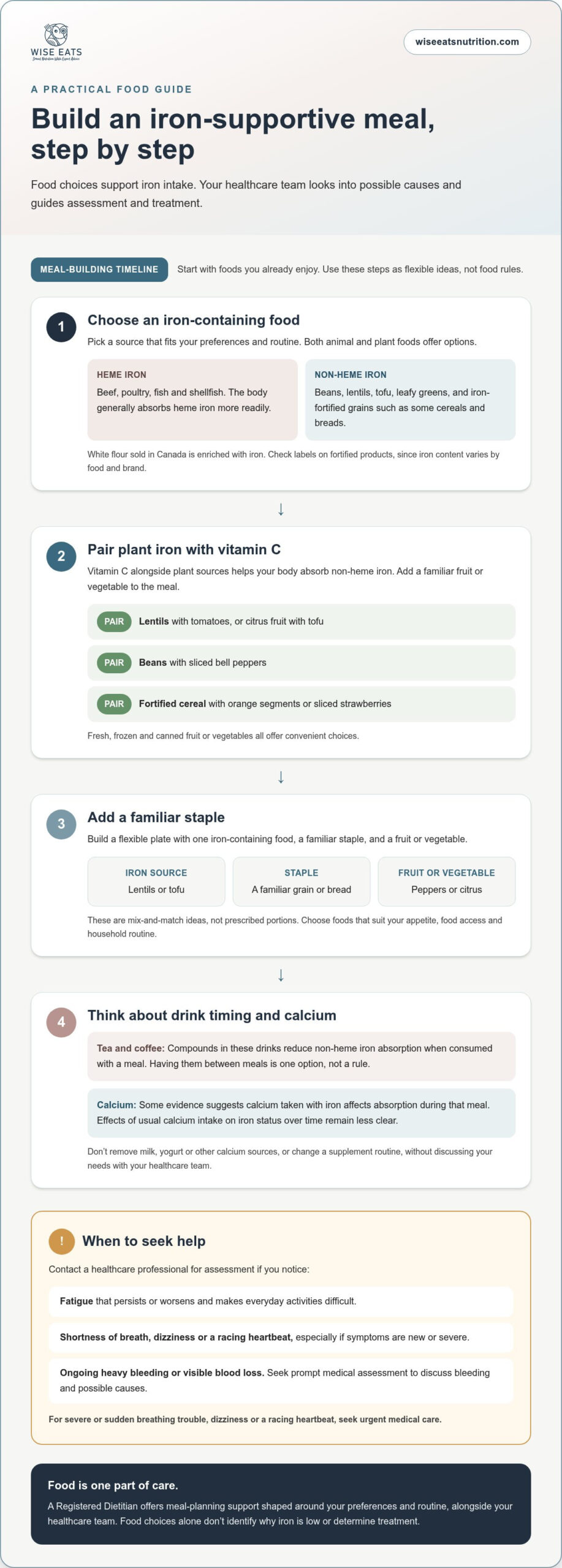
Food choices matter, but a meal plan alone won’t identify or address every reason iron levels are low. An iron deficiency anemia diet plan is one part of care, alongside working with your healthcare team to look into possible causes. If you’re tired and unsure whether to add meat, beans, fortified cereal, or supplements, conflicting advice online can make each meal feel like a test. It doesn’t need to.
This guide explains which foods contain iron and how to pair plant sources, such as lentils, with vitamin C-rich peppers or fruit. You’ll also learn how tea and coffee timing fits into meals, without following rigid food rules.
For Calgary readers, a Registered Dietitian offers support adapting meal ideas to your preferences, routine, and nutrition needs. Dietitian support works alongside your healthcare team, not in place of medical assessment or treatment. You’ll also find guidance on when fatigue or other symptoms call for a conversation with a healthcare professional.
Key Takeaways
- Learn how an iron deficiency anemia diet plan fits into care, alongside assessment of possible causes by your healthcare team.
- See how heme and non-heme iron sources differ, and which vitamin C-rich foods pair well with plant sources.
- Use a simple plate-building approach to combine an iron source, a familiar staple, and a fruit or vegetable.
- Find practical ways to add iron-containing foods suited to your budget, appetite, food access, and household routine.
- Learn how Registered Dietitian Rachel McBryan, RD, College of Health and Care Professionals of BC, supports personalized meal planning alongside your healthcare team.
Iron Deficiency Anemia Diet Plan: What Food Can Support
Iron deficiency anemia occurs when low iron stores leave the body without enough iron to make the hemoglobin needed for healthy red blood cells. Hemoglobin is a protein in red blood cells carrying oxygen through your body. Alberta Health Services’ clinical guidance treats iron deficiency anemia as a specific cause of anemia, rather than a general term for every type. The Iron-deficiency anemia overview discusses possible causes, symptoms, assessment, and treatment.
Food choices support your overall iron intake, but they don’t show why your iron is low or determine the right treatment. Blood loss, difficulty absorbing iron, increased iron needs, and low intake are among the possible factors. An iron-focused diet plan may be one part of care, but it doesn’t suit every type of anemia or address every cause. Talk with your healthcare team about your test results, symptoms, and next steps before making major changes or starting supplements.
How iron deficiency anemia differs from other anemia
Your body needs iron to make hemoglobin and produce red blood cells. When iron stores fall, hemoglobin production also falls, leading to iron deficiency anemia. Iron deficiency can exist without anemia, so low iron and low hemoglobin aren’t interchangeable findings.
Other types of anemia have different causes, including deficiencies of nutrients other than iron or health conditions affecting red blood cell production. Adding iron-rich foods alone won’t address every cause. Your healthcare team interprets blood test results in context and discusses whether further assessment or treatment is needed. Bring questions about your results, bleeding history, symptoms, and current supplements to your appointment.
A practical iron deficiency anemia diet plan focuses on supportive food choices without assuming food is the full treatment. If you live in Calgary, a Registered Dietitian offers meal-planning support tailored to your preferences and routine, alongside your healthcare team’s care. Learn about Registered Dietitian support in Calgary.
When to Seek Help
Symptoms deserve attention, especially if they’re new, worsening, or interfering with daily life. Contact a healthcare professional for assessment if you notice any of the following:
- Fatigue that persists or worsens and makes everyday activities difficult.
- Shortness of breath, dizziness, or a racing heartbeat, especially if symptoms are new or severe.
- Ongoing heavy bleeding or visible blood loss. Seek prompt medical assessment to discuss the bleeding and possible causes.
If breathing trouble, dizziness, or a racing heartbeat feels severe or sudden, seek urgent medical care. You don’t need to work out the cause on your own. Food and nutrition counselling support care, while your healthcare team assesses symptoms and guides medical decisions.
How Iron in Food Works: Heme, Non-Heme, and Absorption
Iron in food comes in two forms. Heme iron occurs in animal foods, and non-heme iron occurs in plant foods and iron-fortified products. The body generally absorbs heme iron more readily than non-heme iron. Both forms fit into an iron deficiency anemia diet plan, based on your preferences and care needs.
Heme and non-heme iron food sources
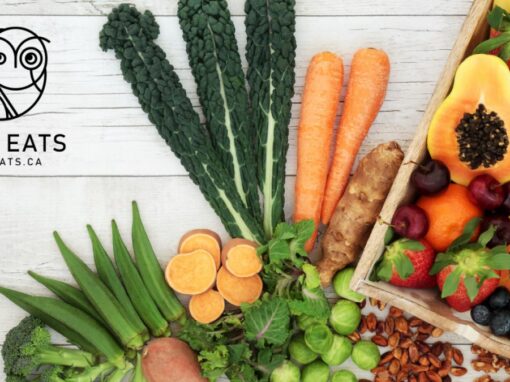
Heme iron comes from foods such as beef, poultry, fish, and shellfish. Non-heme sources include beans, lentils, tofu, leafy greens, and iron-fortified grains, such as some breakfast cereals and breads. White flour sold in Canada is enriched with iron, so flour-based foods also add to iron intake.
You don’t need to eat meat to include iron-containing foods. A bowl of lentil soup, tofu with vegetables, or fortified cereal offers plant-based options. If you eat both animal and plant foods, include either source in meals suited to your household. Iron content varies by food and product, so check labels for fortified grains rather than assuming every brand contains the same amount.
Pairing foods to support iron absorption
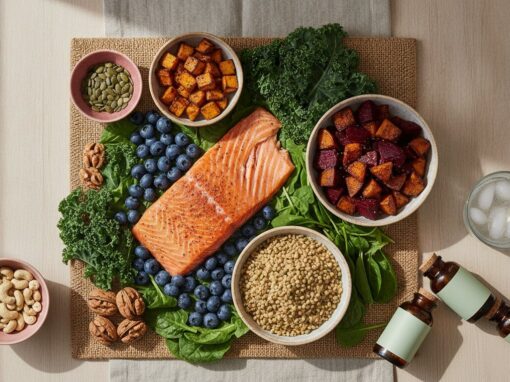
Vitamin C alongside plant sources helps your body absorb non-heme iron. Add sliced bell peppers to beans, tomatoes to lentils, or citrus fruit with a meal containing tofu or fortified cereal. Fresh, frozen, and canned options offer convenient ways to add fruit or vegetables. These pairings support absorption without requiring a special recipe or strict meal rules.
Tea and coffee contain compounds reducing non-heme iron absorption when consumed with a meal. If you usually drink tea or coffee alongside an iron-containing meal, try having it between meals instead. This small timing change is an option, not a rule. Your overall eating pattern and health needs matter, too.
Calcium-rich foods and supplements also deserve context. Some evidence suggests calcium taken with iron affects absorption during that meal, but the effect of usual calcium intake on iron status over time remains less clear. Don’t remove milk, yogurt, or other calcium sources, or change a supplement routine, without discussing your needs with your healthcare team.
For practical meal ideas, start with foods you already enjoy and add a vitamin C source alongside plant-based iron. A Registered Dietitian offers support tailoring pairings to your preferences and routine. Book nutrition counselling for personalized meal-planning support.
Iron-Rich Meal Plan Choices: Compare Foods and Build a Plate
Meal planning feels more manageable when you start with foods you already eat. Choose one iron-containing food, add a familiar staple, then include a fruit or vegetable. This simple mix-and-match approach gives you options without setting calorie limits or treating one menu as right for everyone.
The table offers ideas, not prescribed portions. Iron content varies by food and brand, so check packaging for fortified products.
| Iron-containing food | Meal role | Easy vitamin C pairing |
|---|---|---|
| Iron-fortified breakfast cereal | Breakfast base with milk or a milk alternative | Orange segments or sliced strawberries |
| Canned beans or lentils | Filling for a wrap, soup, or grain bowl | Bell peppers, tomatoes, or citrus |
| Tofu | Protein in a stir-fry or noodle bowl | Broccoli or red pepper |
| Seafood, such as salmon or mussels | Main item with potatoes or rice | Tomato salad or steamed broccoli |
| Beef or poultry | Main item in a sandwich, stew, or meal with grains | Tomatoes, peppers, or fruit on the side |
A flexible iron-supportive sample day
Use these combinations as a starting point. Choose options suited to your appetite, schedule, and household routine.
- Breakfast: Iron-fortified cereal with strawberries, or toast with eggs and a piece of fruit.
- Lunch: Lentil soup with a tomato and pepper side salad, or a bean-and-cheese wrap with orange slices.
- Dinner: Tofu stir-fried with frozen broccoli and served with rice. Another option is salmon with potatoes and tomatoes.
- Snack: Hummus with bell pepper strips, or a small bowl of fortified cereal if it suits your routine.
You don’t need to follow this sample day exactly. Swap meals, repeat a convenient option, or choose a different iron source. These examples offer general food ideas. They don’t assess the cause of anemia or replace personalized medical care from your healthcare team.
Adapting choices to your eating pattern
Plant-based meals fit this flexible approach. Use canned beans in a wrap, lentils in soup, or tofu in a stir-fry, then add a vitamin C-containing vegetable or fruit. Frozen vegetables save washing and chopping time, and canned foods offer a practical pantry option. Rinse canned beans if you prefer a milder taste.
Your usual cultural foods and personal preferences are useful starting points. Add lentils to a familiar stew, serve beans with a staple your household enjoys, or pair a preferred seafood dish with vegetables. A Registered Dietitian can help adapt ideas into an iron deficiency anemia diet plan suited to your food preferences and daily routine, alongside your healthcare team’s guidance.
How to Put an Iron Deficiency Anemia Diet Plan into Practice
A useful plan should fit your actual week, not ask you to rebuild every meal. Start with foods already in your kitchen, then add small changes suited to your budget, food access, appetite, and household routine. Food choices support nutrition, while your healthcare team guides assessment and treatment.
A simple weekly planning routine
Use this four-step process to put an iron deficiency anemia diet plan into practice without preparing every meal from scratch:
- Choose an iron-containing food. Pick a few options you already enjoy, such as beans, lentils, tofu, fortified cereal, seafood, or meat. Fit them into meals already in your household rotation.
- Add a pairing. With meals featuring beans, lentils, or fortified grains, include a vitamin C food such as tomatoes, bell peppers, citrus, or frozen broccoli.
- Plan for busy days. Keep convenient choices on hand, such as canned beans, ready-to-eat fortified cereal, or frozen vegetables. A quick meal still counts as a meal.
- Review the plan with your care team. Bring questions about symptoms, test results, food choices, and treatment to an appointment. A Registered Dietitian supports meal planning, while your healthcare team assesses and treats medical causes.
Try adding one or two ideas first. If appetite, energy, cooking facilities, or food access make planning difficult, adjust the approach rather than blaming yourself. Repeating a familiar meal is a practical choice. Custom meal planning helps organize food ideas around your preferences and routine.
For a wider overview of Medical Nutrition Therapy, the Master Guide explains how nutrition counselling fits into care for health conditions. For hands-on meal planning support, custom meal planning with a Dietitian helps turn flexible ideas into meals suited to your needs.
Coordinate food choices with clinical care
Food planning doesn’t replace medical assessment or treatment. Share concerns about fatigue, other symptoms, blood test results, and possible causes with your healthcare team. Ask how nutrition fits alongside any treatment they recommend.
Iron supplements need individualized guidance. Your healthcare team can advise whether a supplement is appropriate and how it fits your care. Don’t start, stop, or change a supplement or medication based on a meal plan alone. Supplements aren’t a substitute for identifying and addressing the cause of low iron.
If you already take supplements, bring the product name, label, and dose to your healthcare or nutrition appointment. A supplement review helps you discuss your current routine and prepare questions for your care team. The goal is a coordinated plan, with nutrition counselling supporting medical care rather than taking its place.
Dietitian Support for Iron Deficiency Anemia in Alberta and British Columbia
Food advice often sounds simple until you need to fit it around your appetite, schedule, budget, and familiar meals. A Registered Dietitian offers practical nutrition counselling to make food choices easier to apply. This support doesn’t diagnose iron deficiency anemia or provide medical treatment. Your healthcare team remains responsible for assessing symptoms, test results, possible causes, and treatment options.
What a Registered Dietitian can contribute
A dietitian helps adapt iron-containing food ideas to your preferences, routines, and nutrition needs. For example, meal planning might include familiar ingredients, plant-based choices, or convenient options for days when cooking feels difficult. The goal is a realistic approach, not a rigid menu or a promise about medical outcomes.
An iron deficiency anemia diet plan works alongside care from your healthcare team. Bring questions about food, supplements, and test results to the professionals supporting your care. Broader nutrition counselling for health conditions helps clarify how meal planning fits within a wider care approach, without replacing medical assessment or treatment.
Wise Eats Registered Dietitians supports residents of Alberta and British Columbia. Rachel McBryan, RD, is registered with the College of Health and Care Professionals of BC. Sheirry Poposka, RD, is registered with the Alberta College of Registered Dietitians. Their nutrition counselling focuses on practical support and personalized food planning.
Local nutrition support
Residents of Calgary, Edmonton, Nanaimo, Parksville, Vancouver Island, and Qualicum Beach can explore nutrition support suited to their location and needs. Calgary readers can learn more about Dietitian support in Calgary. Meal planning focuses on food preferences, household routines, and practical choices, without promising an anemia-specific protocol or taking the place of medical care.
Before a counselling session, jot down foods you enjoy, meals that feel manageable, and questions for your care team. If you have test results or guidance from a healthcare professional, those details help keep nutrition discussions connected to your broader care. You don’t need to arrive with a perfect food record or a fully formed plan.
Nutrition counselling is one part of coordinated care. Your healthcare team assesses and treats medical concerns, and a Registered Dietitian helps turn relevant food guidance into choices suited to daily life. For support with your nutrition goals and meal planning, book an appointment below.
Choose a Next Step That Fits Your Care
Your next step doesn’t need to be a major menu change. Before your next healthcare visit, write down what you want clarified, such as what your test results mean, whether further assessment is needed, and how food choices fit with your care plan. If symptoms affect your routine, note what has changed and when it tends to happen. These details help focus the conversation.
An iron deficiency anemia diet plan works best as part of care guided by your healthcare team. Ask which symptoms need follow-up, how to check whether your care plan needs review, and whom to contact if concerns change. Keep the guidance in one place, such as a note on your phone, so it’s easy to refer to after your appointment.
Choose one practical food idea to discuss, then build from advice suited to your health, preferences, and daily life. You don’t need to sort through every decision at once. A clear next step is enough to begin.
Frequently Asked Questions
What foods should I eat with iron deficiency anemia?
Include iron-containing foods you enjoy and have access to, such as meat, seafood, beans, lentils, tofu, or iron-fortified cereal. Check cereal and bread labels, since iron levels differ among products. If certain foods don’t suit your appetite, budget, or cultural preferences, choose another source instead. A Registered Dietitian helps you compare options and build a flexible iron deficiency anemia diet plan alongside guidance from your healthcare team.
Which foods help the body absorb iron from plant sources?
Vitamin C-rich foods eaten with plant sources of iron support absorption. Try adding kiwi or strawberries to a meal with fortified oats, or include tomato salsa with a bean dish. Fresh, frozen, and canned produce offer options across seasons and food budgets. Pairing foods is a practical step, but it doesn’t confirm whether you have iron deficiency or whether your body absorbs enough iron.
Does tea or coffee affect iron absorption from meals?
Tea and coffee with a meal can reduce absorption of non-heme iron, the type found in plant foods and fortified grains. If you drink them with meals often, try having them between meals and see whether the timing feels manageable. You don’t need to remove either drink from your routine. If you take prescribed iron, follow your healthcare professional’s instructions about when to take it.
Can an iron deficiency anemia diet plan replace iron supplements?
No. Food planning supports nutrition, but it doesn’t replace supplements or other treatment when your healthcare team recommends them. The right approach depends on your test results and the reason for low iron. Don’t start, stop, or change an iron supplement based on general meal suggestions. Bring the supplement label and dose to an appointment so your care team can review how it fits your care.
How long does it take for food changes to improve iron deficiency anemia?
There isn’t one reliable timeline for food changes to affect iron levels or symptoms. Progress depends on factors such as the cause of low iron, absorption, and any treatment your healthcare team recommends. Keep follow-up appointments and ask when they want to review your results. If fatigue worsens or new symptoms appear, contact your care team rather than waiting for food changes alone to make a difference.
Should I follow an iron-rich meal plan before getting blood tests?
You don’t need to delay blood tests to change your eating pattern first. Follow the instructions from the clinician or lab arranging your test, since preparation depends on the specific tests ordered. Don’t begin iron supplements to influence a result unless your healthcare professional advises you to do so. If you’ve recently changed supplements or your eating habits, mention this when discussing your results.
When should I seek help for possible iron deficiency anemia?
Arrange medical assessment for ongoing fatigue interfering with daily activities, new or severe shortness of breath, dizziness or a racing heartbeat, or ongoing heavy bleeding or visible blood loss. Prompt assessment helps your healthcare team consider possible causes and decide what care is appropriate. If symptoms feel sudden or severe, seek urgent medical care. You don’t need to wait for a nutrition appointment before raising these concerns.
Article by
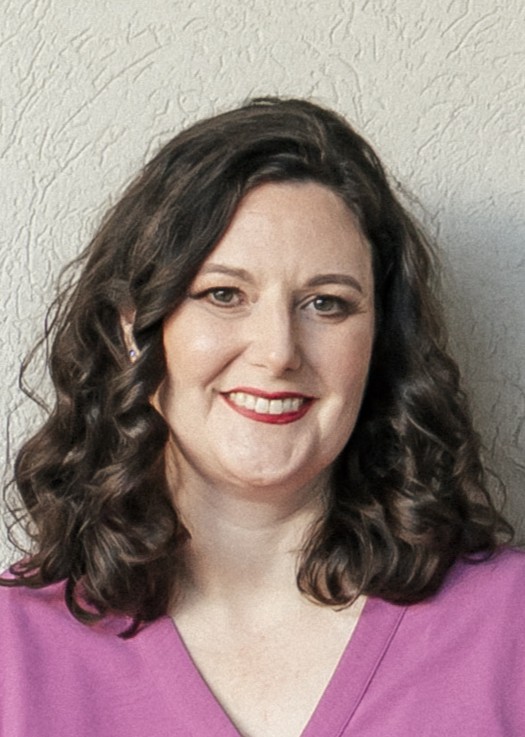
Rachel McBryan, Dietitian
Rachel McBryan is a licenced Dietitian in British Columbia offering comprehensive nutrition counselling as virtual and/or in-person counselling sessions to suit your needs and preferences. With a Bachelor of Science in Nutrition and Food Science, Rachel has over 20 years experience helping people address their health through nutrition. She was awarded Human Nutrition and Food Science BSc.from University of Alberta followed by post-grad course work at UBC in guidance counselling.
An eating disorder is a serious mental health illness.
If you are in immediate distress or crisis, please contact emergency services by dialing 911 or calling Vancouver Island Crisis Line: 1-888-494-3888.