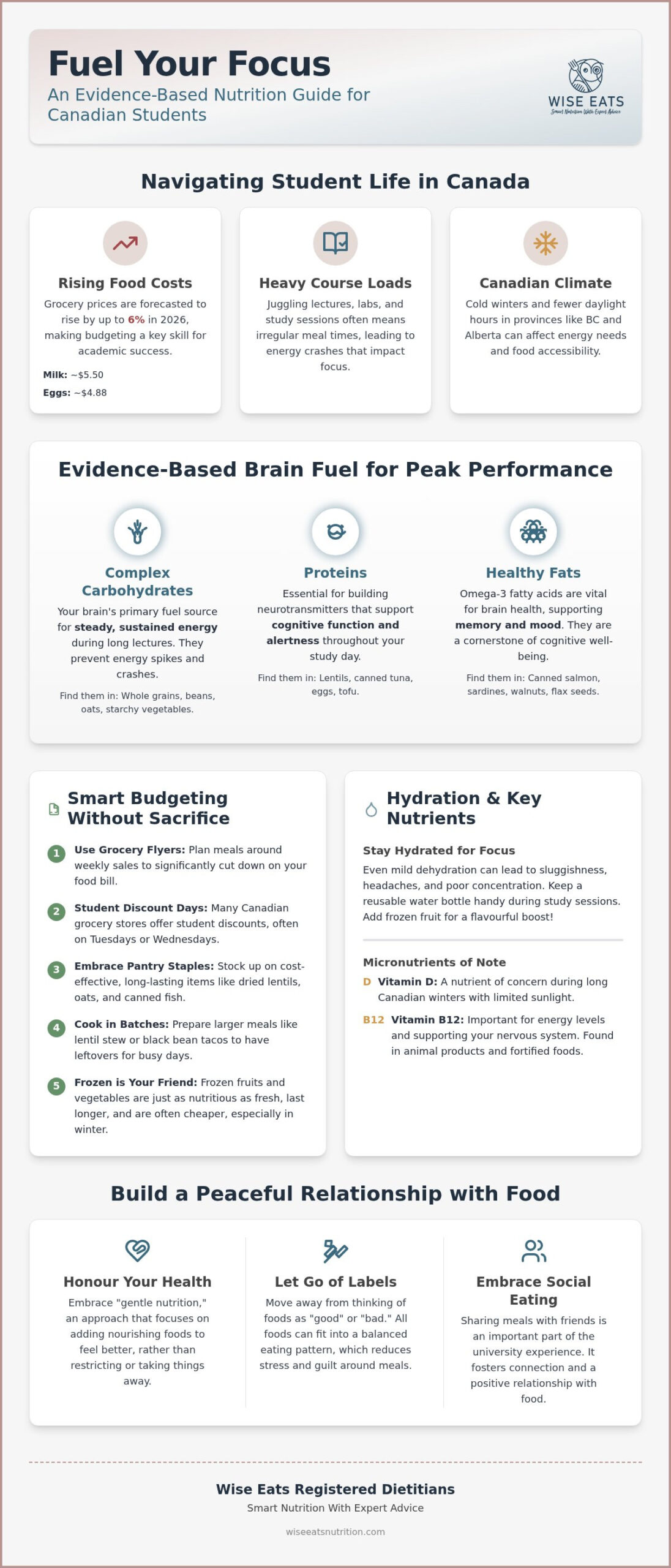
Navigating university or college life in Canada comes with a unique set of challenges. Between demanding lectures, late-night study sessions, and a tight budget, focusing on nutrition can feel like just another item on an overwhelming to-do list. You’re not just learning to manage your time; you’re often managing your own meals for the first time, all while facing the high cost of groceries in provinces like BC and Alberta. It’s a lot to handle.
This guide is different. We’re not here to give you a list of restrictive rules. Instead, we want to offer evidence-based strategies to fuel your academic success and manage your well-being. Student nutrition is about adding nourishment to support your brain function and energy levels, not subtracting foods to meet an external standard. Let’s explore how you can build a peaceful, sustainable relationship with food throughout your academic journey.
Navigating the Unique Challenges of Student Nutrition in Canada
The transition to post-secondary education is a significant life change. You’re adapting to a new environment, new academic pressures, and a new level of independence. This shift can have a major impact on your eating patterns, and it’s important to acknowledge the specific hurdles Canadian students face.
- Environmental Shifts: The pressure of living independently, often for the first time, means you are suddenly responsible for grocery shopping, cooking, and planning every meal.
- Canadian Realities: The long winters and climate can affect the availability and cost of fresh produce, while the rising cost of food in provinces like BC and Alberta adds significant financial strain.
- Emotional Toll: Academic stress is real, and it often affects appetite and food choices. It’s completely normal to feel overwhelmed by the need to balance everything.
- Gentle Nutrition: We introduce the concept of “gentle nutrition” as a framework to honour your health without rigidity. It’s about making choices that feel good for your body and mind, free from guilt or stress.
The Reality of the Student Schedule
Does this sound familiar? A 9 a.m. lecture, a gap until a 2 p.m. lab, and then a group study session that runs late into the evening. Irregular schedules can disrupt your body’s natural hunger and fullness cues, making it easy to skip meals and then overeat later. This cycle can lead to energy crashes, poor concentration, and added stress.
Viewing food as a functional tool for academic performance can help reframe your perspective. Consistent fueling throughout the day provides your brain with the steady energy it needs to absorb information in lectures and stay sharp during exams. It’s not about perfection; it’s about providing your body with reliable energy to meet the demands of your day.
Budgeting Without Sacrifice
One of the biggest objections we hear is that nourishing food is too expensive for a student budget. While grocery costs are a valid concern, there are many strategies to eat well without breaking the bank.
- Use Local Resources: Get familiar with Canadian grocery flyers (many have digital apps) and look for student discount days at local stores in cities like Edmonton and Vancouver.
- Embrace Pantry Staples: Cost-effective staples like oats, lentils, beans, brown rice, and pasta are far more budget-friendly than pre-packaged snacks. They provide lasting energy and can form the base of many different meals.
- Explore Campus Support: Don’t hesitate to use the resources available to you. Many universities and colleges have a campus food bank or other food security programs designed to support students. These services are confidential and exist to help you succeed.
- Plan Ahead: Even a little planning goes a long way. Wise Eats offers free meal planning resources that can help you get started with budget-friendly ideas.
Fueling Your Brain: Evidence-Based Nutrition for Focus
The term “brain food” is often misused to promote expensive, trendy products. In reality, brain health isn’t about one specific “superfood.” It’s about a consistent and balanced intake of the three main macronutrients: carbohydrates, proteins, and fats. Your brain’s primary fuel source is glucose, which comes from carbohydrates. Providing a steady supply is key for maintaining focus and memory.
According to research from institutions like the University of Toronto, complex carbohydrates are digested more slowly, providing a more stable release of glucose to the brain. This helps you avoid the sharp energy spikes and crashes associated with highly processed, sugary snacks. Healthy fats, particularly Omega-3 fatty acids, also play a crucial role in cognitive function. You can find these in accessible sources like canned salmon, walnuts, and flax seeds.
Hydration and Cognitive Function
It’s one of the simplest and most overlooked aspects of academic performance. Even mild dehydration can lead to fatigue, headaches, and difficulty concentrating. How much coffee is too much? While caffeine can provide a temporary boost, it’s not a substitute for water. Aim to keep a reusable water bottle with you during long study sessions at the library or in lectures. If you find plain water unappealing, try adding a slice of lemon or a few frozen berries for flavour.
The Role of Micronutrients in Mental Health
Certain vitamins and minerals are essential for brain health and mood regulation. In Canada, many people may have lower levels of Vitamin D, especially during the winter months. Vitamin B12 is another nutrient of concern, particularly for those following plant-based diets. While a food-first approach is always recommended, sometimes supplementation may be necessary to fill nutritional gaps.
A professional supplement review with a dietitian can help you determine if you need supplements and ensure you are taking the correct forms and dosages. This avoids wasting money on unnecessary products and ensures you are only taking what your body truly needs.
Disclosure: Our dietitians may recommend VitaminLab products. A purchase of VitaminLab products is not required to receive a consultation.
Smart Grocery Shopping and Meal Prep for Students
The idea of spending every Sunday prepping a week’s worth of identical meals can feel daunting and unrealistic. Instead, we recommend a more flexible “mix and match” method. Prepare a few key components—like a batch of brown rice, some roasted vegetables, and a protein source like baked chicken or chickpeas—and combine them in different ways throughout the week.
Don’t overlook the value of frozen and canned foods. Frozen fruits and vegetables are just as nutritious as fresh (and often more affordable), especially in the Canadian winter. Canned beans, lentils, and fish are inexpensive, long-lasting protein sources. For a versatile, low-cost meal base, try making a large batch of a One-Pot Lentil and Vegetable Curry.
The Student Pantry Essentials
Stocking a small pantry with versatile staples is the key to creating quick and nourishing meals. Focus on items that provide long-lasting energy, fibre, and protein.
- Oats
- Canned chickpeas and black beans
- Brown rice or quinoa
- Nut butters
- Canned tuna or salmon
- Whole-wheat pasta
When you can, look for store-brand (no-name) options, as they are often identical to brand-name products but at a lower cost.
Quick Assembly Meals for Tight Deadlines
When you’re facing a deadline, you don’t have an hour to cook. Here are some “10-minute meal” ideas that you can assemble quickly:
- Chickpea Salad Wraps: Mash chickpeas with a little mayonnaise or yogurt, add some chopped celery, and roll it into a whole-wheat tortilla.
- Quick Egg Scramble: Scramble two eggs with a handful of spinach and a sprinkle of cheese. Serve with a slice of whole-grain toast.
- Upgraded Instant Oats: Make a bowl of plain instant oats and stir in a scoop of protein powder, a tablespoon of nut butter, and some frozen berries.
If you find yourself constantly running out of time and ideas, a custom meal planning service can reduce decision fatigue by providing a personalized schedule that fits your life.
Building a Positive Relationship with Food on Campus
University is a time of social connection, and food is often at the centre of it. Sharing a meal in the cafeteria, grabbing pizza with roommates, or celebrating the end of exams are all important parts of the student experience. Adopting an all-or-nothing mindset, where foods are labelled as “good” or “bad,” can lead to guilt and social isolation.
Following NEDIC (National Eating Disorder Information Centre) Anti-Diet Culture Standards, we encourage you to see all foods as neutral. The myth of the “Freshman 15” creates unnecessary anxiety around weight and can damage a person’s relationship with their body. Instead of focusing on a number on the scale, try tuning into your body’s internal cues. Practising intuitive eating—honouring your hunger, feeling your fullness, and giving yourself unconditional permission to eat—can create a more peaceful and sustainable approach to nourishment.
Managing Stress Eating During Exams
It is completely normal to reach for certain foods for comfort during periods of high stress. This is not a sign of weakness; it’s a coping mechanism. The key is to approach it with awareness rather than judgment. Ask yourself: am I physically hungry, or am I feeling stressed, bored, or tired? Sometimes, you might just need a study break or a quick walk. Other times, you might decide to mindfully enjoy a snack. Allowing yourself to enjoy these foods without guilt can prevent a cycle of restriction and overeating.
When to Seek Help
While navigating food challenges is a common part of student life, certain patterns may indicate that it’s time to seek more support. If you notice any of the following, it may be helpful to talk to a professional:
- Feeling intense guilt or shame after eating.
- Avoiding social events because you are worried about the food that will be served.
- Frequently using exercise as a way to “earn” food or “burn off” what you’ve eaten.
Your campus is full of resources. As a first step, consider reaching out to the student health centre or campus counselling services. They can provide a safe space to talk and connect you with the right support, whether it’s a counsellor, a doctor, or a dietitian. For more specialized support with your relationship with food, you can also explore professional eating disorder recovery services.
How a Registered Dietitian Can Support Your Academic Journey
Many students believe that dietitians are only for people with serious medical conditions. However, a Registered Dietitian can be an invaluable partner in your academic success, helping you navigate everything from budget meal planning to managing digestive issues in a shared dorm.
Best of all, these services are often more accessible than you think. Many Canadian university and college student health insurance plans (like those from Sun Life, Blue Cross, and others) provide coverage for appointments with a Registered Dietitian. Check your student benefits package to see what you’re covered for.
A dietitian provides a personalized nutrition assessment to understand your unique needs, whether you’re an athlete, dealing with a condition like IBS, or simply want to learn how to fuel your body and mind effectively. The goal is always to help you build a sustainable, stress-free way of eating that supports your health and academic goals.
Personalized Plans vs. Generic Advice
The nutrition advice you find online is generic. It doesn’t know about your lecture schedule, your food budget, your allergies, or your health history. A Registered Dietitian creates a plan that is tailored specifically to you. With the ease of telehealth appointments, students in Nanaimo, Edmonton, and across BC and Alberta can access expert, one-on-one guidance without leaving their dorm room.
Meet Your Nutrition Team
Working with a qualified professional is key to receiving safe and effective advice. The dietitians at Wise Eats are regulated health professionals committed to evidence-based, anti-diet care.
- Rachel McBryan is a Dietitian (licenced) and a member of the College of Health and Care Professionals of BC.
- Sheirry Poposka is a Registered Dietitian (RD) and a member of the Alberta College of Registered Dietitians.
If you’re ready to move beyond confusing advice and find a balanced approach to food that works for your student life, we’re here to help.
Frequently Asked Questions
- Are Registered Dietitian services covered by my student insurance in Canada?
- In many cases, yes. Most comprehensive student health plans offered by Canadian universities and colleges include coverage for services from a Registered Dietitian. It’s best to check your specific student benefits portal or contact your insurance provider to confirm the details of your coverage.
- How can I eat healthfully if I only have a microwave in my dorm?
- A microwave can be a powerful tool! You can cook eggs, steam vegetables, make oatmeal, and heat up pre-cooked grains and proteins. Focus on simple assembly meals like black bean and corn salads, “baked” sweet potatoes, or lentil soups.
- What are some cheap protein sources for students in BC and Alberta?
- Excellent budget-friendly protein sources include canned lentils, chickpeas, and black beans. Eggs, tofu, and plain Greek yogurt are also great options. When on sale, frozen chicken breasts or ground turkey can also be cost-effective.
- Is it possible to manage digestive issues like IBS while living on campus?
- Yes, it is possible, though it requires some planning. A dietitian can help you identify trigger foods and develop a plan that works with cafeteria options and dorm-friendly cooking, helping you feel your best while still enjoying your social life.
- How much water should I actually be drinking during a study session?
- General needs vary, but a good goal is to sip water consistently throughout your study session rather than drinking a large amount all at once. If your urine is a pale, straw-like colour, you are likely well-hydrated.
- Can a dietitian help me create a meal plan for my specific food allergies?
- Absolutely. This is a key area where a Registered Dietitian provides critical support. They can help you create a balanced and varied meal plan that safely avoids your allergens while ensuring you still get all the nutrients you need to thrive.

Article by
Rachel McBryan, Dietitian
Rachel McBryan is a licenced Dietitian in British Columbia offering comprehensive nutrition counselling as virtual and/or in-person counselling sessions to suit your needs and preferences. With a Bachelor of Science in Nutrition and Food Science, Rachel has over 20 years experience helping people address their health through nutrition. She was awarded Human Nutrition and Food Science BSc.from University of Alberta followed by post-grad course work at UBC in guidance counselling.
An eating disorder is a serious mental health illness.
If you are in immediate distress or crisis, please contact emergency services by dialing 911 or calling Vancouver Island Crisis Line: 1-888-494-3888.
This article is educational information only, not professional diagnosis or treatment. This health education content is heavily AI augmented and parts or all of this article may not have been reviewed yet for accuracy. AI generated content is prone to error.
Please note that we partner with VitaminLab and financially gain if you purchase supplements. You are under no obligation to use VitaminLab products and whether you supplement your diet with VitaminLab or another product of your choice will not impact your nutrition care.