
Does 95% of Dieting Really Fail? A Closer Look
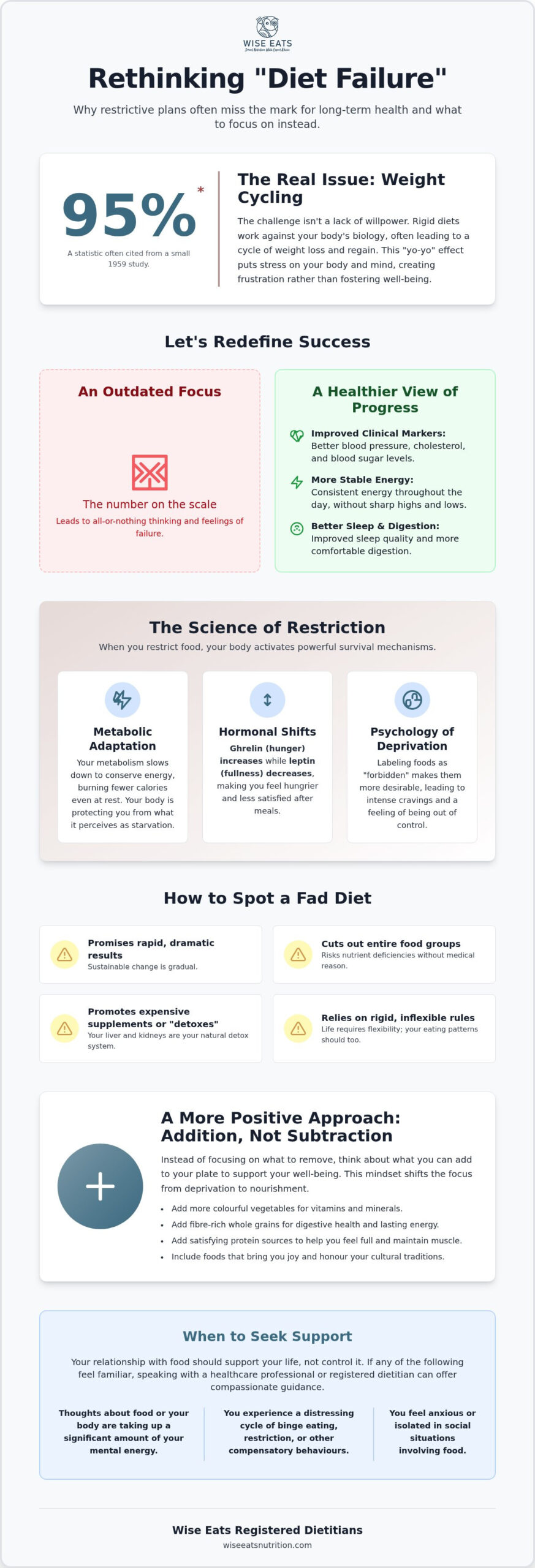
You have likely heard the statistic that 95% of diets fail. This figure often circulates in discussions about weight management, but its origins trace back to a small study from 1959. While the exact number is debated, the core message holds value: restrictive eating plans often do not lead to lasting health changes for many people.
Instead of focusing on a specific percentage, it is more helpful to redefine “diet failure.” The problem is not a lack of willpower or a personal shortcoming. It is often the breakdown of a rigid, unsustainable system that works against the body’s natural biology. This process frequently leads to “weight cycling,” where weight is lost and then regained. This pattern of yo-yo dieting puts stress on the body and mind, creating a cycle of frustration.
Redefining What Success Looks Like
A healthier perspective on success shifts the focus from the number on the scale to overall well-being. Progress is better measured by improvements in clinical markers like blood pressure, cholesterol levels, and blood sugar control. Other positive indicators include having more stable energy throughout the day, better sleep quality, and improved digestion.
The ultimate goal is to build sustainable habits that support your health for years to come. A weight-neutral approach, which prioritizes health-promoting behaviours over weight loss itself, helps improve mental well-being and fosters a more positive relationship with your body.
The Problem with Rigid Definitions
Many diets promote an “all-or-nothing” mindset. You are either perfectly on the plan or you have failed. This rigid thinking creates a cycle of guilt and discourages consistency. If one meal or one day does not go as planned, it feels like the entire effort is ruined.
True success looks different for everyone. For one person, it is managing digestive symptoms from IBS. For another, it is achieving stable blood sugar levels to support diabetes management. Your personal health goals determine what a successful outcome is. Working with a dietitian helps you define what health and success mean for your unique body and life.
The Science of Restriction: Why Your Body Fights Back
When you significantly reduce your food intake, your body initiates a powerful series of biological responses to protect you from perceived starvation. Your metabolism adapts by slowing down to conserve energy, a process known as metabolic adaptation. This means your body becomes more efficient and burns fewer calories, even at rest.
At the same time, your hunger hormones shift. Ghrelin, the hormone that signals hunger, increases, while leptin, the hormone that signals fullness, decreases. This hormonal change makes you feel hungrier and less satisfied after eating. Food preoccupation also intensifies, causing you to think about food more often. These biological responses are powerful survival mechanisms, not flaws in your character.
Metabolic Adaptation: Your Body’s Protective Shield
The common advice to “eat less and move more” is an oversimplification of human biology. Your body works hard to maintain a state of balance, or homeostasis. It has a preferred weight range, sometimes called a “set point,” that it defends. When you lose weight, especially quickly, your body interprets it as a threat and works to return to its familiar range.
Long-term restriction lowers your resting metabolic rate, which is the number of calories your body burns to perform basic functions like breathing and circulating blood. This is a key reason why maintaining weight loss becomes progressively more difficult over time.
The Psychology of “Forbidden” Foods
Labeling foods as “good” or “bad” creates a psychological burden. When a food is off-limits, it becomes more desirable. This sense of deprivation often leads to intense cravings and a feeling of being out of control around those foods. Many people experience the “Last Supper” effect, where they overeat foods they enjoy right before starting a new diet because they believe they will not be allowed to have them again.
Practising food neutrality is essential for building a peaceful relationship with eating. This approach removes moral judgments from food, viewing all foods as part of a balanced and varied pattern. It allows you to eat with awareness and enjoyment, free from guilt.
How to Spot a Fad Diet in the Wild
Learning how to spot a fad diet is a practical skill that protects your physical and mental health. These diets often share common red flags that you can learn to identify. A key warning sign is any plan that requires you to cut out entire food groups, such as carbohydrates or fats, without a medical reason.
Other red flags include promises of rapid, dramatic results, the promotion of expensive and unnecessary supplements, or rigid rules that do not allow for flexibility. These approaches contrast sharply with evidence-based medical nutrition therapy (MNT), which involves personalized, sustainable recommendations from a qualified health professional.
Many fad diets also promote “detoxes” or “cleanses.” For healthy individuals, these are biologically unnecessary. Your liver and kidneys are incredibly efficient at filtering and removing waste products from your body 24 hours a day.
Marketing Hype vs. Evidence-Based Nutrition
Fad diets often rely on persuasive marketing language. Be skeptical of phrases like “miracle cure,” “secret ingredient,” or “unlock your body’s potential.” These are signs of hype, not science. A sustainable lifestyle pattern is built on consistent habits, not a quick fix.
It is important to look for credible evidence and question sensational claims. For example, many popular trends are not supported by strong scientific research. A dietitian helps you look past the marketing and understand what the evidence actually shows. You can learn more by reading our master guide to nutrition myths and marketing.
The Hidden Costs of Unsustainable Plans
The cycle of dieting and perceived failure takes a significant toll on mental health, contributing to anxiety, low self-esteem, and a poor body image. The constant focus on food rules and weight creates stress and diminishes the joy of eating.
From a physical standpoint, highly restrictive protocols lead to nutrient deficiencies. Cutting out food groups risks inadequate intake of essential vitamins, minerals, and fibre. For individuals with existing health concerns like digestive issues, fad diets often complicate symptoms and make management more difficult.
Building a Sustainable Relationship with Food
A more positive and effective approach is to focus on what you can add to your plate, not what you need to subtract. Think about adding more colourful vegetables, fibre-rich whole grains, and satisfying protein sources to your meals. This “addition” mindset promotes nourishment and satisfaction rather than deprivation.
Food is also a source of pleasure and cultural connection. A healthy eating pattern includes foods you genuinely enjoy and honours your traditions. Gentle nutrition is a practice that balances your health needs with your taste preferences. It is about making choices that feel good for your body and your soul.
Flexibility is the cornerstone of a lasting approach. Life happens. There will be social events, holidays, and busy days. A sustainable plan allows you to navigate these situations without feeling like you have “fallen off the wagon.”
The Power of Food Flexibility
A “perfect” diet is not as effective as a “consistent” one. Striving for perfection often leads to burnout. Instead, aim for consistency in your overall eating patterns. This includes integrating your favourite foods in a balanced way, without guilt or shame. A slice of birthday cake or a serving of your favourite pasta fits into a healthy lifestyle.
When you give yourself unconditional permission to eat all foods, the intense cravings and feelings of scarcity often fade. You can eat a food you enjoy, savour it, and move on with your day.
Measuring Progress Beyond the Scale
There are many ways to measure health progress that have nothing to do with your weight. These non-scale victories are powerful indicators of improved well-being.
- More consistent energy levels throughout the day
- Improved sleep quality
- Better digestion and fewer uncomfortable symptoms
- A more positive and less stressful relationship with food
- Increased strength and stamina for daily activities
Focusing on clinical markers, such as improved cholesterol or A1c levels, also provides a more accurate and health-oriented picture of your progress. These measurements reflect positive changes in your body’s internal function.
When to Seek Professional Guidance
When looking for nutrition advice, it is important to understand the difference between regulated and unregulated professionals. In Canada, the title “Registered Dietitian” (RD) is a protected title, meaning an RD must meet specific education and training standards and is accountable to a provincial regulatory body. The title “nutritionist” is not protected in most provinces, so anyone can use it without formal qualifications.
A Registered Dietitian provides personalized medical nutrition therapy to help you manage specific health conditions and build sustainable habits. The dietitians at Wise Eats Nutrition, including Rachel McBryan, RD, from the College of Health and Care Professionals of BC, and Sheirry Poposka, RD, from the Alberta College of Registered Dietitians, are qualified to provide evidence-based care.
The Role of a Registered Dietitian
A Registered Dietitian translates complex nutrition science into practical, real-life advice. They act as a knowledgeable partner, helping you filter through the misinformation and conflicting advice you encounter online and in the media. They work with you to create a personalized plan that fits your lifestyle, preferences, and health goals.
Services like custom meal planning are designed to provide structure and guidance while still allowing for flexibility and enjoyment. A dietitian offers accountability and compassionate support, empowering you to make lasting changes.
When to Seek Specialized Support
Navigating your health journey alone is not always easy. If you experience certain challenges, professional support is especially important. Consider reaching out if you notice any of the following:
- Obsessive or intrusive thoughts about food, weight, or body shape that interfere with your daily life.
- A cycle of restricting food followed by episodes of eating large amounts of food in a way that feels out of control.
- Significant digestive distress, rapid weight changes, or other physical symptoms related to your eating patterns.
You do not have to figure this out on your own. If you’re struggling with a nutrition-related medical condition or an eating problem, a registered dietitian can provide professional support — book a consultation.
Frequently Asked Questions
Is it possible to improve my health without a restrictive diet?
Yes. Focusing on building sustainable habits, such as adding more nutrient-dense foods, honouring your hunger and fullness cues, and finding enjoyable ways to move your body, is a more effective long-term strategy for health than restrictive dieting.
How long does it typically take to see results from lifestyle changes?
The timeline varies for each person. Some people notice improvements in energy and digestion within a few weeks. Changes in clinical markers like blood pressure or cholesterol often take a few months of consistent habits to appear.
What is the “set point” theory and how does it affect me?
The set point theory suggests that your body has a weight range it is biologically programmed to maintain. When you go below this range, your body responds with hormonal and metabolic changes to encourage a return to its set point. This is a protective mechanism, not a personal failure.
Can a Registered Dietitian help if I have a history of chronic dieting?
Absolutely. A dietitian can help you heal your relationship with food, break free from the diet cycle, and learn to trust your body again. They provide a non-judgmental space to explore your eating patterns and develop a more peaceful approach.
Why do I feel so hungry when I start a new diet plan?
When you restrict calories, your body increases the production of ghrelin, the hunger hormone, and decreases leptin, the fullness hormone. This is a biological response designed to drive you to eat and protect you from starvation.
How can I stop the binge-restrict cycle for good?
Stopping the cycle involves moving away from restriction. When you give yourself permission to eat all foods and consistently nourish your body, the intense psychological and physiological pressure to binge often subsides. Working with a dietitian or therapist specializing in eating disorders is highly recommended for support.
This article is for general educational purposes and is not a substitute for individualized medical or nutrition advice. Please speak with a physician, nurse practitioner, pharmacist, or Registered Dietitian for guidance tailored to your specific needs.

Article by
Rachel McBryan, Dietitian
Rachel McBryan is a licenced Dietitian in British Columbia offering comprehensive nutrition counselling as virtual and/or in-person counselling sessions to suit your needs and preferences. With a Bachelor of Science in Nutrition and Food Science, Rachel has over 20 years experience helping people address their health through nutrition. She was awarded Human Nutrition and Food Science BSc.from University of Alberta followed by post-grad course work at UBC in guidance counselling.
An eating disorder is a serious mental health illness.
If you are in immediate distress or crisis, please contact emergency services by dialing 911 or calling Vancouver Island Crisis Line: 1-888-494-3888.
This article is educational information only, not professional diagnosis or treatment. This health education content is heavily AI augmented and parts or all of this article may not have been reviewed yet for accuracy. AI generated content is prone to error.
Please note that we partner with VitaminLab and financially gain if you purchase supplements. You are under no obligation to use VitaminLab products and whether you supplement your diet with VitaminLab or another product of your choice will not impact your nutrition care.