Finding a licensed Health at Every Size (HAES) dietitian (Registered Dietitian) in Canada involves exploring care options across various provinces. This guide breaks down professional credentials, practical frameworks like Intuitive Eating, and practical insurance pathways to help you choose the right weight-neutral professional. Compassionate, personalized guidance toward your specific health objectives is available through Wise Eats Registered Dietitians.
Key Takeaways: A HAES dietitian Canada provides weight-neutral care focusing on health behaviors and body trust rather than the scale to improve metabolic and mental health.
- Skip it when you are in an acute medical crisis requiring immediate clinical stabilization.
- Wise Eats Registered Dietitians are best for individuals seeking to heal their relationship with food.
- Clinical outcomes show improved psychological well-being and blood pressure even when weight remains stable.
Match your situation to weight-inclusive nutrition support
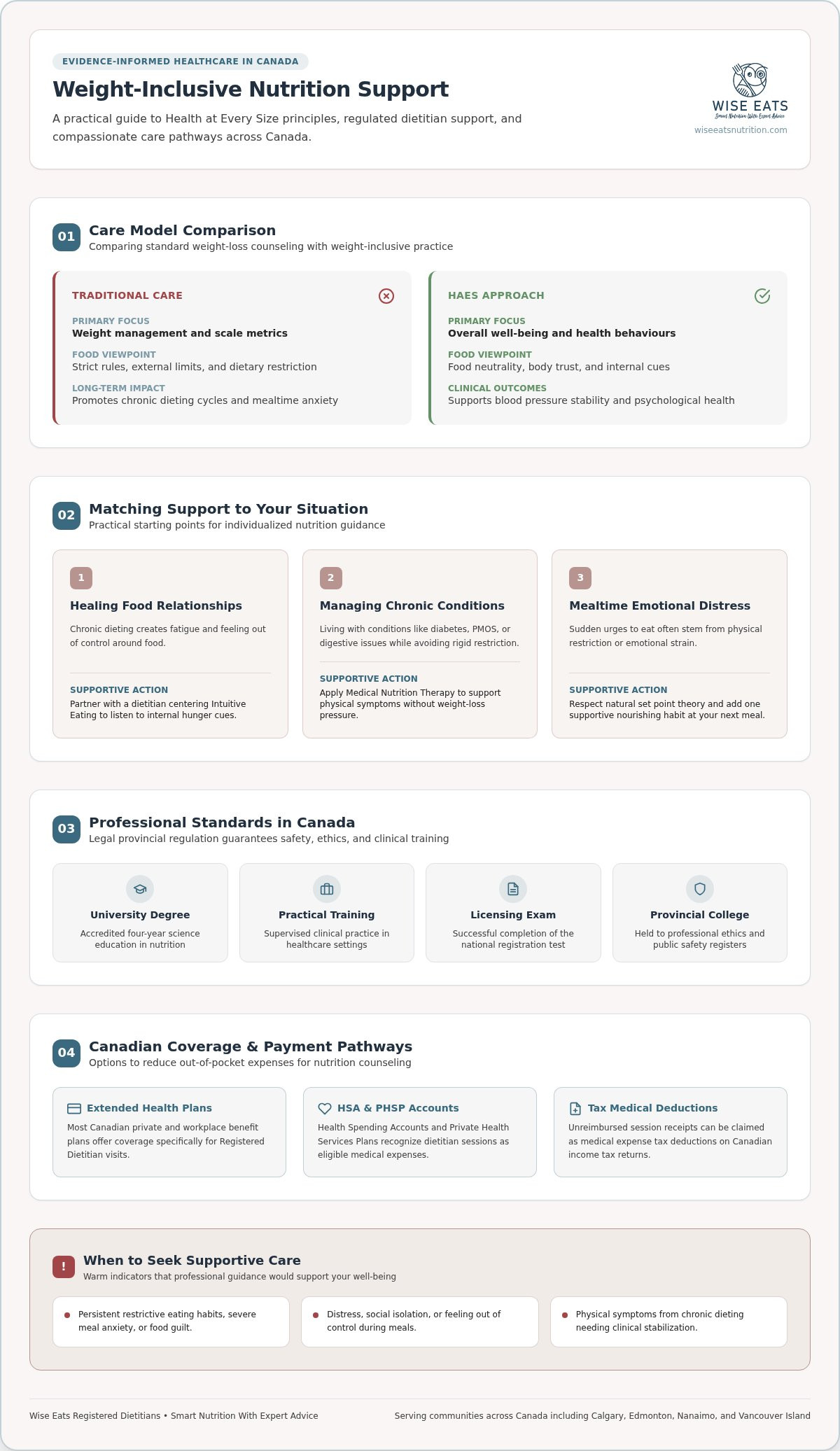
You sit down for dinner, yet guilt takes over your mind, and finding the right path forward feels overwhelming. Matching your needs with a HAES dietitian gives you compassionate, weight-inclusive care. A compassionate HAES overview explains how this support shifts the focus toward body respect.
Here are three typical situations, each with a concrete next step drawn from the care options in this guide:
Scenario 1: Healing your Relationship with food
You feel exhausted by endless rules. Chronic dieting leaves you feeling out of control around meals, so you need gentle guidance to rebuild trust with your body. A non-diet practitioner helps you practice food neutrality and listen to your internal hunger cues without judgment: choose a weight-inclusive registered dietitian who centres Intuitive Eating rather than new food rules.
Scenario 2: Managing chronic conditions
You live with diabetes or digestive issues and still want to avoid restrictive diets. Clinical care must protect your mental health. Seeking eating for health (Medical Nutrition Therapy) lets you manage conditions without making weight loss the primary goal. See also Dietitian for PMOS Canada and Dietitian for Rheumatoid Arthritis Canada. By honouring your personal background, Wise Eats Registered Dietitians deliver customized care and clear nutrition information that cuts through marketing and diet trends. More on this: Dietitian for PMOS Canada. More on this: Dietitian for Rheumatoid Arthritis Canada.
Scenario 3: Coping with emotional distress around meals
Uncontrollable urges to eat often bring shame; those urges frequently signal physical restriction or emotional distress. Compassionate nutrition counseling helps you address root triggers while your natural weight range (set point theory) is respected as your body finds stability. Start by adding one supportive habit at the next meal rather than waiting for a perfect reset.
Weight-inclusive HAES care restores peace where diets create rules
Traditional weight-loss counseling focuses on body size. Health at Every Size care prioritizes health behaviours over scales instead.
A dietitian using this framework works to restore your peace with food. HAES supports body acceptance and non-judgmental nourishment, while traditional diet routines treat weight as the primary health marker.
| Care Model | Primary Focus | Food Viewpoint |
|---|---|---|
| Traditional Care | Weight management | Rules and restrictions |
| HAES Approach | Overall well-being | Food neutrality and body trust |
Many people fear turning recovery into another restrictive cycle, because traditional plans create strict rules. A HAES practitioner guides you toward eating for health through internal cues, which helps protect your natural weight range.
Choosing weight-inclusive care breaks the cycle of chronic restriction. Guidance oriented toward eating disorder recovery without rigid rules helps you build lasting self-care habits. The work asks you to unlearn years of diet culture rather than chase a quick fix, so steady practice matters more than speed.
Regulated dietitian credentials protect you from unsafe advice
Canadian provinces regulate the title of dietitian through legal colleges that protect public safety.
Titles matter. In Canada, anyone can call themselves a "nutritionist" without formal training, clinical practice, or oversight. A registered practitioner must hold a university degree, complete accredited practical training, and pass a national registration exam. That path supports safe eating for health tailored to your history.
Non-accredited health coaches frequently promote rigid diets that can prompt disordered eating habits. A regulated professional is held to professional ethics and evidence-informed care, and is trained to understand complex metabolic conditions alongside weight-inclusive practice.
Always verify your provider’s credentials on their provincial college register before beginning care. Regulation is what makes that safety check possible.
HAES care costs C$105-C$210 per session, and benefits often help
Partnering with a dietitian in Canada is a financial commitment to your future well-being. Fees vary with session length and the complexity of your care. According to current market rates, session fees generally fall within a standard market price band of $105-$210, with a median rate established across Canadian practices.
Picture the common bind: you want specialized support, the session fee feels heavy at first glance, then you map how payment actually works. Private health insurance often reduces what you pay out of pocket. Most Canadian extended health benefits cover nutrition counseling from a credentialed professional. Paying for care directly can also help you bypass lengthy public waitlists. If you hold a Health Spending Account or a Private Health Services Plan, these fees usually qualify as eligible medical expenses, and you can claim unreimbursed costs on your income tax return as medical deductions. Direct billing depends on your specific insurance provider.
Clear fee structures make planning easier. Ask for a personalized quote so you can compare coverage before you book.
When the fee still feels out of reach, check your workplace benefit allotment: unused nutrition coverage is easy to miss and often applies to registered dietitian visits.
Tip: Check if your Extended benefits explicitly cover ‘Registered Dietitian’ services, as private insurance plans in Canada frequently offer reimbursement.
Weight-neutral habits support metabolic and mental health
Clinical evidence shows that shifting away from weight loss as the main target improves health. on health-centred habits supports long-term metabolic health, stabilizes blood sugar, and improves blood pressure. Clinical research shows these benefits can occur even when your body stays at its natural weight range.
Distress after loss of control with food often stems from chronic restriction and diet culture. Practicing eating for health helps interrupt that cycle by returning you to regular, adequate nourishment.
When you practice food neutrality, your Relationship with food can change in measurable ways. Clinical outcomes include improvements in psychological well-being, with lower rates of depression and body dissatisfaction among people who move toward health behaviours instead of weight targets. Consistent nourishing choices support that shift more reliably than pressure to shrink the body.
Wise Eats Registered Dietitians help you build these steady habits across Canada. Focusing on nourishing behaviours rather than scale numbers supports health equity, and individual results still vary with personal medical history.
Stabilize acute medical crises before weight-neutral counseling
Weight-neutral care is not appropriate during acute medical crises that demand immediate clinical stabilization.
Explicit medical mandates or severe hospital admissions sometimes require temporary, highly structured clinical interventions. In emergency care, managing sudden physiological instability takes priority over long-term behavioural goals: secure medical stability first, then return to longer-term food peace work.
A dietitian must prioritize immediate physical safety when life-threatening complications arise. Specialized eating for health provides critical clinical oversight during those acute phases. Weight-neutral frameworks fit long-term recovery; active medical crises call for emergency protocols.
Your current health status drives the pathway. Acute medical crises require immediate clinical stabilization in a hospital setting. Stable individuals seeking long-term healing benefit from weight-inclusive approaches. Direct medical intervention protects your immediate safety so you can explore non-diet care later; it does not mean you abandon food neutrality forever.
Four steps to book and prepare for your first visit
You can move toward food freedom by booking an initial appointment online with a dietitian. Once you begin, you receive nutrition guidance grounded in professional training rather than food myths. Please note that the contact form contains system markup limitations that require viewing full health details on dedicated service pages.
Follow these four steps to prepare:
- Schedule your visit: Select a time online that fits your daily routine.
- Share your history: Complete pre-session forms regarding your Relationship with food and medical background.
- Discuss your goals: Explore compassionate strategies focusing on Medical Nutrition Therapy (eating for health) during your first session.
- Build your framework: Collaborate on a non-diet plan designed to support your natural weight range.
Booking early brings clarity and shifts attention from rigid rules toward sustainable nourishment. Intake forms are brief and designed around your comfort, so you do not need a large reserve of energy to take the first step.
Details and enquiries: Wise Eats Registered Dietitians.
Frequently asked questions
What is the HAES approach used by the dietitians?
The HAES framework prioritizes body respect, food neutrality, and health behaviours over weight manipulation. who uses this approach helps you focus on adding nourishing habits rather than restricting foods.
What qualifications do the dietitians have?
Dietitians are regulated health professionals who hold university degrees in human nutrition and completed supervised clinical training. They provide evidence-based care and nutrition information grounded in professional standards rather than marketing claims.
Can I improve health without dieting?
You can support your physical well-being through health-promoting behaviours without focusing on weight loss. Adopting a non-diet perspective allows you to practice eating for health by listening to internal body cues. This shift helps your body settle near its natural weight range without strict food rules.
Why do I have intense sugar cravings?
Sugar cravings usually stem from physical hunger caused by under-eating or restrictive meal patterns. Your body demands quick energy when it lacks sufficient fuel throughout the day. Restricting carbohydrates often amplifies these intense urges.
What should I do after a binge eating episode?
Offer yourself compassion and avoid the impulse to restrict food or over-exercise immediately afterward. Return to normal meal patterns at the very next opportunity to restore your body’s energy balance. Standard market rates for specialized private nutrition counseling in Canada generally span from C$105 to C$210 per hour based on recent professional listings, though personalized fee structures vary by provider.
Choose credentials, coverage, and weight-neutral fit, then book
You deserve compassionate nutrition care in 2026. A HAES dietitian available Canada-wide can offer virtual support while you heal your Relationship with food, using the same decision points this guide covers: regulated credentials, weight-inclusive frameworks such as Intuitive Eating, and practical insurance pathways.
Wise Eats Registered Dietitians deliver evidence-based eating for health tailored to your needs. This care focuses on adding nourishing habits rather than restricting your daily meals.
Book a discovery call with a dietitian to discuss your goals and confirm whether weight-neutral care fits your current health status.
Article by
Rachel McBryan, Dietitian
Rachel McBryan is a licenced Dietitian in British Columbia offering comprehensive nutrition counselling as virtual and/or in-person counselling sessions to suit your needs and preferences. With a Bachelor of Science in Nutrition and Food Science, Rachel has over 20 years experience helping people address their health through nutrition. She was awarded Human Nutrition and Food Science BSc.from University of Alberta followed by post-grad course work at UBC in guidance counselling.
An eating disorder is a serious mental health illness.
If you are in immediate distress or crisis, please contact emergency services by dialing 911 or calling Vancouver Island Crisis Line: 1-888-494-3888.