You stand in your kitchen with a fridge full of food, yet the thought of picking a recipe feels overwhelming. Traditional advice often tells you to meal prep on Sundays or follow a strict plan, but these rules often ignore how your brain works. If sensory textures or executive function burnout make eating feel difficult, you deserve a different approach. Neurodivergent-friendly nutrition counselling: what makes care easier to access is the shift from fixing your habits to building systems supporting your energy.
Finding a way to stay nourished should not feel like another source of shame. We believe nutrition care should adapt to you, whether you struggle with impulsive eating or forgetting to eat until you feel shaky. This article explores how inclusive support in Calgary and Edmonton provides practical tools helping you feel better. You will learn about flexible systems like EatLove and custom supplement options through VitaminLab. We look at how working with a Registered Dietitian who understands ADHD or Autism creates a non-judgmental space for your health.
Key Takeaways
- Understand why standard meal plans often fail neurodivergent brains and ways to reduce decision fatigue during meal times.
- Learn how sensory processing and interoception affect your hunger signals and food choices.
- Explore Neurodivergent-friendly nutrition counselling: what makes care easier to access through virtual appointments and flexible scheduling.
- Find a Registered Dietitian in Alberta or BC who uses weight-inclusive and neuro-affirming methods.
- Use systems like EatLove and VitaminLab to provide support fitting your unique energy levels.
Why traditional nutrition advice fails neurodivergent people
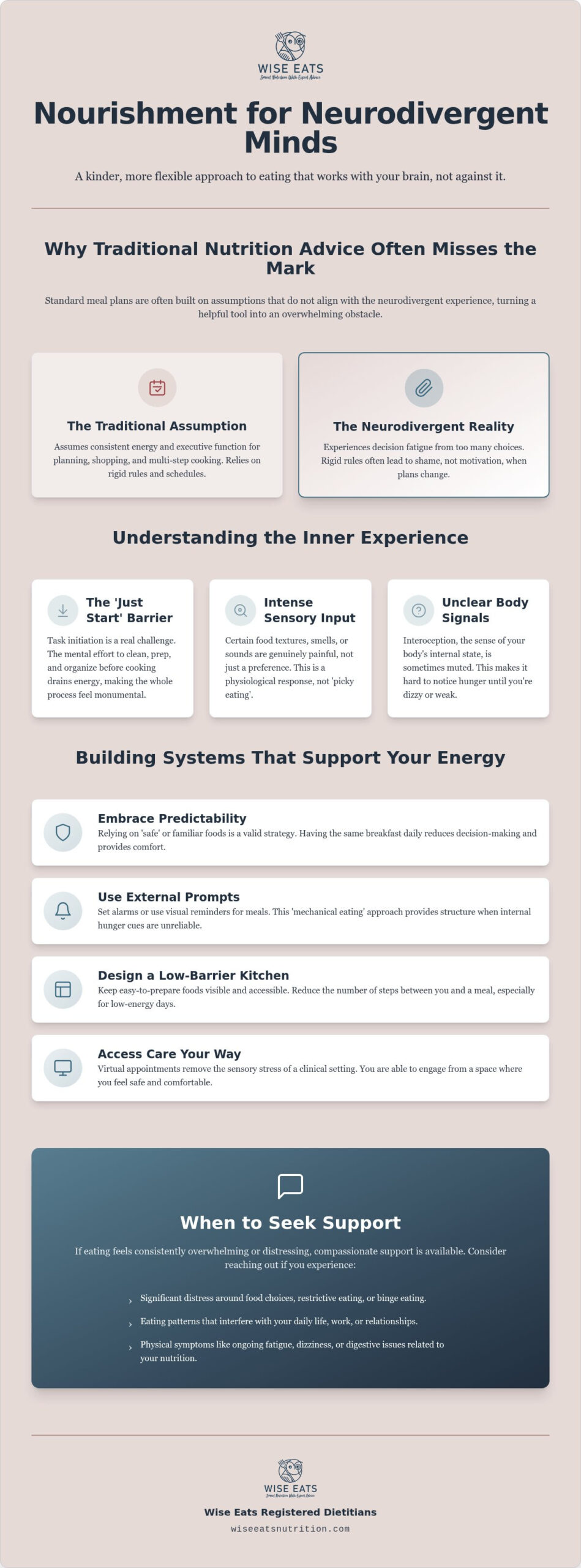
Picture a standard meal plan: a neatly organized weekly grid with colour-coded meals, a grocery list sorted by aisle, and prep instructions for each evening. For many people, this looks like a helpful tool. For a brain managing ADHD, Autism, or sensory processing differences, it can feel like an obstacle course before you’ve even opened the fridge.
Standard nutrition advice is built around the assumption that planning, initiating tasks, and following multi-step routines feel roughly the same for everyone. They don’t. When executive function is part of the picture, even a “simple” Tuesday dinner requires a chain of decisions, each one drawing from a limited daily energy reserve. By the time you’ve thought through what to make, checked what’s in the pantry, and figured out the steps, the appeal of eating anything at all has often disappeared.
Rigid food rules add another layer of difficulty. When eating plans come with strict categories of “allowed” and “off-limits” foods, a single impulsive choice or a skipped meal prep session can spiral into shame. That shame rarely motivates change. It tends to make the next meal harder, not easier. Neurodivergent-friendly nutrition counselling: what makes care easier to access starts with removing that shame from the equation entirely.
Executive function and the kitchen
Starting to cook involves far more than turning on the stove. Task initiation, the ability to begin an action even when you know how to do it, is a genuine executive function challenge. Cleaning up before you can cook, remembering to defrost something, and managing a grocery trip are each their own significant mental effort. Inclusive care builds systems that reduce the number of active decisions you face at once, so that eating becomes less of a project and more of a default.
The impact of impulsivity and hyperfocus
Hyperfocus is real and it’s common. You get absorbed in something meaningful, and hours pass without a single hunger cue breaking through. Then, when you do stop, you’re running on empty and reaching for whatever requires the least effort. Those impulsive food choices often provide immediate sensory relief, which makes complete sense given how Sensory Processing Disorder affects the way taste, smell, and texture are experienced. A Registered Dietitian who understands these patterns helps you build practical reminders and low-barrier options that work with your natural rhythm, not against it.
The goal of neurodivergent-friendly nutrition counselling is not to overhaul your habits overnight. It’s to build a smaller, more manageable set of choices that your brain can actually follow through on, even on the hardest days.
Sensory experiences and interoception in eating
Eating is a full sensory experience. For some, the crunch of a cracker or the smell of steamed broccoli feels painful. These reactions are not picky eating or a lack of willpower. They are physiological responses. Sensory processing differences mean your brain interprets input with high intensity. Neurodivergent-friendly nutrition counselling: what makes care easier to access involves acknowledging these physical realities without judgment. Care providers look at the way your environment and the food itself interact with your nervous system.
Interoception is your sense of the internal state of your body. It tells you when your heart is racing or when your bladder is full. It also signals hunger and fullness. Many neurodivergent people experience these signals as muted or overwhelmingly loud. When signals are muted, you might not notice you need food until you feel weak or dizzy. When they are loud, the feeling of a half-full stomach might feel distressing. Recognizing these patterns helps you understand why traditional advice to listen to your body feels confusing.
Understanding sensory food aversions
Adult selective eating is a legitimate response to sensory input. Respecting food sameness provides predictability when other parts of life feel chaotic. Having the same breakfast every morning reduces the mental load of making decisions. Nutrition care focuses on meeting your needs through safe foods rather than forcing new textures. No-pressure exploration allows you to stay in control of your environment. You are able to find ways to add variety without triggering a fight-or-flight response.
Building awareness of hunger cues
External prompts provide a safety net when internal signals are hard to notice. Setting phone alarms or using visual reminders helps maintain consistent nourishment. This approach, often called mechanical eating, provides a framework for regular meals. It is helpful for managing appetite changes from medications. Consistent eating helps stabilize energy levels throughout the day. If you want to discuss these strategies with a professional, you are able to book an appointment online to find a path forward.
What makes nutrition care easier to access
Traditional clinics often present hidden barriers. Fluorescent lights, ticking clocks, and travel stress drain your energy before the appointment even starts. Neurodivergent-friendly nutrition counselling: what makes care easier to access involves removing these physical and mental hurdles. Virtual care changes the dynamic. You meet from your sofa. You wear comfortable clothes. You have fidget tools nearby. This environment lets you focus on the conversation instead of managing sensory input. It turns a clinical visit into a supportive chat in a space you control.
Access also means changing how we talk. Communication options like text or email reduce the anxiety often linked to phone calls. Many people find voice calls draining or difficult to track. Written messages allow you to process information at your own pace and refer back to it later. Flexible scheduling accommodates days when your energy is low or burnout feels heavy. Collaboration with your existing care team ensures everyone stays on the same page. Your dietitian works alongside your therapist or doctor to provide cohesive support fitting your lifestyle. This teamwork reduces the need for you to repeat your story to multiple professionals. Neurodivergent-friendly nutrition counselling: what makes care easier to access is about creating a network of support surrounding you.
The benefits of virtual nutrition visits
Telehealth removes the sensory overwhelm of travelling to a clinic. You avoid traffic, parking, and crowded waiting rooms. These visits also offer a practical advantage. You show your dietitian your actual kitchen and food tools. Seeing your pantry helps us suggest changes fitting your life. Appointments in Alberta and BC are accessible from your own home. This level of comfort makes it easier to stay consistent with your goals. You are able to focus on building systems instead of surviving the commute.
Flexibility in meal planning tools
Executive function support often requires better tools than a simple PDF list. Systems like EatLove provide nutrition prescriptions adapting to your preferences. If you have a low-energy day, the system helps find a simple option. Grocery list automation reduces the mental load of shopping. You spend less time wandering aisles and more time feeling nourished. Working with a dietitian provides the guidance needed to set up these systems. These digital tools act as an external brain, holding the details so you don’t have to. This approach makes care easier to access because it meets you at your energy level today. It turns the complex task of feeding yourself into a series of manageable steps.
Finding the right support in Alberta and BC
Finding a professional who understands your brain requires looking beyond a generic search. In Canada, Registered Dietitians follow strict provincial regulations to ensure you receive safe, evidence-informed care. You deserve a provider using a weight-inclusive and neuro-affirming approach. This approach focuses on your well-being instead of a number on a scale. Neurodivergent-friendly nutrition counselling: what makes care easier to access involves finding someone who treats your sensory needs as a priority.
Rachel McBryan, RD, is registered with the College of Health and Care Professionals of BC. Sheirry Poposka, RD, is registered with the Alberta College of Registered Dietitians. These titles mean these professionals meet high standards of practice and ethics. Choosing a registered professional protects you as a client. It ensures your dietitian remains accountable to a governing body. In Alberta and BC, the title Registered Dietitian is protected by law. This protection ensures only qualified individuals provide medical nutrition therapy.
Rachel McBryan, RD, works within the BC framework to support clients with diverse needs. Sheirry Poposka, RD, provides similar expertise within the Alberta college standards. Both professionals understand the intersection of neurodivergence and nutrition. They provide a reassuring presence helping you find clarity in a confusing field. Neurodivergent-friendly nutrition counselling: what makes care easier to access starts with trusting the expertise of your guide. The same inclusive philosophy extends to gender-affirming nutrition counselling: what clients can expect when working with a registered dietitian who respects your full identity.
Questions to ask a potential dietitian
Finding a good fit involves asking specific questions during your first meeting. You are able to ask how they handle sensory food aversions or their experience with executive function support. Confirm they follow evidence-based guidelines from sources like Diabetes Canada. Inquire about their use of flexible tools. You are able to ask if they use systems like EatLove for meal planning. A neuro-affirming dietitian recognizes some textures or smells feel painful. They will not push you toward foods triggering sensory distress.
A knowledgeable partner will explain their methodology with a steady, calming pace. They will help you find systems fitting your energy levels. This personalized approach makes abstract goals feel tangible and accessible. You are able to move forward with a plan designed for your unique brain.
When to seek help
Sometimes, nutrition challenges require more immediate attention. Seek professional support if you experience frequent restrictive eating or isolation around food. Contact your care team if physical symptoms like extreme fatigue or dizziness occur. Support is available if you find yourself struggling with compensatory behaviours. These red flags suggest your current system needs adjustment to keep you safe. Working with a registered professional provides a safety net during these times.
Personalized nutrition strategies at Wise Eats
Feeding yourself well is hard enough without a support system built around how your brain actually works. At Wise Eats, the approach starts from a different place entirely. Instead of handing you a rigid template and wishing you luck, the team builds around your specific energy levels, sensory needs, and daily realities. Whether you’re working through digestive health challenges or finding your footing in eating disorder recovery, care here is grounded in compassion rather than correction.
Neurodivergent-friendly nutrition counselling: what makes care easier to access is the combination of practical tools and a care team that genuinely understands the overlap between brain differences and food. Wise Eats brings together registered dietitians, flexible digital systems, and personalized supplement options to reduce the friction between you and consistent nourishment. You don’t need to have everything figured out before your first appointment. That’s what the appointment is for.
For a deeper look at how medical nutrition therapy works in practice, the Medical Nutrition Therapy Master Guide offers a thorough, evidence-informed overview of what this kind of care involves in the Canadian context.
Customized tools for your brain
EatLove works as an external planning system, holding the structure so your brain doesn’t have to. It builds a flexible approach to eating that adapts when your energy dips or your schedule shifts, without the guilt that comes with “falling off” a strict plan. There are no rigid rules to break. There are simply options that fit today.
Supplement needs are equally personal. Through VitaminLab, Wise Eats offers precision formulas replacing the guesswork of managing multiple bottles. A registered dietitian reviews your nutritional needs and works with you to identify gaps, whether that relates to energy, mood support, or digestive function. You get a single, tailored formula rather than a shelf full of products you’re unsure about. Details on this service are available on the supplements page.
Speaking with a registered dietitian ties these tools together. They help you develop a balanced, flexible approach to eating that accounts for your sensory preferences, medication effects on appetite, and the realities of low-executive-function days.
Start your nutrition journey today
Booking a consultation is a straightforward first step toward clearer nutrition goals. Wise Eats supports residents across Vancouver Island and Alberta, with virtual appointments removing the need to travel. Whether you’re in Calgary, Edmonton, or a smaller community, professional support is within reach.
Neurodivergent-friendly nutrition counselling: what makes care easier to access becomes clear when you see the full picture: registered professionals, flexible tools, and a team that meets you where you are. Visit the Meet Our Team page to learn more about who you’d be working with and take the first step toward feeling more at ease with food.
Build a system fitting your unique brain
Nourishing your body shouldn’t feel like a constant battle against your own biology. By shifting from rigid rules to flexible systems, you create space for health without the burden of shame. You’ve seen how sensory awareness and executive function support transform the way eating feels. Neurodivergent-friendly nutrition counselling: what makes care easier to access is the bridge between clinical expertise and your daily life. Rachel McBryan, RD, with the College of Health and Care Professionals of BC, and Sheirry Poposka, RD, with the Alberta College of Registered Dietitians, provide evidence-based care for digestive health and eating disorder recovery. Their expertise ensures your plan remains safe and grounded in science.
If you struggle with a nutrition-related medical condition or an eating problem, a registered dietitian provides professional support. These experts help you build routines which respect your energy levels and sensory needs. You are able to move forward with a knowledgeable partner who understands your challenges. Taking this step brings you closer to a life in which food feels simple and supportive.
You deserve a path to wellness acknowledging your strengths and providing practical solutions for your struggles. Clarity is within reach.
Frequently Asked Questions
What is neurodivergent-affirming nutrition counselling?
Neurodivergent-affirming nutrition counselling is care designed around how your brain actually works, rather than expecting you to adapt to a standard clinical approach. It acknowledges that executive function challenges, sensory differences, and interoception variation are real barriers to consistent eating. A registered dietitian using this approach builds flexible systems, removes shame from the conversation, and focuses on practical strategies that fit your actual daily capacity, not an idealized version of it.
How does ADHD affect my ability to eat a balanced diet?
ADHD affects eating in several concrete ways. Hyperfocus episodes cause people to skip meals for hours, then reach for whatever requires the least effort when they finally stop. Task initiation difficulties make cooking feel like an insurmountable project on harder days. Medication timing also influences appetite, sometimes suppressing hunger during the day and increasing it in the evening. A registered dietitian familiar with these patterns helps you build low-barrier eating strategies that account for all of this.
Will a dietitian make me eat foods that I have sensory issues with?
No. A neuro-affirming registered dietitian treats sensory food aversions as legitimate physiological responses, not habits to overcome through willpower. The goal is meeting your nutritional needs through foods that already feel safe and acceptable to you. Neurodivergent-friendly nutrition counselling focuses on what makes care easier to access, and that includes never pressuring you toward textures, smells, or temperatures that trigger distress. Exploration of new foods, if ever relevant, happens at your pace and entirely on your terms.
Are dietitian services covered by insurance in British Columbia and Alberta?
Coverage varies depending on your specific plan. Many extended health benefit plans in BC and Alberta include registered dietitian services, though the amount covered and the number of sessions differ by provider. It’s worth contacting your insurance company directly to confirm your coverage details before booking. Wise Eats works with clients across both provinces, so asking your insurer specifically about registered dietitian coverage, rather than general nutrition services, tends to produce a clearer answer.
How does virtual nutrition counselling work for neurodivergent adults?
Virtual appointments happen through a secure video platform, meaning you connect from your own home in whatever environment feels comfortable. You can have fidget tools nearby, wear comfortable clothing, and avoid the sensory demands of travel and waiting rooms. Your dietitian is able to view your actual kitchen setup and pantry if that’s helpful, which makes suggestions more practical and grounded in your real life. Scheduling is flexible, and written follow-up options are available for those who find voice calls difficult to process.
Can a dietitian help with ARFID or selective eating?
Yes. Avoidant or restrictive food intake patterns are a recognized area where registered dietitian support is appropriate. At Wise Eats, the approach to selective eating is non-pressured and grounded in your safe foods first. The focus is on ensuring your nutritional needs are met without triggering distress. In some cases, a dietitian works alongside other members of your care team, such as a therapist or physician, to provide coordinated support. No single approach works for everyone, so care is tailored to your specific situation.
What is the difference between a dietitian and a nutritionist in Canada?
In Canada, the title Registered Dietitian is legally protected in most provinces, including BC and Alberta. To use it, a professional must meet specific educational requirements, pass a national registration exam, and maintain standing with their provincial regulatory college. The title nutritionist is not protected in the same way across all provinces, meaning the qualifications of people using it vary widely. Rachel McBryan, RD, is registered with the College of Health and Care Professionals of BC, and Sheirry Poposka, RD, is registered with the Alberta College of Registered Dietitians.
How do I prepare for my first neuroinclusive nutrition appointment?
There’s no need to overhaul your eating before you arrive. Coming as you are gives your dietitian an accurate picture of where you’re starting from. If it feels manageable, you might jot down a few notes about your typical eating patterns, any foods that feel safe or difficult, and what you’d most like support with. If writing feels like too much, that’s completely fine too. The first appointment is a conversation, not an assessment you need to pass.
Article by
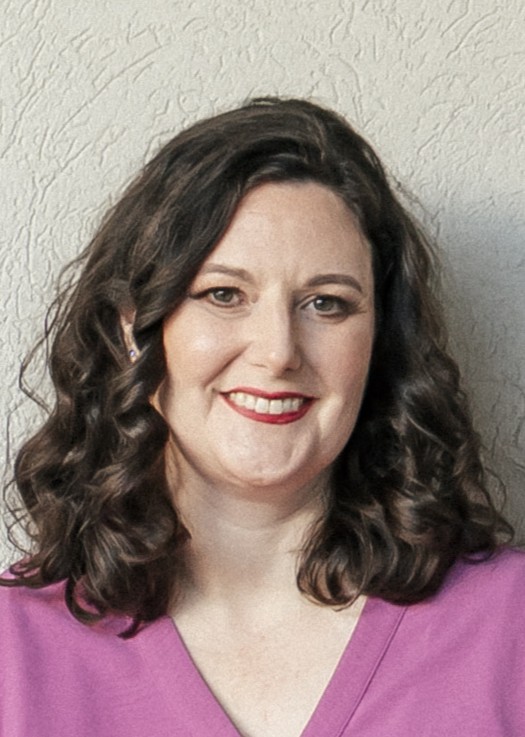
Rachel McBryan, Dietitian
Rachel McBryan is a licenced Dietitian in British Columbia offering comprehensive nutrition counselling as virtual and/or in-person counselling sessions to suit your needs and preferences. With a Bachelor of Science in Nutrition and Food Science, Rachel has over 20 years experience helping people address their health through nutrition. She was awarded Human Nutrition and Food Science BSc.from University of Alberta followed by post-grad course work at UBC in guidance counselling.
An eating disorder is a serious mental health illness.
If you are in immediate distress or crisis, please contact emergency services by dialing 911 or calling Vancouver Island Crisis Line: 1-888-494-3888.