none
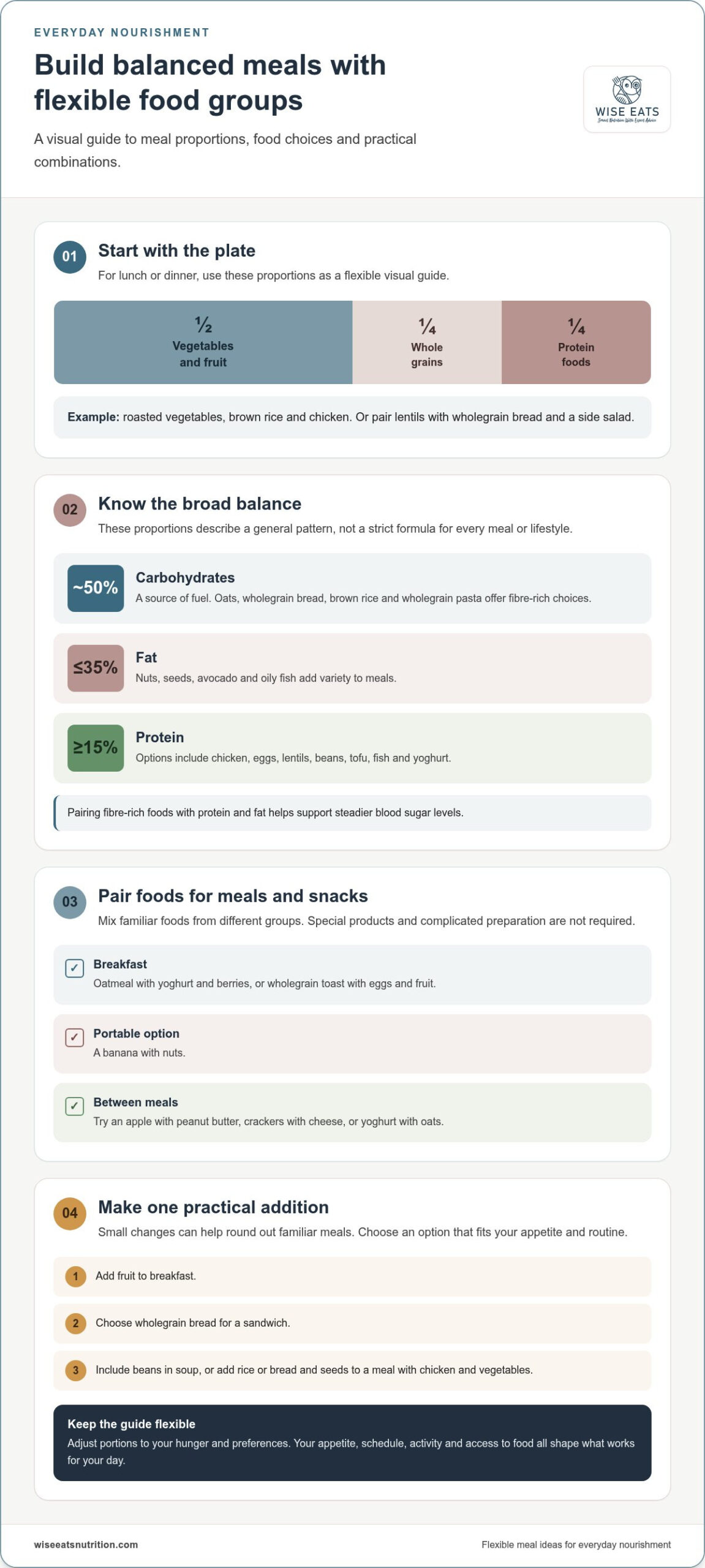
A nutrition plan for better energy pairs fibre-rich carbohydrates with protein and fats at regular meals, alongside fluids throughout the day. For lunch or dinner, try filling half your plate with vegetables and fruit, one-quarter with whole grains and one-quarter with protein foods.
When your energy dips, coffee or a sweet snack can seem like the quickest fix. It’s understandable to reach for something familiar when concentration fades or a meal is delayed. Meal timing, food choices and hydration can all affect how steady your energy feels, so aim for a routine that fits your appetite, schedule and preferences.
This guide explains how to build balanced meals, choose foods that support everyday nourishment and make hydration part of your routine. It also covers common pitfalls, such as relying on sugary snacks for a lift, and practical adjustments that don’t require strict food rules. Examples show how these ideas might fit into an ordinary day.
Key Takeaways
- Build meals with whole grains, protein foods, and vegetables or fruit to support a steadier eating routine.
- Keep water within reach and pay attention to thirst, activity, and your daily routine.
- Choose practical snacks, such as fruit with nuts, when you need something between meals.
- Notice how relying on sugary drinks or snacks affects your energy and focus.
- If fatigue persists or affects daily life, speak with your care team about possible causes and next steps.
1. Balancing carbohydrates, protein and fat
A balanced eating pattern includes carbohydrates, protein and fat, with each playing a different role. One general guide suggests carbohydrates make up around 50% of a healthy balanced diet, fat no more than 35%, and protein at least 15%. These proportions offer a broad starting point, not a strict formula for every meal or lifestyle.
Carbohydrates provide fuel, and high-fibre choices such as oats, wholegrain bread, brown rice and wholegrain pasta offer more fibre than refined versions. Protein foods include chicken, eggs, lentils, beans, tofu, fish and yoghurt. Fats from foods such as nuts, seeds, avocado and oily fish add variety to meals. Combining these foods with fibre helps support steadier blood sugar levels.
The balanced plate method offers a visual guide for planning lunch or dinner: fill half your plate with vegetables and fruit, one-quarter with whole grains and one-quarter with protein foods. For example, serve roasted vegetables with brown rice and chicken, or pair lentils with wholegrain bread and a side salad. Treat these proportions as a flexible guide, not a test.
Breakfasts that pair carbohydrates with protein and fibre may help you feel satisfied through the morning. Try oatmeal with yoghurt and berries, or wholegrain toast with eggs and fruit. For a portable option, have a banana with nuts. These combinations include different food groups without requiring special products or complicated preparation.
If there’s a long gap between meals, a snack can use the same simple approach. Try an apple with peanut butter, crackers with cheese, or yoghurt with oats. Some people find smaller meals and snacks every few hours helpful when managing perceived fatigue. Your appetite, schedule, activity and access to food all shape what timing is practical.
Start with one manageable change: add fruit to breakfast, choose wholegrain bread for a sandwich, or include beans in soup. If a meal already has chicken and vegetables, add rice or bread for carbohydrates and seeds for fat. These additions help round out meals without labelling foods or removing familiar choices.
Planning meals around your routine also matters. Prepare oats the night before, keep nuts or fruit ready for a busy morning, or cook extra rice for lunch. For more structure, meal-planning examples show how meal components fit together. Use the plate method as a starting point and adjust portions to your hunger and preferences.
2. Hydration
Hydration supports normal body functions, including attention and physical performance. Low fluid intake may be associated with dry mouth, headache or difficulty focusing, but these signs can have other causes. Consider them alongside meals, sleep and activity. If your concentration fades during the workday, pause for water and think about when you last ate or rested.
Instead of aiming for one daily amount, build drinking into your routine. Have water with breakfast, refill a bottle before leaving home, and keep it beside your workspace. Soup, yoghurt, oranges, berries, cucumbers and leafy vegetables also contain water. Including them with meals adds variety and fluids, as well as vitamins and minerals.
Exercise can change your fluid needs. Bring water on a walk, keep it near your exercise mat, and drink before and after activity according to thirst and comfort. During a longer workout, take small sips regularly rather than waiting until you feel parched. Hot weather, heavy sweating and an active shift can also affect how often you want a drink.
Hydration can influence how you feel and function. Low fluid intake may affect focus or make physical activity feel harder. Before reaching for another coffee or sweet drink during an afternoon slump, try water and consider whether hunger, fatigue or a need for rest also plays a part. Water supports fluid balance, but it does not replace food or provide fuel.
Make drinking easier by linking it to habits already in your day. Pour a glass while preparing lunch, take a drink after returning from errands, or keep a bottle beside your work bag. If plain water doesn’t appeal, try sparkling water or add lemon. A visible bottle can serve as a reminder, while thirst and comfort still guide your choices.
Digestive symptoms can disrupt eating and drinking routines. If nausea, diarrhoea or other digestive concerns make fluids difficult, note what you experience and discuss it with your care team. A Registered Dietitian providing digestive health nutrition can review your food and fluid habits as part of your support. Advice should reflect your symptoms, preferences and usual routine.
For personalized support with food and fluid habits, book a dietitian appointment.
3. What foods are good for fatigue?
No single food addresses every cause of fatigue. Regular meals that include grains, protein foods, vegetables or fruit provide nourishment throughout the day. For example, try lentil soup with bread at lunch and notice how your energy feels during the afternoon. Food choices matter, but ongoing tiredness deserves attention beyond eating habits.
Vitamin B12 deficiency can contribute to low energy and fatigue during exercise. Low iron also appears among health concerns linked with persistent tiredness. Fatigue alone does not identify a deficiency. Include sources such as eggs, dairy, fish, meat or fortified foods for B12, and lentils, beans, tofu or meat for iron.
A varied eating pattern supports your intake of vitamins and minerals. Add fortified cereal to breakfast or include beans in a grain bowl. Avoid starting supplements based on tiredness alone. A health professional can assess your symptoms and discuss whether further evaluation or a review of supplements is appropriate.
The NHS recommends regular meals and healthy snacks every 3 to 4 hours to help improve tiredness and fatigue. Pack yoghurt and fruit for a long stretch between meals. If your schedule changes, keep an easy option nearby, such as a sandwich or trail mix. Pair regular eating with Hydration, since low fluid intake can affect concentration and physical performance.
Sleep also shapes how you feel during the day. Adults not sleeping 7 to 9 hours each night can start by addressing sleep, according to the guidance summarized for this topic. Set a consistent bedtime, dim screens before bed, and keep a simple sleep note. Record bedtime, wake time and daytime tiredness to spot patterns for discussion with your care team.
When to Seek Help
Talk with your doctor or care team if fatigue persists, disrupts daily activities or comes with other physical symptoms. Persistent fatigue can be associated with concerns such as low iron, thyroid issues, diabetes, sleep apnea, chronic stress, medication side effects or other health conditions. A clinician can consider these factors and guide next steps. Notes about sleep, meals, hydration and symptoms can help you describe what you’ve noticed.
- Fatigue continues or interferes with work, school or daily activities.
- Tiredness comes with other physical symptoms or a noticeable change in how you feel.
- Eating becomes difficult or your food choices narrow because of distress or fear.
Nutrition changes can support routine care, but they don’t replace assessment of ongoing fatigue. Sharing details such as skipped meals, low appetite or changes in sleep gives your care team more context for deciding next steps.
4. What foods give you instant energy?
No food guarantees an instant, lasting change in energy. If hunger is behind an afternoon dip, a snack with carbohydrates and protein can provide practical nourishment. Try wholegrain crackers with cheese or fruit with yoghurt. These options offer more than a quick sweet taste and fit easily into a workday or commute.
Sugary drinks, pastries and candy provide quick-digesting carbohydrates. Some people notice their energy fades soon after, especially when these foods replace a meal. You don’t need to avoid them completely. If they’re your usual afternoon choice, have a more filling snack or meal alongside them and notice how you feel.
Make gradual changes rather than removing several familiar foods at once. Replace one sweet drink with water, or add fruit and nuts to a snack break. If packaged snacks are part of your routine, pair them with a food containing fibre or protein. These small additions bring variety without turning eating into a list of strict rules.
Convenience foods, including highly processed options, are part of many meals and snacks, and they can have a place in your routine. Add vegetables or beans to instant soup, or serve a packaged meal with fruit. These simple additions bring variety to your plate. Focus on what you’d like to add rather than treating familiar foods as a problem.
Magnesium-rich foods include spinach, nuts, seeds, fish and whole grains. Calcium sources include milk, fortified plant beverages and canned salmon with bones. Add spinach to pasta or seeds to cereal to include these foods in everyday meals. Taking extra amounts of individual nutrients may not improve energy.
Caffeine may offer a short-term lift in alertness for some people, but timing matters. Coffee later in the day can interfere with sleep, particularly for people sensitive to caffeine. Notice whether afternoon coffee affects your sleep or next-day energy. If it does, try having it earlier or choosing a caffeine-free drink later.
Sports drinks contain vitamins, minerals and electrolytes, but they don’t provide extra energy for ordinary daily activities. For desk work or errands, water and regular meals suit routine needs. During an afternoon slump, pause to consider whether you need food, fluid or rest before reaching for another sweet drink.
If tiredness continues despite changes to your routine, discuss it with your care team. Low iron, thyroid issues, diabetes, medication effects and other health concerns can contribute to persistent fatigue. Food choices support daily nourishment, but ongoing fatigue deserves attention beyond snack selection.
5. Nutritional pitfalls that may affect energy
Energy dips often reflect a pattern rather than one specific food. Skipping lunch, drinking little water, then relying on coffee and a sweet snack can leave your routine uneven. Track your meals, drinks and energy for a few days. Look for practical patterns, such as feeling tired in the afternoon after a long gap between meals.
Large amounts of refined sugar and white starches provide quick fuel, but the effect may fade. If a sweet drink is your usual afternoon choice, add water and a snack with fruit, nuts or whole grains. You don’t need to remove familiar foods. Try adding something filling first, then notice how your energy feels.
Energy bars and sports drinks don’t suit every situation. An Ohio State University study reported that typical energy bars were no better than candy bars for sustained energy. The vitamins, minerals and electrolytes in sports drinks don’t add energy during ordinary daily activities. For a desk day, try a banana and water instead of treating a sports drink as necessary fuel.
More vitamins or minerals don’t automatically mean more energy. Taking extra amounts of individual nutrients does not provide extra energy, and supplements aren’t a substitute for regular meals. If you suspect a nutrient gap, discuss your symptoms and current supplement intake with your care team before adding products.
Coffee habits matter, too. Several cups late in the day can interfere with sleep, particularly for people sensitive to caffeine. Notice whether afternoon coffee affects your bedtime or next morning. If it does, try moving it earlier or choosing a caffeine-free drink later. Keep the adjustment manageable rather than setting a strict rule.
Hydration, meal timing and food variety work together. If you often forget to drink, keep a glass beside your lunch. If meetings push meals later, pack fruit with nuts or wholegrain crackers. These small steps address common gaps without adding complicated recommendations or treating any food as a failure.
Review one habit at a time. For a few days, note when fatigue appears, what you ate and which drinks you chose. A repeated pattern, such as low energy after skipping breakfast, gives you a clear place to start. If fatigue persists despite routine changes, speak with your care team about other possible causes.
Wise Eats Registered Dietitians: Custom Meal Planning
WISE EATS Nutrition offers custom meal planning for people looking for practical meal ideas suited to their routines, preferences and nutrition needs. A Registered Dietitian can help turn general guidance into choices that fit your workday, appetite, food access and health goals. This support may help when irregular meals, fatigue or changing needs make planning difficult.
WISE EATS Nutrition also offers personalized vitamin and mineral supplement recommendations. A Registered Dietitian can help you review your current routine and discuss whether supplements suit your needs. Support is also available for weight management, eating disorder recovery and digestive health nutrition.
For personalized nutrition support, contact Wise Eats Registered Dietitians or visit wiseeatsnutrition.com.
Choose a next step that fits your routine
A nutrition plan for better energy doesn’t need to start with a complete routine change. Choose one adjustment that feels manageable this week, then notice how it fits your appetite, schedule and energy. If it adds stress or proves hard to maintain, try a different step. Your day-to-day experience can help you identify what’s practical.
Consider what support would help you follow through. You might want ideas for organizing meals around work, help making sense of supplement choices, or guidance that respects your health goals and relationship with food. A Registered Dietitian can discuss these needs with you and help identify a suitable nutrition focus. Persistent fatigue also warrants a conversation with your care team, especially if it affects daily life.
Small, workable changes are a reasonable place to begin. You don’t need every answer before seeking support, and there’s no single routine everyone needs to follow. Choose a pace and next step that feel right for you.
Frequently Asked Questions
How Does Food Impact Energy Levels?
Food provides fuel and nutrients your body needs for daily activity. For example, a busy morning with only coffee may leave you hungry and distracted before lunch. Energy also reflects sleep, hydration, stress and health, so food is only part of the picture. Notice when dips happen, then try a practical change, such as bringing a snack for a long commute.
What foods are good for fatigue?
No single food addresses every cause of fatigue. Foods containing iron and vitamin B12 include lentils, eggs, dairy, fish and meat. Fortified cereal is another option. If tiredness persists, talk with your care team rather than guessing about a deficiency or starting supplements on your own. A brief note of your symptoms, meals and sleep patterns can help you explain what you’ve noticed.
What foods give you instant energy?
No food guarantees an instant, lasting change in energy. If hunger is part of a dip, choose an accessible snack, such as a banana with yoghurt or a small sandwich. A sweet drink may appeal, but it doesn’t replace a meal. If you’re tired after a demanding day, eating, drinking water and resting address different needs, so consider what your body might be signalling.
What gets rid of fatigue fast?
There isn’t one quick solution for fatigue because causes differ from person to person. If you missed a meal, eating something and having a drink can address hunger and thirst. If you slept poorly, rest may be more useful than another coffee. Seek medical advice for persistent fatigue, sudden severe symptoms or tiredness that disrupts your usual activities.
What foods and nutrients help maintain steady energy throughout the day?
A variety of foods across the day supports nutrient intake. Include foods such as eggs, lentils, fish, whole grains and fruit, based on your preferences and access. Iron and vitamin B12 are among the nutrients linked with fatigue when levels are low, but symptoms alone don’t confirm a deficiency. Discuss ongoing tiredness and supplement questions with your care team.
What does a balanced daily meal plan for better energy look like?
A nutrition plan for better energy should suit your routine, appetite and food preferences. Breakfast might be toast with eggs, lunch a bean-and-rice bowl, and dinner salmon with potatoes and vegetables. Pack fruit or yoghurt if you expect a long gap between meals. Treat this as a flexible day of ideas, not a required menu or measure of success.
How often should you eat to avoid energy dips?
Meal timing depends on your hunger, schedule and daily activities. If you regularly finish work late and arrive home hungry, packing an afternoon snack may help bridge the gap. A nutrition plan for better energy can include meals and snacks timed around your day rather than a fixed schedule. Notice patterns and make adjustments that feel manageable.
How much water should adults in Canada drink each day for energy?
Fluid needs vary with activity, weather, food choices and health, so one daily amount won’t suit every adult in Canada. Water is a practical drink, and soup, fruit and vegetables also contribute fluids. Keep a drink nearby during work or errands, and drink with meals and in response to thirst. Your routine in Calgary, Edmonton, Nanaimo, Parksville, Vancouver Island or Qualicum Beach may vary with the season and your activity.

Article by
Rachel McBryan, Dietitian
Rachel McBryan is a licenced Dietitian in British Columbia offering comprehensive nutrition counselling as virtual and/or in-person counselling sessions to suit your needs and preferences. With a Bachelor of Science in Nutrition and Food Science, Rachel has over 20 years experience helping people address their health through nutrition. She was awarded Human Nutrition and Food Science BSc.from University of Alberta followed by post-grad course work at UBC in guidance counselling.
An eating disorder is a serious mental health illness.
If you are in immediate distress or crisis, please contact emergency services by dialing 911 or calling Vancouver Island Crisis Line: 1-888-494-3888.