Kidney disease changes how much phosphorus your body clears. A low phosphorus diet for kidney disease is often tailored to blood phosphorus levels, and BC Renal describes a low-phosphorus diet as containing 800-1000 mg of phosphorus. Your own nutrition needs and kidney care plan matter too.
Food choices can feel confusing when you’re managing kidney disease. Phosphorus occurs naturally in nourishing foods, including dairy, beans, nuts and meat, and is also added to some packaged foods. Your body absorbs different amounts from different sources, so reducing phosphorus does not mean avoiding every food that contains it.
This guide explains what phosphorus does and how reduced kidney function affects its balance. You’ll also find practical examples of natural foods, dairy substitutes and egg whites. For example, an egg white contains 5 mg of phosphorus, compared with 95 mg in a large egg. These details offer a starting point for understanding food choices and discussing a plan with your care team.
Key Takeaways
- Learn how reduced kidney function affects phosphorus balance and why your blood levels help shape food choices.
- Use ingredient lists to spot added phosphorus, including ingredients with “phos” or “phosphate” in the name.
- Compare natural food options and dairy substitutes, and see why egg whites contain less phosphorus than whole eggs.
- Understand how a low-phosphorus eating plan fits individual needs, rather than following one target for everyone.
- Wise Eats Registered Dietitians offers Custom Meal Planning to help make food choices fit your nutrition needs and routines.
Low-phosphorus diet: Helpful for kidney disease?
A low-phosphorus eating plan takes account of food sources, portions and blood test results. It should also support your protein, energy and other nutrition needs, including any potassium guidance from your care team.
This video offers another overview of phosphorus and kidney disease:
Lower-phosphorus food and drink alternatives
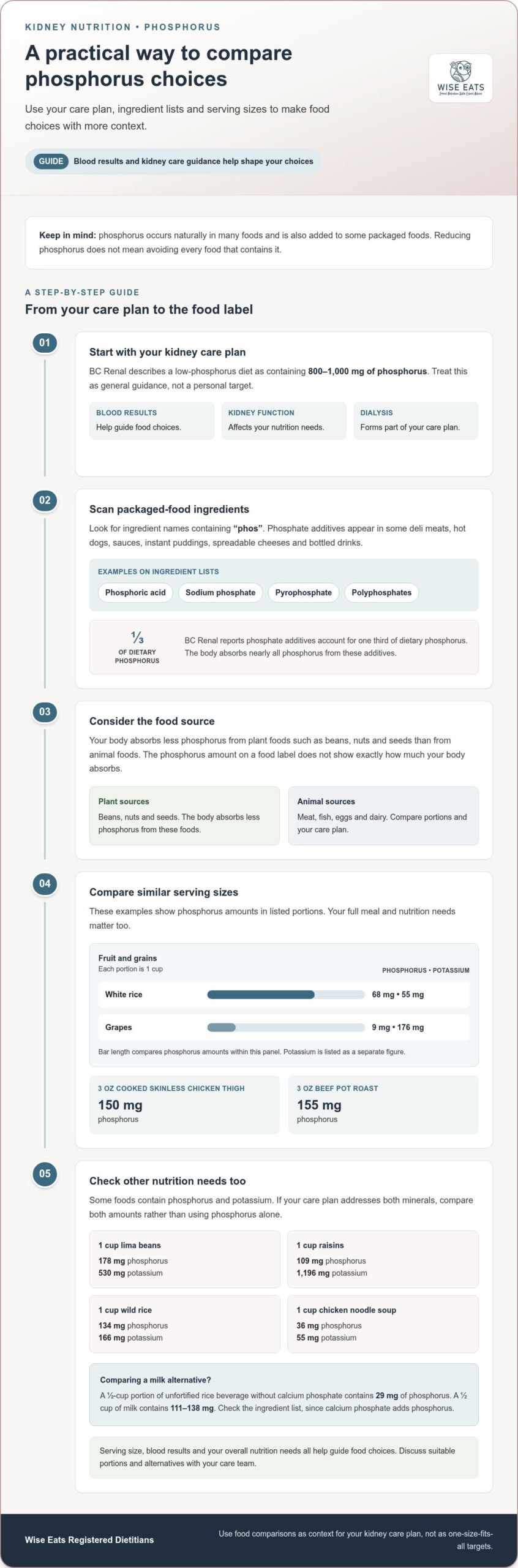
Lower-phosphorus choices include white rice, white bread, grapes, green beans and corn flakes. A cup of white rice contains 68 mg of phosphorus and 55 mg of potassium. A cup of grapes contains 9 mg of phosphorus and 176 mg of potassium. These comparisons help illustrate both minerals, but your potassium needs guide which foods fit.
Home-brewed iced tea is an alternative to some bottled drinks with phosphate additives. For cheese, Alberta Health Services lists hard cheese at 1 oz (30 grams) as a limited portion. Portions and the rest of your meals affect the amount of phosphorus you get.
Lower-phosphorus protein alternatives
Fresh chicken, turkey, fish, beef, veal, eggs, lamb and pork are protein options to compare. A 3-ounce cooked portion of skinless chicken thigh contains 150 mg of phosphorus. The same portion of beef pot roast contains 155 mg. Fresh, unprocessed meat also avoids phosphate additives found in some deli meats, hot dogs and sausages.
Protein needs vary with kidney function and your overall nutrition needs. Include enough protein in your meals, and consider portions across the day. A dietitian can help compare protein sources without unnecessarily removing entire food groups.
Phosphorus in plant and animal foods
Your body absorbs less phosphorus from plant foods, such as beans, nuts and seeds, than from animal foods. That difference matters because the amount of phosphorus listed for a food does not show exactly how much your body absorbs.
Meat, fish, eggs and dairy are animal sources. For example, a 3-ounce portion of chicken breast contains 190 mg of phosphorus. Portion size, food source and the rest of your meals all help shape daily intake.
Daily phosphorus intake
BC Renal describes a low-phosphorus diet as containing 800-1000 mg of phosphorus. Your needs depend on blood results, kidney function and dialysis. Treat this range as general guidance, not a personal target, since people’s nutrition needs differ.
Some people are prescribed phosphate binders to help control the phosphorus absorbed from food. Take prescribed binders with meals or snacks according to your instructions. Eating too little phosphorus can reduce food variety and make it harder to meet protein and energy needs. Do not remove whole food groups without discussing suitable alternatives with your care team.
Choosing natural foods over processed foods
Choosing less processed foods can help limit added phosphorus. Ingredient lists are a practical way to spot phosphate additives in packaged foods.
Phosphorus in processed foods
Phosphate additives are ingredients added during food processing, and the body absorbs nearly all their phosphorus. According to BC Renal, additives account for one third of dietary phosphorus. Foods with these additives add up to 1000 mg/day of phosphorus, so ingredient checks matter.
Look for names containing “phos,” including phosphoric acid, sodium phosphate, pyrophosphate and polyphosphates. These ingredients appear in some deli meats, hot dogs, sauces, instant puddings, spreadable cheeses and bottled drinks. Compare ingredient lists and choose a similar product without phosphate additives. Fresh ingredients in home-cooked meals also help limit extra phosphorus.
Foods and drinks high in phosphorus
Foods that can be higher in phosphorus include dairy, bran cereals, nuts, seeds, beans and lentils. Milk, cheese, chocolate, instant pudding and some processed foods also contribute phosphorus. Dark colas, cocoa drinks made with milk, bottled iced tea and beverages with phosphate additives are other examples to consider.
Portion size affects the phosphorus in a meal. A 2-tablespoon serving of peanut butter contains 118 mg of phosphorus. A 1-ounce serving of dry-roasted almonds contains 139 mg. These foods also provide nutrients, so use your care plan to guide portions rather than removing them without advice. For people on dialysis, food choices and treatment both matter for phosphorus management.
Foods higher in phosphorus and potassium
Some foods contain notable amounts of both minerals, which matters if your care plan addresses phosphorus and potassium. A cup of lima beans contains 178 mg of phosphorus and 530 mg of potassium. A cup of raisins contains 109 mg of phosphorus and 1,196 mg of potassium.
Other examples include a cup of wild rice, with 134 mg of phosphorus and 166 mg of potassium, and a cup of prepared chicken noodle soup, with 36 mg of phosphorus and 55 mg of potassium. These figures show why one mineral alone does not determine whether a food fits your needs. Compare serving sizes with your care team’s guidance.
A Registered Dietitian helps make label-reading and meal choices fit your nutrition needs. Get support with food planning if phosphorus additives or potassium guidance make grocery decisions difficult.
Dairy substitutes and egg whites
Milk, cheese and whole eggs contain phosphorus, but alternatives may fit some kidney-friendly meal plans. Compare labels and portions rather than assuming all plant-based drinks or egg products have the same phosphorus content. Your blood results, food preferences and overall nutrition needs help guide suitable choices.
Choosing a dairy substitute
Unfortified rice beverage without calcium phosphate is one option to compare with cow’s milk. A half-cup portion contains 29 mg of phosphorus, compared with 111-138 mg in a half cup of milk. Check the ingredient list: calcium phosphate adds phosphorus, even in a plant-based drink. Almond beverage also appears among options when it is unfortified and has no phosphorus additives.
A fact sheet recommends ½ to 1 cup per day of unfortified rice or almond beverage without phosphorus additives. Alberta Health Services lists soy beverage in a ½ cup (125 mL) portion. These are examples, not automatic targets for every person. Fortification and ingredients differ between cartons, so read the label each time you choose a product.
Plant-based drinks also differ in protein and other nutrients. Rice beverage, for example, does not provide the same protein as cow’s milk. If milk usually adds protein or energy to breakfast, consider what could provide a similar role. A dietitian can help you compare nutrition labels and choose a substitute that fits your usual meals.
Using egg whites
Egg whites offer a lower-phosphorus way to include egg protein. One egg white contains 5 mg of phosphorus, compared with 95 mg in a large whole egg. For an American recipe calling for one whole egg, replacing it with egg whites changes the phosphorus amount, but also changes the recipe’s fat and texture.
Egg whites can be used in omelettes, scrambled eggs and some baking recipes. For baking, follow a recipe developed for egg whites, since yolks help bind and soften many mixtures. Choose pasteurized egg whites for recipes served uncooked, and follow the package storage directions.
Whole eggs provide nutrients, so a kidney disease diagnosis alone does not mean everyone needs to avoid yolks. Kidney function, blood phosphorus levels, protein needs and other health conditions all affect food guidance. A Registered Dietitian can help you compare egg and dairy options within your nutrition plan, including choices that support your energy needs without unnecessary food rules.
How kidney disease affects phosphorus balance
Phosphorus is a mineral your body uses to build cells, support bones and transfer energy within cells. Healthy kidneys remove excess phosphorus from the blood. As kidney function declines, this becomes less effective, and phosphorus can build up more easily. Changes may appear in blood test results before you notice anything different in your eating routine.
High blood phosphorus can disrupt the balance between phosphorus and calcium. Your body needs both minerals for bone health. Possible signs include itchy skin and painful joints. High phosphorus is also associated with calcium loss from bones, so your care team considers blood results alongside kidney health and other test findings.
Blood tests track phosphorus levels, rather than relying on symptoms or food choices alone. A typical adult range is 2.5 to 4.5 mg/dL, though your care team sets your target based on your health. Ask your kidney doctor or dietitian to explain your latest result and record the test date for future comparisons.
The source of phosphorus affects how much your body absorbs. Your body absorbs nearly all phosphorus from additives in processed foods, but less from natural plant foods such as beans and nuts. Animal foods, including dairy, meat and fish, also contribute phosphorus. These differences help your care team assess your overall intake.
Kidney function and dialysis both shape phosphorus care. Dialysis removes some phosphorus from the blood, while food continues to contribute to your overall intake. Your healthcare professional may prescribe phosphate-binding medicine to help control phosphorus absorbed from meals. Follow the prescribed directions, and discuss questions about medicine or meals with your care team.
When to Seek Help
Contact your care team if food choices become difficult to manage. Ask for support if you notice:
- Your meals are becoming increasingly limited because of phosphorus concerns.
- Physical symptoms, such as persistent itching or painful joints, are affecting daily life.
- You avoid eating with others or feel isolated because of food worries.
A dietitian can review your eating pattern alongside kidney function and blood results, while your healthcare team assesses physical symptoms. This support keeps your nutrition needs and relationship with food in view.
Declining kidney function can cause blood phosphorus levels to rise. When kidneys cannot remove excess phosphorus, it can build up and disrupt the balance between calcium and phosphorus. Poor kidney function is also associated with increased risks of heart disease, weak bones, joint pain and death.
How much phosphorus should people with kidney disease eat per day?
There is no single daily phosphorus target for everyone with kidney disease. BC Renal describes a low-phosphorus diet as containing 800-1000 mg of phosphorus. A dietitian may recommend 800 to 1,200 milligrams daily, depending on individual needs. These figures are guides, not automatic targets for every person.
Your blood phosphorus results help determine whether you need to limit phosphorus. People with kidney disease may need to reduce their intake if blood levels are high or they receive dialysis. Kidney disease stage, dialysis, food intake and other nutrition needs all affect the plan. Your care team considers these factors together.
To understand your intake, check the serving size on the Nutrition Facts table and compare it with the amount you eat. Ingredient lists offer another clue. Terms containing “phos,” such as phosphoric acid or sodium phosphate, identify added phosphorus. Since the body absorbs nearly all phosphorus from additives, choosing a similar product without them can help reduce the amount absorbed.
Food sources matter too. Your body absorbs less phosphorus from plant foods than from animal foods. A cup of lima beans contains 178 mg of phosphorus, and a cup of prepared white rice contains 68 mg. These amounts describe different serving sizes and foods, so compare like portions when reviewing meals.
Phosphate binders are part of care for some people. These medicines help control phosphorus absorbed from food, so take them as prescribed with meals or snacks. BC Renal advises taking the prescribed number with each meal or snack. Do not change your medicine or binder schedule based on a food label.
Ask your kidney doctor or dietitian for your latest phosphorus result, and record it with the date. Review future results with your care team. A written food record can also show which meals include packaged foods, dairy or plant proteins. Note serving sizes and product labels, since ingredients can change between brands or over time.
Reducing phosphorus too sharply can make it harder to meet protein, energy and other nutrition needs. Removing dairy, meat, beans and nuts without suitable replacements can narrow your food choices. Instead, focus on the sources and portions that matter for your results. A Registered Dietitian can help balance phosphorus guidance with meals that suit your routine and preferences.
Wise Eats Registered Dietitians: Custom Meal Planning
Wise Eats Registered Dietitians offers Custom Meal Planning to turn your nutrition needs and food preferences into practical meal ideas. If applying phosphorus guidance to grocery shopping or everyday meals feels difficult, a Registered Dietitian can help you plan around the recommendations from your kidney care team.
Bring questions about foods you enjoy, meal routines and ingredient labels. Your plan can account for phosphorus sources you’re managing while supporting variety and adequate nutrition. Wise Eats also offers Personalized Vitamin and Mineral Supplements, with recommendations tailored to individual nutrition needs.
For support with meal planning, contact Wise Eats Registered Dietitians.
Make your next food choice feel manageable
A low phosphorus diet for kidney disease should reflect the guidance you receive and how you eat day to day. Choose a meal or grocery decision that feels difficult, then bring a specific question about it to your next conversation with your care team. A focused question can make nutrition advice easier to put into practice.
Wise Eats Registered Dietitians offers Custom Meal Planning, Personalized Vitamin and Mineral Supplements, and Weight Management. A Registered Dietitian can help you work through meal-planning questions and consider your preferences alongside your nutrition needs. You deserve support that respects your routines and does not turn food into a test.
When you’re ready, take the next step and build a plan with support, one practical choice at a time.
Your food choices do not need to be perfect to matter. Start with the question that matters most to you.
Frequently Asked Questions
What is phosphorus?
Phosphorus is a mineral your body uses for bones, cells and energy transfer. It occurs naturally in foods such as meat, dairy, beans and nuts, and is added to some packaged products. The source affects how much your body absorbs. For example, phosphorus from plant foods is generally less readily absorbed than phosphorus from additives, making both food labels and ingredient lists useful clues.
What is a safe blood level of phosphorus?
A typical adult blood phosphorus range is 2.5 to 4.5 mg/dL, but your target may differ. One result needs context, including your kidney health and other blood test findings. Ask your kidney doctor or dietitian to explain your latest result and target. Keep a record of the result and test date, so you can compare it with future results during care appointments.
Will dialysis help with phosphorus control?
Dialysis removes some phosphorus from your blood, so attending scheduled treatments is part of phosphorus care. It does not remove all phosphorus from food, and your eating plan still matters. If you take prescribed phosphate binders, follow the timing and amount set by your care team. Note any questions about missed doses or meal timing, and discuss them with your care team.
What is a low phosphorus diet for chronic kidney disease?
A low phosphorus diet for chronic kidney disease manages phosphorus intake according to blood results and kidney needs. It focuses on practical choices, such as limiting phosphate additives and adjusting portions of higher-phosphorus foods. The plan also needs to provide enough protein, energy and variety. Your needs depend on factors such as blood phosphorus levels and whether you receive dialysis.
Which foods are high in phosphorus and should be limited?
Foods often considered when managing phosphorus include organ meats, sardines, fish roe, oysters, bran cereals, dairy products and foods with phosphate additives. Packaged deli meats, instant puddings and some bottled drinks may also contain added phosphorus. These foods do not automatically need to be excluded. Portion size, ingredients and blood results all matter, so focus on the sources relevant to your care plan.
Which low-phosphorus foods are suitable for kidney disease?
Foods often included in kidney-friendly meal plans include apples, grapes, green beans, white rice, pasta, white bread, and corn or rice cereals. These examples may not suit everyone or every nutrition plan. Potassium, protein, sodium and energy needs also shape food choices. If your care team has given you potassium guidance, consider both minerals before making a regular food swap.
How can I identify phosphate additives on Canadian food labels?
Read the ingredient list and look for “phos” or “phosphate” in ingredient names. Examples include phosphoric acid, sodium phosphate, calcium phosphate, pyrophosphate and polyphosphates. These additives can appear in processed meats, sauces, instant puddings and beverages. Check the ingredient list when you buy a product, since recipes and brands can differ. The Nutrition Facts table alone does not identify every ingredient.
How do kidney disease stage and dialysis affect phosphorus needs?
Phosphorus needs depend on kidney function, blood test results, dialysis and your overall nutrition needs. As kidney function declines, the kidneys remove less excess phosphorus. Dialysis removes some phosphorus from the blood, but it does not make food choices irrelevant. Your plan should also account for protein and energy needs. Changes in blood results or your treatment schedule are good reasons to review nutrition guidance with your care team.

Article by
Rachel McBryan, Dietitian
Rachel McBryan is a licenced Dietitian in British Columbia offering comprehensive nutrition counselling as virtual and/or in-person counselling sessions to suit your needs and preferences. With a Bachelor of Science in Nutrition and Food Science, Rachel has over 20 years experience helping people address their health through nutrition. She was awarded Human Nutrition and Food Science BSc.from University of Alberta followed by post-grad course work at UBC in guidance counselling.
An eating disorder is a serious mental health illness.
If you are in immediate distress or crisis, please contact emergency services by dialing 911 or calling Vancouver Island Crisis Line: 1-888-494-3888.