Your kidney stone prevention plan should start with your stone type, not a blanket list of foods. If you’re searching for a dietitian for kidney stone prevention Canada, it helps to understand why advice about calcium, sodium, oxalate and fluids varies from person to person.
Conflicting recommendations can leave you unsure what belongs on your plate or how much to drink. Your stone history, test results, health needs and everyday routine all matter. A Registered Dietitian works alongside your healthcare team to make relevant guidance practical, without treating food changes as one-size-fits-all rules.
This article explains how stone type and health history shape prevention advice, and how a dietitian supports food and hydration habits suited to your life. You’ll also learn what to expect at a video, phone or in-person appointment with Wise Eats Registered Dietitians. The team serves clients in Alberta and British Columbia, including Calgary, Edmonton, Nanaimo, Parksville, Vancouver Island and Qualicum Beach. If you have concerns about symptoms or your care plan, speak with your healthcare team.
Key Takeaways
- Your stone type and health history shape which food and fluid factors deserve attention. One broad food list won’t fit every situation.
- A Registered Dietitian reviews stone information, eating routines and hydration with you to set practical goals.
- Calcium oxalate, calcium phosphate, uric acid, struvite and cystine stones call for different nutrition discussions.
- Learn what working with a dietitian for kidney stone prevention Canada involves, including WISE EATS Nutrition’s in-person, video and phone appointments in Alberta and British Columbia.
- Know which warning signs call for prompt medical care, and how nutrition questions fit alongside support from your healthcare team.
Dietitian for kidney stone prevention in Canada: what personalised support covers
Advice about fluids, calcium, sodium and oxalate often sounds contradictory because stone prevention depends on your stone type and health needs. A dietitian-led plan uses your stone history and wider health context to identify relevant nutrition changes. It also accounts for your usual meals, food preferences, schedule and other conditions affecting your choices.
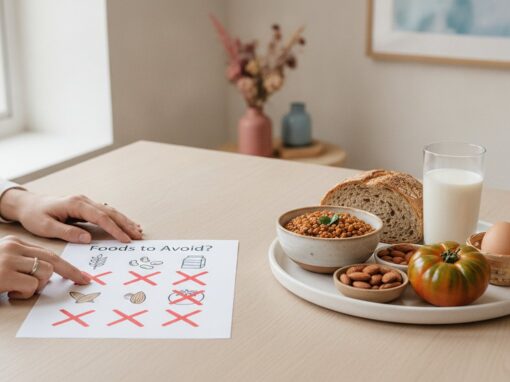
A general food list leaves out important differences. For example, cutting out calcium-rich foods without guidance isn’t a standard approach for calcium oxalate stones. People with uric acid stones often need to discuss different nutrition factors. Your healthcare team assesses your condition and directs medical care. Nutrition counselling supports this care, but doesn’t replace it.
What a kidney stone prevention dietitian contributes
A Registered Dietitian reviews the information you have and asks about your typical meals and drinks. They consider stone details, test results, medical conditions, supplements and current advice from your care team. For people seeking a dietitian for kidney stone prevention in Canada, video and phone care offer ways to discuss these details without travelling to an office.
The goal is to turn relevant clinical information into manageable steps. A discussion might focus on sodium in packaged foods, ways to include calcium-rich foods, or practical routines for drinking throughout the day. A dietitian works within nutrition scope and alongside your healthcare team. Read more about nutrition counselling for medical conditions.
Why stone type matters before changing eating habits
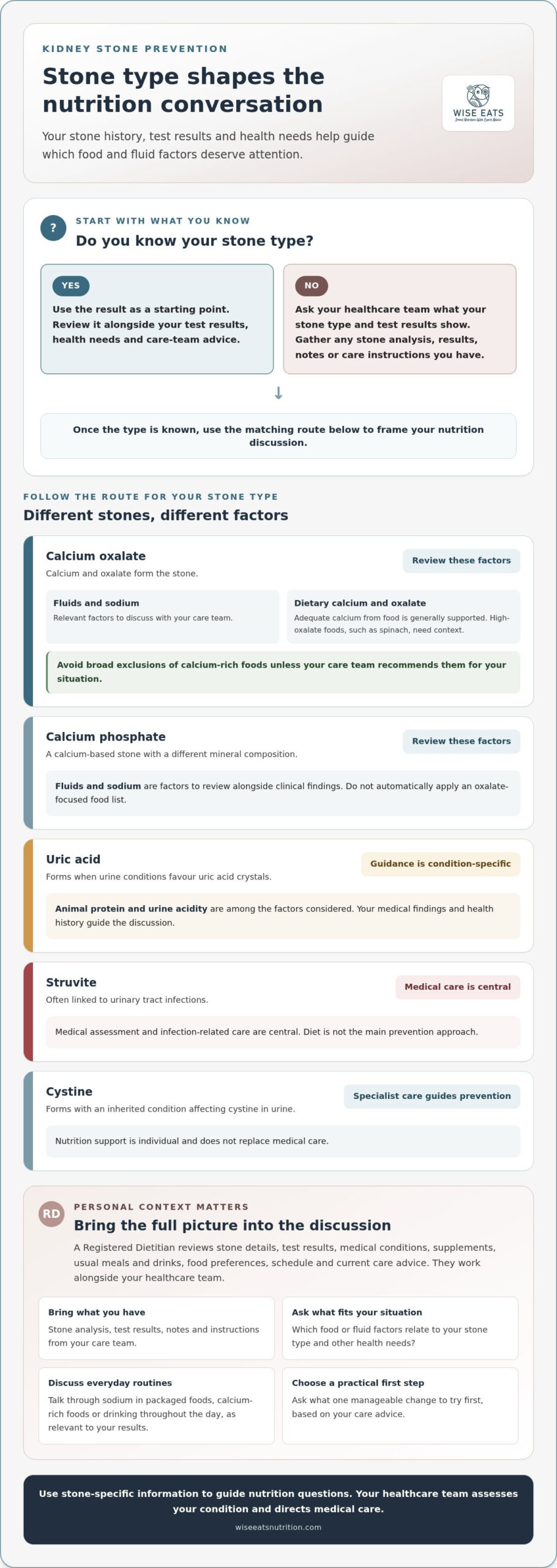
Calcium oxalate stones, the most common type, involve calcium and oxalate. A dietitian might review sodium intake, dietary calcium and high-oxalate foods such as spinach in light of your stone information. Canadian guidance generally supports adequate calcium from food. Avoid broad food exclusions unless your care team recommends them for your situation.
Uric acid stones form under different conditions. Your care team might discuss urine acidity and other clinical factors. Nutrition conversations often include animal protein intake and your usual food pattern, but recommendations depend on your results and health history. Changes to eating habits don’t replace medical assessment or prescribed treatment.
Before an appointment, gather any stone analysis or test results you have, along with notes or instructions from your care team. You might ask:
- What type of stone did I have, and what do my test results show?
- Which food or fluid factors relate to my stone type?
- How do these suggestions fit my other health needs and current care advice?
- What’s one practical change to try first?
Kidney stone disease offers a general overview of stone types and symptoms. Use your own results and your healthcare team’s advice to guide personal decisions.
Kidney stone types and nutrition: which factors need individual attention?
A stone’s name gives your care team useful information, but it doesn’t set a complete eating plan on its own. Stone results, urine or blood tests, health conditions and current care advice all affect which nutrition factors matter. Canadian guidance supports attention to fluids and dietary patterns for prevention, with specific recommendations depending on the person and stone type.
Use this table as a starting point for discussion, not as a personal treatment plan. Nutrition priorities differ by stone category, and diet isn’t the main prevention approach for every type.
| Stone type | What it means | Nutrition context |
|---|---|---|
| Calcium oxalate | Calcium and oxalate form the stone. | Fluid, sodium, dietary calcium and, in some cases, oxalate intake are relevant factors. |
| Calcium phosphate | A calcium-based stone with a different mineral composition. | Fluid and sodium are factors for the care team to review alongside clinical findings. |
| Uric acid | Forms when urine conditions favour uric acid crystals. | Animal protein and urine acidity are among the factors considered. Guidance is condition-specific. |
| Struvite | Often linked to urinary tract infections. | Medical assessment and infection-related care are central. Diet isn’t the main prevention approach. |
| Cystine | Forms with an inherited condition affecting cystine in urine. | Specialist medical care guides prevention. Nutrition support is individual and doesn’t replace medical care. |
Calcium oxalate and calcium phosphate stones
For calcium oxalate stones, avoiding calcium-rich foods across the board isn’t standard Canadian guidance. Adequate calcium from food is generally preferred, while very high-oxalate foods might need review in context. Sodium and fluid intake also matter for some people. Calcium phosphate stones need careful interpretation of clinical information, so don’t apply an oxalate-focused food list automatically.
Your stone history and test results help identify relevant changes. A Registered Dietitian discusses everyday food choices in light of your care team’s advice.
Uric acid, struvite and cystine stones
Uric acid stones have different contributing factors from calcium-based stones, and medical findings guide prevention discussions. Struvite stones are associated with infection, so dietary changes alone don’t address the main concern. Cystine stones relate to an inherited condition and require medical oversight. Discuss evaluation and prevention for these stone types with your healthcare team before changing your eating pattern.
A dietitian for kidney stone prevention Canada residents work with helps connect nutrition questions with relevant clinical information and your care team’s guidance. WISE EATS Nutrition offers dietitian consultations in person, by video and by phone. See the appointment information.
How a dietitian personalises kidney stone prevention strategies
Kidney stone prevention planning starts with what’s known about your stone and health, then connects that information to your daily routine. A dietitian reviews relevant records and eating patterns with you, agrees on manageable goals and revisits the plan as your needs or clinical information change.
Prevention guidance depends on your stone type, test results and wider health context, so nutrition advice needs to fit your individual situation.
- Gather available information. Stone analysis, test results and care-team recommendations help identify which nutrition factors deserve attention. You don’t need every record before starting a conversation.
- Review your usual routine. Discuss meals, snacks, drinks, work or school schedules, food preferences and access to groceries. A brief record of meals and drinks is optional, not a requirement.
- Agree on practical goals. Choose steps suited to your stone information and other health needs. A goal might involve adjusting a familiar meal or finding a convenient way to drink regularly during a workday.
- Reassess together. At follow-up, discuss what felt manageable, what got in the way and whether new guidance from your care team changes the plan.
Information to bring to a nutrition appointment
If you have a stone analysis or relevant test results, bring them or note how your care team shared the information. Include current advice about food, supplements or fluids, along with questions you want answered. A few notes about your usual meals and drinks offer context, but you don’t need to track every bite or sip.
Turning recommendations into everyday routines
Hydration deserves an individual discussion. The right approach depends on your clinical needs, daily schedule and care-team advice. A dietitian helps you think through practical routines, such as keeping a drink nearby during desk work or pairing a drink with a regular meal. Follow any fluid guidance from your healthcare team, especially if you manage another health condition.
Food goals should also reflect what you already eat and what’s realistic for your household. If breakfast is usually toast and yoghurt, planning might focus on choices suited to your stone guidance rather than replacing the meal. If you pack lunch, a dietitian might help you compare sodium on labels or find a convenient option for your needs. These are discussion examples, not rules for every stone type.
Access to food, budget, cooking time, cultural preferences and other health needs all shape a workable plan. Small additions or adjustments often fit more easily than removing whole food groups. Read more about nutrition counselling for medical conditions.
A dietitian for kidney stone prevention Canada residents work with helps translate relevant clinical information into food and hydration strategies alongside the healthcare team. For appointment details, visit the WISE EATS Nutrition booking page.
When to seek help for kidney stone symptoms and nutrition concerns
Nutrition support covers prevention planning and everyday food questions. New or severe symptoms need medical attention first. The signs below are general safety information, not a diagnosis. If you’re worried about symptoms, follow guidance from your healthcare team and seek urgent medical care for serious concerns.
When to Seek Help
Seek urgent medical care if you experience any of these warning signs:
- Severe or worsening side or back pain, especially with vomiting. Don’t wait for a nutrition appointment to discuss intense or worsening pain.
- Fever or chills alongside possible kidney stone symptoms. Contact a healthcare professional promptly for assessment.
- Difficulty passing urine or inability to urinate. Seek urgent medical care, particularly if you can’t pass urine.
If symptoms feel serious or are getting worse, prioritize medical care over routine nutrition support. A Registered Dietitian doesn’t diagnose kidney stones, assess urgent symptoms or replace medical evaluation. Your doctor or other healthcare professional guides assessment and treatment. A dietitian’s role starts with nutrition questions and works alongside your care team’s plan.
How nutrition support fits alongside medical care
Once your care team has addressed symptoms and shared relevant guidance, a dietitian helps you understand the food and fluid advice connected to your situation. Bring questions about how recommendations fit your usual meals, work schedule, cultural food preferences or other health needs. If instructions seem to conflict, share them with your care team and dietitian rather than changing your plan on your own.
For example, you might ask how to follow a nutrition recommendation alongside another condition, or how to put care-team advice into practice during a busy day. A dietitian discusses these concerns within nutrition scope and coordinates with your healthcare team as appropriate. This team-based approach keeps nutrition support connected to your overall care.
People looking for a dietitian for kidney stone prevention Canada-wide should keep the roles clear: medical professionals assess symptoms and diagnose stones, and dietitians provide nutrition counselling based on relevant clinical information. Discuss questions about supplements, fluids or food changes with your care team, especially if you have other health needs or existing instructions.
WISE EATS Nutrition offers nutrition counselling for medical conditions as part of collaborative care. Learn more about nutrition counselling for medical conditions and how dietitian support fits alongside your healthcare team.
Working with a kidney stone prevention dietitian in Canada
WISE EATS Nutrition offers Registered Dietitian consultations in person, by video and by phone. The right format depends on your location and the dietitian you see. Video appointments give clients across Alberta and British Columbia access to nutrition support without travelling to an office.
Virtual and local dietitian appointments
Rachel McBryan, RD, is licensed with the College of Health and Care Professionals of BC. She sees clients at her Parksville office and provides video consultations across British Columbia. Sheirry Poposka, RD, is licensed with the Alberta College of Dietitians and offers online appointments for clients in Alberta and British Columbia. These options serve people in Calgary, Edmonton, Nanaimo, Parksville, Qualicum Beach and across Vancouver Island.
Phone appointments offer another way to speak with a dietitian. The Registered Dietitian consultation information explains the appointment options. Choose a quiet place for a call or video session, and keep any stone or test information nearby if you have it.
What to expect from personalised nutrition counselling
Your appointment is a collaborative discussion, not a lecture. Your dietitian asks about your stone history, available clinical information, usual meals, drinks, preferences and other health needs. Bring questions or care-team advice you’d like help applying to everyday routines.
The conversation focuses on nutrition support within the wider care plan. Recommendations reflect the information available and your healthcare team’s guidance. A dietitian doesn’t diagnose a stone or replace medical assessment. If new results or advice come up later, discuss how they affect your nutrition goals with your care team and dietitian.
Bring what you have, not a perfect record. A stone analysis, test results or notes from your healthcare team offer useful context. If you don’t have these documents, describe what you know and ask what information would help guide nutrition discussions. You might also note questions about food, fluids or supplements before the appointment.
Working with a dietitian for kidney stone prevention Canada residents access through WISE EATS Nutrition means receiving support from a Registered Dietitian in Alberta or British Columbia, in a format suited to the service available in your area. You set the pace of the conversation and work together on practical next steps for your needs.
Explore the consultation options to learn more about working with a Registered Dietitian.
Take your next step with nutrition support
You don’t need to have every food or fluid question sorted before asking for support. Start with the concern that matters most to you, and bring any care-team guidance you have. A Registered Dietitian helps you consider practical nutrition steps alongside your wider health needs.
WISE EATS Nutrition’s Registered Dietitians have more than 30 years of combined clinical experience. If you’re considering a dietitian for kidney stone prevention Canada, an appointment offers space to discuss your questions and priorities without pressure to change everything at once.
With support from a Registered Dietitian, you can work toward an eating approach that feels balanced, flexible and suited to your nutritional needs.
Nutrition guidance should respect your health, preferences and day-to-day life.
Frequently Asked Questions
Is a kidney stone diet the same for everyone?
No. Nutrition advice depends on your stone type and wider health needs. A handout explains common factors, but it doesn’t account for your test results, other conditions or usual meals. Before changing several foods, bring the guidance you found to a Registered Dietitian or your care team. Ask which parts apply to your stone history and which need clinical review. This helps keep food choices practical.
What does a 24-hour urine test show for kidney stone prevention?
A 24-hour urine collection measures urine volume and substances linked with stone formation. Depending on the test, results might include levels of calcium, oxalate, uric acid, citrate or sodium. A clinician interprets these findings alongside your medical history and other results, rather than in isolation. Ask the clinician who ordered the test to explain your results and recommend next steps.
Do kidney stones always need surgery?
No. A procedure isn’t needed for every kidney stone. A healthcare professional assesses factors such as the stone’s size and location, your symptoms and other clinical findings before discussing care options. Nutrition advice doesn’t determine whether surgery or another treatment is needed. If pain becomes severe or symptoms change, seek medical assessment instead of waiting for a dietitian appointment.
Should I avoid calcium-containing foods to prevent kidney stones?
No, avoiding all calcium-containing foods isn’t a general prevention rule. For calcium oxalate stones, Canadian guidance generally supports getting adequate calcium from food, such as yoghurt, milk or a fortified plant-based beverage. Your needs depend on your stone history, health and eating pattern. Discuss concerns with your care team or a Registered Dietitian before removing foods or changing a calcium supplement.
Is lemon water a reliable way to prevent kidney stones?
Lemon contains citrate, but lemon water isn’t a reliable standalone prevention plan for everyone. The role of citrate depends on stone type and individual clinical information. A drink also doesn’t replace medical assessment or care. If you’re considering adding lemon water for prevention, ask your care team how citrate relates to your results and health history before relying on it as a strategy.
Do vitamin or mineral supplements affect kidney stone risk?
Some supplements matter to stone risk, and the effect depends on the nutrient, amount, stone type and your health history. High-dose vitamin C supplements, for example, can increase oxalate production in some people. Keep a list of supplements and doses to review with your care team or Registered Dietitian. Don’t stop a prescribed supplement or change medication based on general online advice.
Is virtual dietitian counselling available for kidney stone prevention in Canada?
Yes. WISE EATS Nutrition offers video consultations for clients in Alberta and British Columbia. Rachel McBryan, RD, licensed with the College of Health and Care Professionals of BC, provides video care for clients across BC. Sheirry Poposka, RD, licensed with the Alberta College of Dietitians, sees clients online in Alberta and BC. People seeking a dietitian for kidney stone prevention Canada-wide can discuss nutrition questions during a virtual appointment.
Speaking with a registered dietitian can help you develop a balanced, flexible approach to eating and meet your nutritional needs.
Article by
Rachel McBryan, Dietitian
Rachel McBryan is a licenced Dietitian in British Columbia offering comprehensive nutrition counselling as virtual and/or in-person counselling sessions to suit your needs and preferences. With a Bachelor of Science in Nutrition and Food Science, Rachel has over 20 years experience helping people address their health through nutrition. She was awarded Human Nutrition and Food Science BSc.from University of Alberta followed by post-grad course work at UBC in guidance counselling.
An eating disorder is a serious mental health illness.
If you are in immediate distress or crisis, please contact emergency services by dialing 911 or calling Vancouver Island Crisis Line: 1-888-494-3888.