Heart health reflects eating patterns built over time, not a single ingredient. The Mediterranean Diet for Heart Health centres on vegetables, fruit, whole grains, beans, lentils, nuts, seeds, fish and olive oil. Eggs, dairy and poultry can also fit, so this approach doesn’t require vegan meals or strict food rules.
If nutrition advice feels difficult to sort through, a flexible eating pattern offers a practical starting point. Canadian meals don’t need to copy menus from another region. Familiar ingredients and family preferences still have a place. This guide explains the heart-health evidence in measured terms, including its links with risk factors and the limits of current findings.
You’ll learn how fish, omega-3 fats, beans, legumes, nuts and seeds fit into the pattern, plus simple ways to adapt meals to your budget, tastes and routine. The guide also connects Canada’s Food Guide plate approach with Mediterranean-style choices, helping you recognize useful options without turning eating into a list of strict rules. By the end, you’ll have clear starting points for everyday meals and a grounded view of how this eating pattern relates to heart health.
Key Takeaways
- Build meals around vegetables, fruit, whole grains and plant-based proteins, with fish and olive oil as familiar options in this flexible eating pattern.
- Try adding salmon, trout, herring or mackerel to meals, and learn how omega-3 fats fit into the pattern.
- Use beans, lentils, nuts and seeds to bring more plant-based variety to meals and snacks.
- See how the pattern’s mix of foods relates to heart health, and why it supports overall eating habits rather than relying on one ingredient.
- Explore how a Registered Dietitian at Wise Eats can support digestive health nutrition, custom meal planning or personalized vitamin and mineral supplements.
Why the Mediterranean diet?
The Mediterranean eating pattern centres on plant foods, fish and unsaturated fats. In Canada, familiar ingredients and Canada’s Food Guide offer practical starting points for everyday meals.
Wholegrain foods
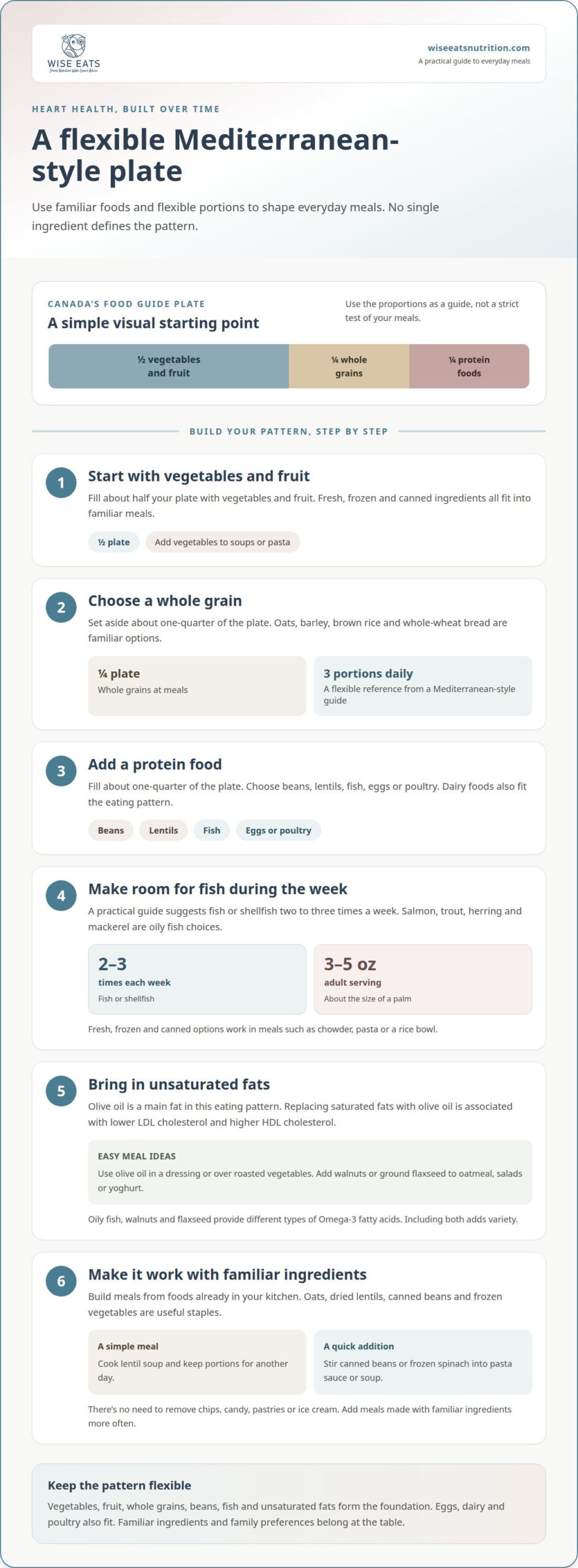
Whole grains retain the grain’s bran and germ, unlike refined grains such as white bread. Familiar examples include oats, barley, brown rice and whole-wheat bread. Choosing these foods more often adds variety and supports the pattern’s focus on minimally processed plant foods. Canada’s Food Guide recommends filling one-quarter of your plate with whole grains at meals.
Try oatmeal at breakfast, barley in soup or brown rice with supper. A Mediterranean-style guide suggests three portions of whole-grain foods each day. Use this as a flexible reference, not a strict test of your meals. A whole-grain food you enjoy and eat regularly is a useful starting point.
Typical foods and eating patterns
A Mediterranean-style eating pattern includes vegetables, fruit, whole grains, beans, lentils, nuts, seeds, fish and olive oil. Eggs, dairy and poultry can also fit, usually in low to moderate amounts. Fish and poultry feature more often than red meat. The pattern is largely plant-based, but it doesn’t require vegan meals or ingredients from Mediterranean countries.
What foods are included in a heart-healthy Mediterranean diet? Picture a meal with vegetables, a grain such as barley, and protein from beans, fish, eggs or poultry. Canada’s Food Guide suggests filling half your plate with vegetables and fruit, and one-quarter each with whole grains and protein foods.
How can you follow this pattern on a budget in Canada? Use affordable staples such as oats, dried lentils, canned beans and frozen vegetables. Add them to familiar soups, stews or grain bowls, then build meals around foods already in your kitchen.
Are Mediterranean foods and meal plans covered by Canadian health programs or insurance? Coverage depends on the program or insurance plan. Groceries and meal plans aren’t automatically covered as dietitian services, so review your plan’s terms for nutrition counselling.
Reducing ultra-processed foods
The pattern emphasizes meals made with vegetables, beans, grains and other minimally processed ingredients. It doesn’t require removing chips, candy, pastries or ice cream. Instead, try adding meals made from familiar ingredients more often. For example, cook lentil soup at home and save portions for another day.
Packaged foods can still be part of a practical Canadian kitchen. Canned tomatoes, canned beans and frozen spinach work well in a quick pasta sauce or soup. Add chickpeas or vegetables to make the meal more plant-focused. These small additions help build a pattern around routine, taste and available ingredients.
Fish and omega-3 fats
Fish and unsaturated fats are regular parts of Mediterranean-style eating. In Canada, salmon, trout, herring and mackerel are familiar oily fish choices. Olive oil also features as a main fat source. Together, these ingredients add variety to meals and support a pattern with fewer saturated fats.
A practical guide suggests fish or shellfish two to three times a week. An adult serving is around 3 to 5 ounces, close to a palm-sized portion. Try baked salmon with potatoes, canned sardines on toast, or trout in a grain bowl. Fresh, frozen and canned options suit different routines and recipes.
Oily fish such as salmon, herring, trout and mackerel contain DHA and EPA, types of Omega‑3 fatty acids important for heart health. These fish are available from Canada’s east and west coasts. Choose a species you enjoy and add it to a familiar meal, such as chowder, pasta or a rice bowl. A simple preparation helps keep the fish’s flavour at the centre.
Plant foods add other omega-3 fats to meals. Walnuts and flaxseeds work in oatmeal, salads or yoghurt. Ground flaxseed stirs easily into breakfast cereal, and chopped walnuts add texture to a snack. Plant sources and oily fish provide different types of omega-3 fats, so including both adds variety rather than making them exact substitutes.
Olive oil supplies mostly unsaturated fat and serves as a primary fat in this eating pattern. Use it in salad dressing, drizzle it over roasted vegetables, or stir it into cooked beans. Replacing saturated fats with olive oil is associated with lower LDL cholesterol and higher HDL cholesterol. A simple swap, such as using olive oil instead of butter on vegetables, is one way to make the change.
Reducing saturated fat doesn’t mean removing fat from meals. Try olive oil in a vinaigrette or nuts in a grain salad. Bake, grill or pan-cook fish for straightforward preparation. Lemon, garlic and herbs add flavour without relying on heavy sauces. If a meal feels unfamiliar, pair fish with a side you already enjoy, such as potatoes or rice.
If digestive symptoms make fish or oil-rich meals difficult, digestive health nutrition support offers a chance to discuss food choices with a dietitian.
Heart-health benefits of the Mediterranean diet
The Mediterranean eating pattern brings together vegetables, fruit, whole grains, beans, fish and unsaturated fats. Research links heart health with the overall pattern, rather than with one food alone. Replacing some refined grains with whole-grain choices, or saturated fats with olive oil, offers a practical way to align meals with the pattern. These changes support variety without promising a specific result.
Heart disease and stroke share risk factors, including high blood pressure, high cholesterol and diabetes. A pattern rich in plant foods and fish may help address some of these factors as part of broader health care. The combination matters: vegetables and fruit provide fibre and antioxidants, while beans, nuts and whole grains add variety. Building regular meals around these foods can also make it easier to include less red meat and fewer highly processed options.
Evidence has limits. Studies often examine eating patterns over time, so an association does not prove that one meal prevents cardiovascular disease. The PREDIMED study included nearly 7,500 people at high risk for heart disease, reflecting research on whole dietary patterns among people with existing risk factors. Individual health, food access and eating habits differ, so the same pattern won’t lead to identical outcomes for everyone.
Other potential benefits relate to risk factors that overlap with heart health. A pattern built around vegetables, fruit, beans and whole grains includes foods associated with fibre and antioxidants. Replacing saturated fats with olive oil is associated with lower LDL cholesterol and higher HDL cholesterol. These findings describe possible effects on risk markers, not a guarantee of preventing disease. A serving of fruit, a bean-based lunch or vegetables alongside supper are manageable examples.
What are the risks or precautions for people with allergies, diabetes, or heart disease following the Mediterranean diet? If you have a food allergy, avoid the allergen and choose suitable alternatives, such as beans instead of nuts when nuts trigger a reaction. If you have diabetes or heart disease, adapt meal choices to your care plan, and don’t change medication based on diet advice alone.
For diabetes, meals with whole grains, beans and fruit can fit the pattern, but post-meal blood glucose responses vary by person and meal. For heart disease, this eating approach complements prescribed care rather than replacing it. If food choices feel difficult alongside digestive symptoms, a dietitian can help you discuss options through Digestive Health Nutrition.
Beans, legumes, nuts, and seeds
Beans, lentils, chickpeas, nuts and seeds bring plant foods into Mediterranean-style meals. They add different nutrients and textures, and pair easily with vegetables, grains or fish. For example, add chickpeas to a salad, stir lentils into soup, or sprinkle pumpkin seeds over cooked vegetables. The American Heart Association also recommends emphasizing beans, legumes and nuts in a healthy dietary pattern.
Legumes include beans, peas and lentils. One Mediterranean diet guideline suggests three servings each week, with a serving equal to one-half cup. Use canned chickpeas in a grain bowl, mash white beans onto toast, or add lentils to pasta sauce. These options make it easier to include legumes in familiar meals without building a separate menu.
Nuts offer another useful option. One suggested amount is four servings of raw, unsalted nuts each week, with a serving measuring one-quarter cup. Add walnuts to oatmeal, pack almonds for a snack, or stir chopped nuts into a salad. Treat the amount as a guide, not a requirement to measure every portion. Choose forms and portions that work for your appetite and routine.
Seeds also fit easily into everyday meals. Sprinkle ground flaxseed over cereal, add pumpkin seeds to soup, or mix chia seeds into overnight oats. These additions offer an easy way to vary ingredients across the week. If you have a nut allergy, avoid the nuts that trigger a reaction and choose tolerated seeds or legumes instead. For people managing allergies, safe food choices take priority over following a particular pattern.
Nuts and dairy both appear in Mediterranean-style eating, but they serve different roles. Nuts and seeds offer plant-based choices, while dairy foods such as yoghurt and cheese can also fit. Pair plain yoghurt with walnuts, or add a small amount of cheese to lentil soup. Dairy isn’t required, and nuts don’t need to replace every dairy food.
How much olive oil, fish, nuts, and whole grains should you eat on the Mediterranean diet? The Cleveland Clinic Mediterranean Diet guidance recommends one to four servings of extra virgin olive oil per day, with one tablespoon as a serving. A whole-grain guide suggests three portions each day. Treat these as examples of the pattern, not strict targets for everyone.
For a simple weekly rhythm, add lentils to soup, chickpeas to a lunch bowl and nuts to breakfast. Pair these choices with grains and vegetables you already enjoy. The pattern draws on foods eaten across Mediterranean countries, but Canadian staples and familiar dishes can make it your own.
Mediterranean eating pattern and heart health
The Mediterranean diet describes a flexible way of eating built around plant foods, fish and unsaturated fats. Its overall pattern is associated with heart health, though it doesn’t guarantee a particular outcome.
Defining the eating pattern
Traditional Mediterranean eating centres on vegetables, fruit, whole grains, beans, lentils, nuts, seeds and olive oil. Fish and poultry appear more often than red meat, while eggs and dairy can also fit. The pattern takes inspiration from food traditions across Mediterranean countries, but doesn’t require specific regional ingredients. Canadian choices such as oats, lentils, frozen vegetables and salmon work well.
Think of the pattern as a mix of choices across meals, rather than a fixed menu. Breakfast might include oats and fruit, lunch could feature a bean-filled soup, and supper might pair mackerel with vegetables. Protein sources can vary from meal to meal. This flexibility helps you adapt familiar dishes without treating any single food as the whole approach.
Supporting heart health
The American Heart Association recommends a healthy eating pattern that emphasizes vegetables, fruit, whole grains, beans, legumes, fish, poultry, nuts and non-tropical vegetable oils. These choices align with Mediterranean-style eating and offer practical options for a heart-focused routine. The pattern also limits reliance on highly processed foods, refined carbohydrates and fatty or processed meats.
Researchers study this combination because heart disease risk relates to several factors, including cholesterol and blood pressure. Replacing some saturated fats with unsaturated fats is one example of a food-pattern change associated with healthier cholesterol levels. Vegetables, fruit, beans and whole grains also provide fibre and other nutrients. The effect of any meal varies with its ingredients and the person eating it.
The key takeaway is to focus on the overall pattern, not a single ingredient or supplement. Add beans to a familiar stew, choose whole grains for some meals, or include fish such as salmon. These examples support variety without requiring a strict plan. People with heart disease should continue following their care plan, since food choices complement medical care rather than replace it.
Evidence describes an association between this eating pattern and heart-health outcomes. It doesn’t show that every food has the same effect or that following the pattern prevents heart disease for everyone. Food preferences, allergies, budget and health needs all shape what fits. A steady pattern of practical choices offers a useful starting point without requiring identical meals every day.
Wise Eats Registered Dietitians: Digestive Health Nutrition
Wise Eats Registered Dietitians offers Digestive Health Nutrition for people whose symptoms make food choices or meal planning challenging. Mediterranean-style meals include foods such as beans, whole grains, vegetables and fish, but you don’t need to force foods that worsen your symptoms or ignore your care plan.
A Registered Dietitian can work with you to explore practical options suited to your preferences, symptoms and nutrition needs. Custom Meal Planning can help organize meals around foods you enjoy and tolerate. If you have questions about supplements, Personalized Vitamin and Mineral Supplements recommendations offer another option.
Consider digestive health support if symptoms make it hard to eat a varied pattern or meet your nutrition needs. Contact Wise Eats Registered Dietitians to discuss your concerns.
Choose a next step that fits your life
A Mediterranean diet for heart health doesn’t need to become a strict meal plan. Start with a change that suits your household, such as adding beans to a familiar soup or choosing a whole-grain option at lunch. Keep foods you enjoy in the picture, and adapt meals to your tastes, schedule and health needs. Familiar meals offer a practical place to begin.
If you’d like help turning these ideas into meals, Wise Eats Registered Dietitians offers Custom Meal Planning and Weight Management. Their Registered Dietitians also provide Personalized Vitamin and Mineral Supplements recommendations, helping you consider supplements in the context of your nutrition needs. These are optional supports, not requirements for following a Mediterranean-style pattern.
Reach out for support if food choices feel confusing or meal planning has become difficult. You deserve an approach that respects your preferences and feels manageable.
Take the next step at your own pace, with support shaped around your needs.
Frequently Asked Questions
Can I use regular olive oil instead of extra virgin olive oil?
Regular olive oil supplies unsaturated fats and works well for dressings, sautéing or roasting. Extra-virgin olive oil has higher polyphenol content than other oils and a more distinct flavour. Refined olive oil has a milder taste and works for cooking. Choose an option that suits the dish and your preferences. Extra virgin isn’t essential for every meal.
What about other popular diets?
Other eating patterns, including DASH, also emphasize foods associated with heart health. According to the American Heart Association, DASH aligns with its healthy-eating recommendations. DASH allows more dairy and meat, while Mediterranean-style eating regularly features olive oil. Both offer ways to plan meals around vegetables, fruit and whole grains. Your food preferences, health needs and usual meals can help guide which approach feels practical.
What about wine?
Wine is optional, not a required part of Mediterranean-style eating. Some descriptions of the pattern include wine with meals, but you don’t need to drink alcohol to follow it. If you don’t drink, there’s no reason to start for this eating pattern. If you do drink, consider how alcohol fits with your health needs, medications and preferences.
What foods should you limit on the Mediterranean diet for heart health?
The American Heart Association recommends limiting added sugars, sugary drinks, sodium, highly processed foods, refined carbohydrates, saturated fats, and fatty or processed meats. Think of this as making room for other choices, not banning foods. For example, add vegetables alongside a familiar packaged food, or choose unsweetened drinks more often. Your overall eating pattern matters more than one meal.
What does research say about the Mediterranean diet’s effects on heart disease, blood pressure, and cholesterol?
Research links the overall eating pattern with heart-health outcomes, but it doesn’t promise the same effects for each person. The PREDIMED study included nearly 7,500 people at high risk for heart disease. Studies also examine risk factors such as high blood pressure and cholesterol. These findings concern patterns over time, not a single food or meal, and don’t replace medical care.
How does the Mediterranean diet compare with DASH and other heart-healthy diets?
Mediterranean-style eating and DASH both emphasize vegetables, fruit and whole grains. DASH includes more dairy and meat, while olive oil features regularly in Mediterranean-style meals. The American Heart Association identifies DASH as aligned with its healthy-eating recommendations. Neither pattern needs to be followed as a strict menu. Food preferences, cultural traditions and health needs can help shape a suitable approach.
What does a typical Mediterranean diet meal plan look like for a week?
A sample week could pair familiar meals with different plant foods and proteins. Try oatmeal with fruit on Monday, lentil soup on Tuesday, and chickpea salad on Wednesday. Add salmon with vegetables on Thursday, bean chilli on Friday, whole-grain pasta with tomato sauce on Saturday, and eggs with vegetables on Sunday. These are meal ideas, not a fixed plan, so switch ingredients to suit your household.

Article by
Rachel McBryan, Dietitian
Rachel McBryan is a licenced Dietitian in British Columbia offering comprehensive nutrition counselling as virtual and/or in-person counselling sessions to suit your needs and preferences. With a Bachelor of Science in Nutrition and Food Science, Rachel has over 20 years experience helping people address their health through nutrition. She was awarded Human Nutrition and Food Science BSc.from University of Alberta followed by post-grad course work at UBC in guidance counselling.
An eating disorder is a serious mental health illness.
If you are in immediate distress or crisis, please contact emergency services by dialing 911 or calling Vancouver Island Crisis Line: 1-888-494-3888.