Kidney damage linked to diabetes often develops slowly over many years, and early chronic kidney disease (CKD) may have no symptoms. CKD means ongoing kidney damage or reduced kidney function. Screening for diabetes-related kidney disease uses urine and blood tests to assess kidney health.
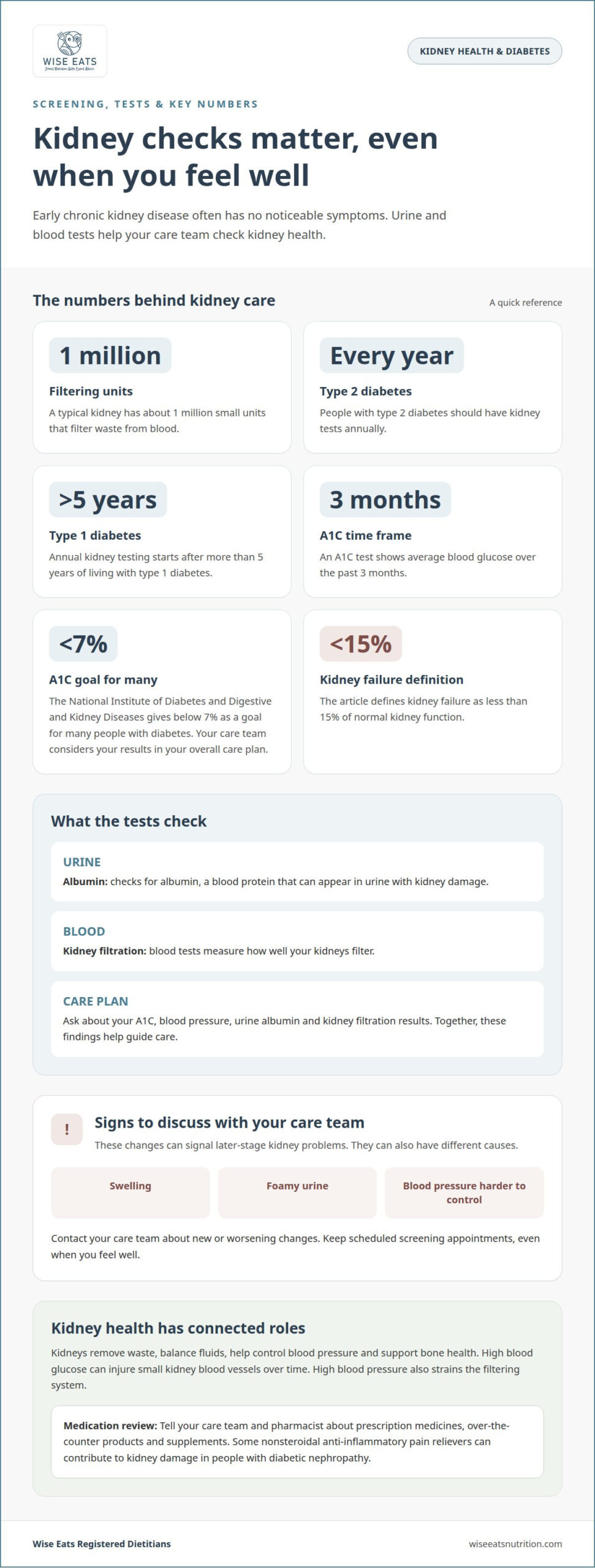
It’s understandable if the connection between blood glucose, blood pressure, and kidney health feels complicated. People with type 2 diabetes should have kidney tests every year. For people with type 1 diabetes, annual testing starts after more than 5 years of living with diabetes.
This article explains how diabetes affects kidney function, which symptoms and screening tests matter, and what can raise risk. It also covers meal planning as part of care. Whether you live in Calgary, Edmonton, Nanaimo, Parksville, elsewhere on Vancouver Island, or Qualicum Beach, use this information as a starting point for discussing kidney health and eating habits with your care team.
Key Takeaways
- Understand how diabetes and high blood pressure can affect kidney function over time.
- Learn which urine and blood tests help detect kidney changes, even before symptoms appear.
- Recognize risk factors such as smoking, high blood pressure and family history.
- Compare diabetes-related kidney damage with other causes of chronic kidney disease.
- Explore how personalized meal planning fits into nutrition care for diabetes and kidney health.
How does diabetes cause damage to my kidneys?
Kidney damage linked to diabetes often develops gradually over many years. Early chronic kidney disease may have no noticeable symptoms. Urine tests for albumin and blood tests of kidney filtration can help identify changes. These checks matter because symptoms alone cannot show how well your kidneys are working.
Diabetes-related kidney damage
Diabetes-related kidney disease is kidney damage associated with type 1 or type 2 diabetes. High blood glucose injures small kidney blood vessels over time. High blood pressure also strains the kidney filtering system. When both conditions affect you, ask your care team how blood glucose and blood pressure fit into your kidney care plan.
Kidney filtration and damage
Your kidneys filter waste from blood through small filtering units. Each typical kidney has about 1 million filtering units. These units help keep needed substances in your blood and remove waste through urine. High blood glucose damages vessels around the filters. Albumin, a blood protein, then appears in urine in some cases. Blood tests measure kidney filtration.
Diabetes-related kidney disease often develops gradually. An A1C test shows your average blood glucose over the past 3 months, according to the National Institute of Diabetes and Digestive and Kidney Diseases. The A1C goal for many people with diabetes is below 7 percent, according to the same organization. Your care team considers your results as part of your overall care plan.
Ask about your A1C, blood pressure, urine albumin, and kidney filtration results. Together, these findings guide care for kidney disease linked to diabetes. ACE inhibitors and ARBs have been found to slow kidney damage in people with diabetes, high blood pressure, and diabetic kidney disease. These medicines are not safe during pregnancy. Discuss medication questions with your care team, and keep taking prescribed medicines as directed.
In Canada, provincial and territorial health systems arrange kidney disease care. Prescription coverage varies by jurisdiction and eligibility. Ask your care team or provincial drug program about coverage for prescribed medicines.
Swelling, foamy urine, or blood pressure that becomes harder to control can signal later-stage kidney problems. Other symptoms may include nausea, itching, tiredness, weakness, appetite loss, confusion, or shortness of breath. These signs can have different causes. Contact your care team about new or worsening changes. Early kidney disease often has no symptoms, so attend recommended screening appointments.
Discuss everyday habits with your care team, including food choices suited to your health needs and routine. For example, meal planning for weight management fits into broader discussions about diabetes and kidney health. Your team can connect your eating routine with your care plan.
Chronic kidney disease and kidney functions
Chronic kidney disease describes ongoing kidney damage or reduced kidney function. In diabetes, changes can affect several functions the kidneys handle each day. Understanding those functions helps explain why kidney health matters beyond urine or blood test results.
Your kidneys remove waste products from the body and balance fluids. They also help control blood pressure and keep bones healthy. These roles are connected: fluid balance affects the amount of fluid in your body, while kidney function helps regulate blood pressure. When kidney function changes, your care team considers these connected effects, not just one test result.
A typical kidney has about 1 million filtering units. Each unit helps remove waste from blood while the kidneys manage fluid balance. Kidney damage can interfere with this filtering work. The kidneys may then have more difficulty carrying out their usual functions. Your clinician interprets test results alongside your health history and other findings.
Kidney failure describes a major loss of function. According to the National Institute of Diabetes and Digestive and Kidney Diseases, kidney failure means the kidneys have lost most of their ability to function, defined here as less than 15 percent of normal kidney function. Some people with severe kidney disease need dialysis, which performs some kidney functions, or a kidney transplant. Your care team explains treatment options based on your kidney health.
Kidney care also includes reviewing medicines. For people with diabetic nephropathy, nonsteroidal anti-inflammatory pain relievers can contribute to kidney damage. These include some common pain medicines. Tell your care team and pharmacist about all prescription medicines, over-the-counter products, and supplements you take. They can review possible concerns in light of your kidney health and other medicines.
Changes in kidney function do not always feel obvious. You might feel well even when tests show a change. Keep track of your results and ask what each one measures. For example, ask how your kidney filtration results relate to your overall care plan. Bring questions about fluid balance, blood pressure, bone health, or pain medicines to appointments.
Food choices also sit within a wider kidney care plan. Needs differ with kidney function, diabetes care, medicines, and personal routines. Avoid making major changes to fluids or food groups based on a single result. If you want nutrition guidance alongside your health care, book a nutrition appointment with Wise Eats Registered Dietitians to discuss your eating pattern and health priorities.
Kidney disease symptoms and screening tests
Early kidney disease often has no symptoms, so feeling well cannot rule it out. For people living with diabetes, scheduled testing matters because kidney changes can begin before noticeable signs appear. At a routine appointment, ask whether urine and blood tests are due. These tests can identify changes that symptoms alone might not reveal.
People with type 2 diabetes should get tested for kidney disease every year. People with type 1 diabetes should get tested for kidney disease annually after having diabetes for more than 5 years, according to the National Institute of Diabetes and Digestive and Kidney Diseases. Your health care professional may recommend tests more often based on your care needs. Keep the recommended schedule, even when you feel well.
Screening checks two aspects of kidney health. A urine test looks for albumin, a protein that can appear in urine when kidney filters are damaged. A blood test measures kidney filtration, or how well the kidneys filter waste from blood. Together, these tests give your care team different information. Neither result describes every aspect of kidney function.
Ask what each result means and how it compares with earlier tests. For example, ask whether albumin appeared in your urine or whether your filtration result changed. Keep a record of test dates and results if that helps you follow your care. Bring your questions to appointments, especially if you have not had kidney tests recently.
Symptoms often appear later, so do not wait for them before arranging screening. Symptoms of later-stage kidney disease include:
- Swelling, foamy urine, or blood pressure that becomes harder to control
- Shortness of breath, confusion, appetite loss, nausea, or vomiting
- Itching, tiredness, or weakness
These symptoms can have different causes, and a symptom alone does not confirm kidney disease. Tell your health care professional about new or worsening changes, including swelling or foamy urine. Mention when each symptom began and whether it has changed. This gives your care team useful context alongside your test results.
At a diabetes appointment, ask when your next urine albumin and kidney filtration tests are planned. If you have type 1 diabetes, include how long you have lived with diabetes when discussing screening. For type 2 diabetes, confirm your yearly testing plan. If you notice symptoms between appointments, contact your care team rather than waiting for the next routine test.
A clear screening plan connects test results, symptoms, and diabetes care. Write down the names of your tests and any questions before your next visit. For example, ask whether your next urine test checks albumin and whether your blood test measures kidney filtration. Regular follow-up helps your care team track kidney health over time.
Risk factors for diabetic kidney disease
Several health and family factors can raise the risk of kidney problems for people with diabetes. These include high blood glucose, high blood pressure, smoking, high blood cholesterol, and a family history of diabetes or kidney disease. Risk factors can guide conversations with your care team, but they do not determine exactly what will happen to one person.
High blood glucose and high blood pressure affect kidney blood vessels and filtering units. Over time, elevated glucose can injure small vessels, while high blood pressure adds strain to the kidney filters. If both affect your health, ask your care team how they consider your results together and which follow-up steps fit your care plan.
Smoking and high blood cholesterol are also risk factors. Bring recent cholesterol results to a diabetes appointment and share your smoking history. If stopping smoking is a goal, ask your care team about support. Health habits are shaped by many circumstances, so a useful discussion focuses on practical care rather than blame.
Family history adds context. Tell your care team if close relatives have had diabetes or kidney disease. Type 2 diabetes tends to run in families, and a family history of kidney disease is another risk factor. These details help frame your personal history alongside current blood glucose, blood pressure, and cholesterol results.
Body weight is only one part of health. Genetics, sleep, stress, age, and other factors also affect weight and health. Set point theory describes how the body defends a preferred weight range through hormonal and metabolic processes. Weight often changes with age, and plateaus may reflect the body’s adaptation. If recommended health behaviours are in place, a plateau or body shape outside social ideals does not erase their value.
Diabetes-related kidney disease can also lead to complications as kidney function declines. These include fluid buildup, high blood potassium, cardiovascular disease, anemia, pregnancy complications, and irreversible kidney damage. Your care team considers your kidney results and overall health when reviewing these risks. Ask which complications matter most in your situation and what monitoring is part of your care.
Before your next appointment, write down your family history, smoking status, and questions about blood glucose, blood pressure, and cholesterol. Bring recent results if you have them. Ask which risk factors deserve attention first and how your care team will monitor changes. A short list helps keep the discussion focused on your concerns and practical next steps.
Risk factors often overlap. For example, a family history of kidney disease alongside high blood pressure gives your care team more context than either factor alone. Share changes in your health, sleep, stress, or routine at follow-up visits. These details help the team consider your circumstances without reducing kidney risk to one measurement or habit.
How does diabetic kidney disease differ from other types of chronic kidney disease?
Chronic kidney disease describes ongoing kidney damage or reduced function. The term diabetic kidney disease identifies diabetes as a cause or contributor. Other types have different underlying causes. This distinction matters because care considers both kidney health and the condition affecting it.
Diabetes-related kidney damage develops as high blood glucose injures kidney blood vessels over time. High blood pressure can add strain to the filtering system. In other forms of chronic kidney disease, diabetes may not be the main cause. Your care team considers your health history and test results to understand which factors are involved.
The conditions share important features. Both involve changes in kidney function, and early disease may not cause noticeable symptoms. A urine test for albumin and a blood test of kidney filtration help assess kidney health. These results show kidney changes but do not explain the cause on their own. Your clinician interprets them alongside your medical history.
Diabetes also affects what the care plan needs to address. For diabetes-related kidney disease, care includes attention to blood glucose and blood pressure, as well as kidney test results. When another condition contributes to chronic kidney disease, the care team considers that cause too. More than one health factor can affect kidney function.
For example, a person with diabetes and high blood pressure has two factors to discuss. Kidney damage in another person might be linked to a different medical issue or medicine. Nonsteroidal anti-inflammatory pain relievers are one example of medicines that can harm kidneys in people with diabetic nephropathy. Share your full medication list, including non-prescription products, during care visits.
Food guidance also depends on your overall health. Diabetes, kidney function, medicines, and personal eating routines all shape nutrition needs. A meal plan for diabetes alone might not address every kidney-related concern. Avoid following a restrictive kidney diet without guidance. Ask your care team which nutrition changes fit your test results and treatment plan.
When discussing a diagnosis, ask what your care team believes is causing the kidney changes. You might ask which test results support that view, how diabetes affects your care, and what other health factors matter. These questions can clarify whether the focus includes blood glucose, blood pressure, medication review, or another underlying issue.
Knowing the cause helps organize follow-up. Keep a record of your kidney test results, diabetes history, blood pressure readings, and current medicines. Bring that information to appointments. It gives your care team concrete details to consider when reviewing kidney health and deciding what needs attention next.
Wise Eats Registered Dietitians: Custom Meal Planning
Wise Eats Registered Dietitians offers Custom Meal Planning for people balancing diabetes care with kidney health needs. A plan considers your test results, eating preferences, usual routine, and guidance from your care team. This support is useful when food advice feels conflicting or your needs change as kidney function changes.
Meal plans focus on practical choices for everyday meals rather than rigid rules. Wise Eats Nutrition also offers Personalized Vitamin and Mineral Supplements, with recommendations tailored to individual needs. Include your current medicines and supplements in nutrition discussions with your care team.
If you’re ready to talk through meal planning for your health needs, contact Wise Eats Registered Dietitians or visit wiseeatsnutrition.com.
Choose nutrition support that fits your next step
Managing diabetes kidney disease involves health decisions alongside everyday meals. Your nutrition plan should reflect your needs, preferences, and guidance from your care team. Wise Eats Registered Dietitians offers Custom Meal Planning, Personalized Vitamin and Mineral Supplements, and Weight Management support, with care shaped around your priorities.
If meal choices feel hard to coordinate with changing health needs, a Registered Dietitian can help you discuss practical options. Bring questions about your eating routine or supplement use, and include your care team’s advice in the conversation.
A thoughtful next step can start with one question about what feels manageable for you. You deserve nutrition guidance that respects your health and your relationship with food.
Take the next step at a pace that feels right for you.
Frequently Asked Questions
What is chronic kidney disease (CKD)?
Chronic kidney disease means lasting kidney damage or reduced kidney function. It often develops gradually, and early changes may not cause noticeable symptoms. For example, you might feel well even when tests show a kidney change. CKD describes the kidney condition, while its cause can differ. Diabetes, high blood pressure, or another health issue may contribute. Your care team can explain how your test results relate to your health.
What is diabetes?
Diabetes is a condition involving how the body makes or uses insulin, a hormone that helps manage blood glucose. There are two main types. With type 1 diabetes, the body does not make enough insulin. With type 2 diabetes, the body makes insulin but does not use it well. The type matters for treatment and kidney screening discussions. Your care team can explain how your diabetes care connects with your test results.
How can I keep my kidneys healthy if I have diabetes?
Keep scheduled appointments and discuss blood glucose, blood pressure, and kidney test results with your care team. Follow your prescribed treatment plan, and speak with your care team before changing medicines. If smoking is part of your life, ask about support to stop. As a practical step, bring a current list of medicines and supplements to appointments. Food choices should fit your health needs, preferences, and care plan.
Where can I get more information?
Start with your family doctor, diabetes care team, or kidney specialist, and bring questions about your test results. Ask for plain-language explanations, including what each result measures and what follow-up is planned. The National Kidney Foundation offers free booklets about diabetes and kidney disease. For guidance about your own care in Canada, your provincial or territorial health care team can explain local services and how to access follow-up.
How does diabetes cause kidney disease?
High blood glucose over time damages small blood vessels in the kidneys, affecting the filters that remove waste from blood. High blood pressure adds strain to those filters and can contribute to further damage. For example, a person with diabetes and high blood pressure has both factors to discuss during care visits. Kidney changes often develop slowly, so regular tests matter even when daily life feels unchanged.
What are the stages and symptoms of diabetic kidney disease?
Kidney disease progresses from early changes to severe loss of function, but early disease often has no noticeable symptoms. Later signs include swelling, foamy urine, harder-to-control blood pressure, nausea, itching, tiredness, or shortness of breath. Kidney failure means less than 15 percent of normal kidney function, according to the National Institute of Diabetes and Digestive and Kidney Diseases. A symptom alone does not identify a stage, so test results matter.
How is diabetic kidney disease diagnosed and monitored in Canada?
Health care professionals assess kidney health with a urine test for albumin and a blood test of kidney filtration. The blood result may be reported as an estimated glomerular filtration rate, or eGFR. Keep copies of your results and note the test dates. At appointments, ask whether results have changed and what follow-up is planned. In Canada, your care team can also explain how provincial or territorial services fit into your care.
How often should people with diabetes have urine albumin and eGFR tests?
People with type 2 diabetes should have kidney disease testing every year. People with type 1 diabetes should have annual testing after living with diabetes for more than 5 years, according to the National Institute of Diabetes and Digestive and Kidney Diseases. The tests include urine albumin and blood measurement of kidney filtration. Keep your next test date with your diabetes appointment notes, and ask your care team if your testing schedule changes.

Article by
Rachel McBryan, Dietitian
Rachel McBryan is a licenced Dietitian in British Columbia offering comprehensive nutrition counselling as virtual and/or in-person counselling sessions to suit your needs and preferences. With a Bachelor of Science in Nutrition and Food Science, Rachel has over 20 years experience helping people address their health through nutrition. She was awarded Human Nutrition and Food Science BSc.from University of Alberta followed by post-grad course work at UBC in guidance counselling.
An eating disorder is a serious mental health illness.
If you are in immediate distress or crisis, please contact emergency services by dialing 911 or calling Vancouver Island Crisis Line: 1-888-494-3888.