Picky eating in adulthood deserves more than being brushed off as a preference. A dietitian for picky eaters as an adult offers support to make sense of a narrow food range, strong reactions to taste or texture, and stress around unfamiliar meals. The aim is practical support for eating and daily life, without blame or pressure.
You might rely on familiar meals and feel self-conscious about eating with friends, travelling, or grocery shopping. A limited menu alone doesn’t explain the full picture. Nutrition, distress, and the role of eating in everyday life also matter. You deserve a calm conversation about what feels manageable and what gets in the way.
This guide explains what picky eating means, when persistent eating challenges warrant further assessment, and how dietitian support helps adults in Calgary. It also covers gradual ways to explore food choices, the role of sensory needs and health history, and what collaborative nutrition care can involve.
Food Support and ARFID
- Build balanced meals around familiar foods, then explore new options gradually and without pressure.
- Consider professional support if a narrow range of foods affects your nutrition, health, social life, or daily routine.
- ARFID involves more serious eating difficulties than food preferences alone and calls for coordinated care when suspected.
- Seek help if eating concerns lead to physical symptoms, increasing restriction, binge eating, compensatory behaviours, or social isolation.
- A Registered Dietitian offers support to understand your food preferences and plan practical nutrition support in Calgary.
Does a Nutritionist Help a Picky Eater?
A Registered Dietitian offers support with planning meals around familiar foods and considering changes at a comfortable pace. A consultation might review your usual meals, sensory preferences, and one practical way to add variety.
Balanced Meals Around Food Preferences
Build meals around foods you already enjoy, then consider what might round them out. For example, try familiar toast alongside eggs or yogurt if those foods suit you. A Registered Dietitian considers your usual meals, nutrition needs, and routine before suggesting additions. The aim is to support nourishment without asking you to give up familiar foods or try something before you feel ready.
Adapting Foods to Sensory Preferences
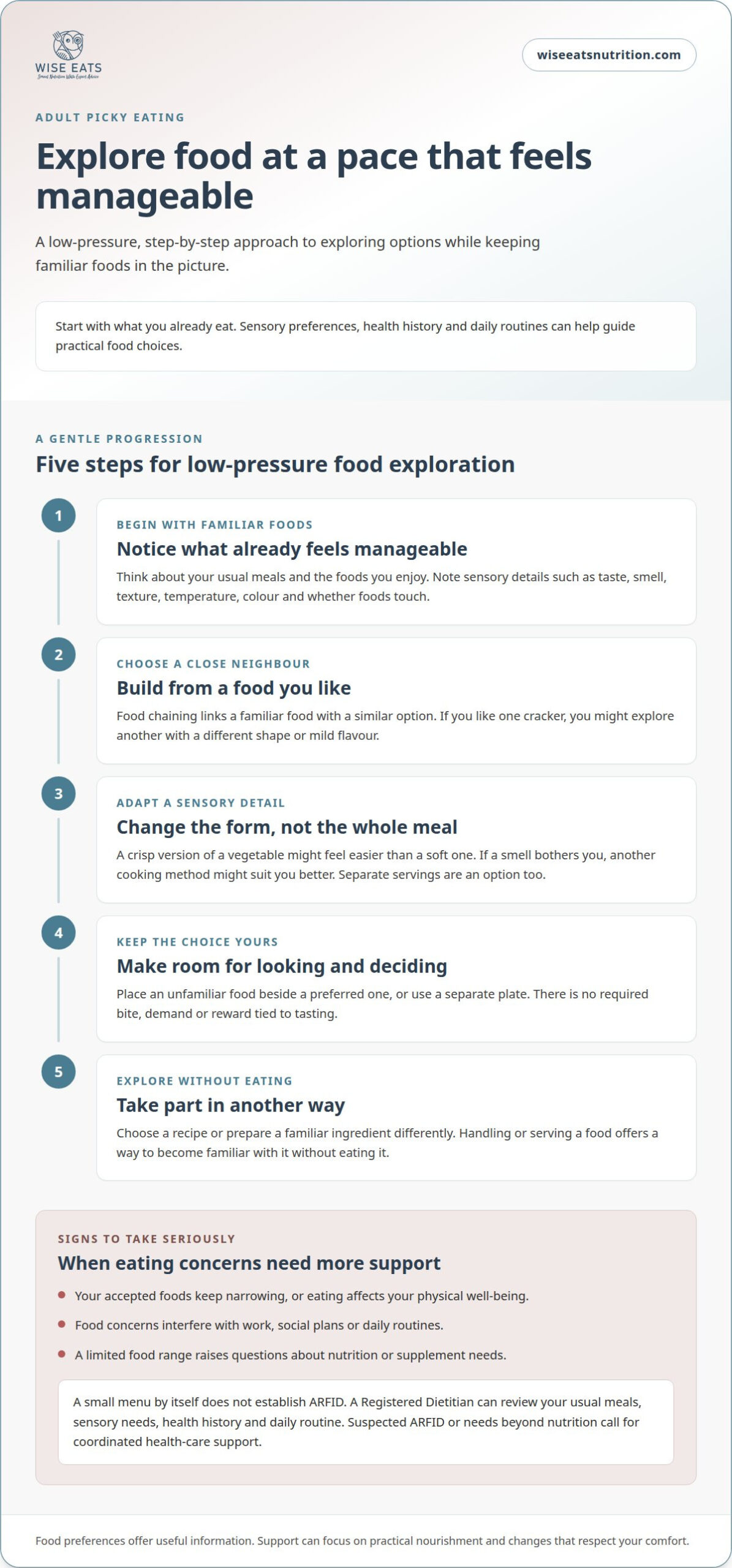
Texture, smell, temperature, colour, and how foods touch each other shape comfort for some eaters. If soft vegetables feel unpleasant, a crisp version or separate serving might feel easier. If a strong smell bothers you, another cooking method may suit you better. A Calgary consultation gives you room to describe these preferences and discuss food changes suited to them. Calgary Registered Dietitian support is available.
Food chaining links a familiar food with a similar new option. For example, if you like one cracker, you might explore another with a different shape or mild flavour. Keep the change small, and let the eater decide whether to taste it. Children sometimes need up to 10 exposures to a new food. Low-pressure contact gives them time to become familiar with it.
Confidence might grow when exploring food doesn’t involve demands. Serve a preferred food beside an unfamiliar one, without requiring a bite or making a treat depend on tasting. You might first feel comfortable with a new food on a separate plate. This keeps the choice yours and might make mealtimes feel calmer.
Children are able to help with simple food tasks, such as washing berries, stirring batter, or choosing between two vegetables at the grocery store. Handling or serving a food offers a chance to become familiar with it without eating it. Adults might choose a recipe or prepare a familiar ingredient differently. Both approaches let the eater take part at their own pace.
When persistent eating difficulties may need investigation
Food preferences vary, but ongoing eating difficulties deserve attention if they affect nutrition, health, or daily life. The pattern and impact matter more than the label.
In children, picky eating and food neophobia, or reluctance to try unfamiliar foods, often appear during development. Up to 50% of toddlers and 27% of older children show picky eating habits. A child’s narrow food intake or concerns about growth deserve closer attention.
Assessing Selective Eating and Food Preferences
An assessment looks at accepted foods, avoided foods, and the reasons behind those preferences. Taste, smell, texture, appearance, and past experiences all offer useful clues. For a child, caregivers might record food intake over one week, noting meals, snacks, and foods offered. This record helps show patterns without pressure to taste or finish food.
ARFID and Possible Health Effects
A limited menu alone does not mean someone has avoidant/restrictive food intake disorder (ARFID). ARFID involves more significant food avoidance, often linked to sensory experiences, little interest in eating, or concern about unpleasant consequences. It can occur in adults. When food choices affect nutritional status, supplement needs, or social and daily activities, a health professional can assess the full picture.
Support for Eating or Growth Concerns
Seek support if a child’s growth causes concern, an adult’s accepted foods keep narrowing, or eating interferes with work, social plans, or daily routines. A health professional considers food preferences, health history, and changes in eating. If disability-related or medical needs affect safe eating, a coordinated health-care team addresses the different concerns together.
If food-related stress or a limited diet affects daily life, book a nutrition consultation to discuss support and next steps.
ARFID and feeding challenges
Avoidant/restrictive food intake disorder (ARFID) involves a narrow range of foods and more significant eating difficulties than familiar food preferences alone. It also occurs in adults, although it is most common in children. A health professional considers how limited intake affects nutrition, daily activities, or social life. A small menu by itself does not establish ARFID.
Sensory experiences often shape eating challenges. You might avoid yogurt because of its texture, cooked vegetables because of their smell, or mixed dishes because separate foods feel more comfortable. Other people have little interest in eating or fear an unpleasant outcome, such as choking. These concerns deserve careful discussion, without pressure to taste foods.
ARFID-related eating difficulties affect nutritional status and sometimes lead to reliance on supplements. A limited food range also raises concern if it leaves few sources of nutrients such as iron, calcium, or fibre. The number of accepted foods gives context, but fewer than 15-20 foods does not establish a diagnosis.
Stress around meals matters too. For example, avoiding a work lunch because the menu feels unpredictable might limit social participation. A health professional reviews food history, sensory needs, health concerns, and daily routine. If medical needs or a disability affect safe eating, your health-care team addresses those concerns together.
Care should reflect your needs and comfort. A team might identify familiar foods that support intake, plan snacks for a long workday, and discuss food changes without demands. You might describe which textures feel manageable and when meals become stressful, or share situations affecting your eating. Suspected ARFID or needs requiring support beyond nutrition call for a coordinated team approach.
When to Seek Help
Food preferences deserve attention when eating becomes distressing, limits daily life, or affects physical well-being. You do not need to wait for a diagnosis before talking with a health professional. A noticeable change in eating habits, energy, or social comfort is a reason to seek support.
Consider reaching out if you notice any of these changes:
- Your food range keeps shrinking. You skip meals, avoid more foods over time, or feel unable to eat unless a familiar option is available.
- Eating feels hard to control or brings urges to compensate. Binge eating, self-induced vomiting, or using other behaviours to compensate after eating deserve sensitive, professional attention.
- Eating affects your body or relationships. Ongoing weakness, dizziness, digestive discomfort, or avoiding meals with friends and family are reasons to talk with your care team.
These signs do not confirm a specific condition. They help describe what has changed and how eating affects you. For example, tell a health professional if you have stopped joining work lunches, feel anxious before meals, or rely on a narrower range of foods than before. You might also share physical symptoms and how long they have affected your routine.
Start with a family doctor or another trusted member of your care team, especially if physical symptoms concern you. A Registered Dietitian can help assess food patterns and nutrition needs. If distress around eating, binge eating, or compensatory behaviours are part of the picture, support should account for both nutrition and mental health. Eating disorder recovery support can be part of a coordinated approach.
In Calgary, asking for help is a practical step, not a judgment of your preferences. You might begin by noting one change you have noticed, such as skipping breakfast or turning down invitations involving food. Share it with your care team and describe what would make eating feel safer and more manageable.
Finding a dietitian
Choose a professional who understands selective eating and respects your comfort with food. If you are concerned about ARFID, look for support that takes adult eating difficulties seriously rather than treating them as a childhood preference.
In Canada, Registered Dietitian is a legally protected title. Registered Dietitians complete accredited education, supervised practice, and a licensing exam. Many extended health plans include dietitian services, but coverage varies by policy, so check your plan details.
Consultation Costs in Canada
There is no single Canada-wide fee for a dietitian consultation. The cost depends on the provider, appointment type, and session length. An initial assessment may differ from a follow-up focused on meal planning or food intake. Ask about the fee and what the appointment includes before booking, then compare it with your coverage.
For children, a pediatric dietitian may have experience with feeding concerns and family mealtimes. Adults with avoidant/restrictive food intake disorder or related concerns benefit from care suited to their health needs. A dietitian can address nutrition, but complex feeding or mental health concerns often call for coordinated care.
Virtual Appointments for Adult Picky Eating
Wise Eats Registered Dietitians offers virtual appointments for adults seeking support with picky eating, as well as in-person appointments in Parksville. An online consultation lets you discuss food preferences, daily routines, and eating concerns from home. Virtual services are available across British Columbia and Alberta, including for people in Calgary and Edmonton.
Before booking, note the concerns you want to discuss, such as avoiding foods because of texture or feeling stressed during meals. A short list can help keep the consultation focused. If you suspect a food intake disorder, describe how eating affects your health, social plans, or daily routine. These details help the Registered Dietitian understand your goals and whether other care team members should be involved.
How dietitians support adult picky eaters
An individual appointment starts with your health history, eating patterns, and food preferences. The Registered Dietitian asks about sensory concerns, such as avoiding mixed textures, and any relevant medical or therapy input. You describe what feels manageable, including foods you rely on during busy workdays. This gives the discussion a practical starting point.
Next, the dietitian looks at how your current intake fits your nutrition needs and daily routine. For example, if breakfast feels difficult, you might plan around a familiar drink or packaged snack. The goal is to identify useful additions without removing foods you depend on. An evidence-informed plan reflects your needs, preferences, and comfort with change. A dietitian for adults who are picky eaters can tailor these steps to your priorities.
Exploring food should never mean pressure to eat. You and the Registered Dietitian choose a small step, such as keeping a new food on the table or trying a familiar food in a different shape. If stress rises, pause or adjust the plan. For adults seeking a dietitian for picky eating, this gradual approach keeps the choice yours.
Eating challenges sometimes involve more than nutrition. If an eating disorder, strong sensory responses, or fear around eating affects daily life, a Registered Dietitian coordinates with other members of your care team. For example, your plan might include familiar meals alongside gradual food exploration, with mental health support involved when appropriate. You decide whether family members take part.
Check-ins give you space to review what feels useful and what needs changing. You might discuss a work lunch, a grocery trip, or a food you explored without eating. Progress varies: some people notice changes within weeks, while others need more time. Your Registered Dietitian adjusts the plan as your needs and comfort shift, rather than treating one approach as right for everyone.
Wise Eats Registered Dietitians
Wise Eats Registered Dietitians offers nutrition support for adults whose food preferences make meals, social plans, or daily routines difficult. In Calgary, a Registered Dietitian starts by learning how you eat now, which foods feel comfortable, and what concerns you most. The discussion might include texture or smell sensitivities, meal patterns, health history, and previous support. You set the pace and choose goals important to you.
Custom Meal Planning offers practical ideas shaped around familiar foods, personal preferences, and everyday routines. For example, a plan might organize meals around foods you already eat, then include optional ways to add variety gradually. This approach avoids rigid rules and keeps familiar choices available. Your Registered Dietitian also considers your nutrition needs and any health concerns you share, so suggestions fit your broader care.
If food concerns overlap with distress around eating, Eating Disorder Recovery offers nutrition support suited to your needs. The Registered Dietitian listens to how eating affects your well-being and daily life, and coordinates with other members of your care team when appropriate. For digestive concerns, nutrition counselling also takes your symptoms and food preferences into account without assuming one food explains every experience.
Personalized Vitamin and Mineral Supplements are discussed when a review of your food intake suggests a reason to consider them. A Registered Dietitian supports you in considering whether supplements fit your situation, rather than treating them as a default answer to a limited menu. Weight Management is also available as a separate area of support, with attention to your health goals and eating habits.
You do not need to arrive with a diagnosis or a detailed plan. Bring the questions, foods, and situations you want to discuss. A first conversation gives you space to explain what eating is like and decide on a useful next step together. The focus stays on your needs, comfort, and nutrition priorities.
Contact Wise Eats Registered Dietitians
Choose a manageable next step
Support with picky eating doesn’t require you to arrive with a diagnosis or detailed plan. Start by naming what you want food to make easier, such as having more choice during the week or feeling less burdened by meal decisions. This goal gives your first conversation a clear starting point.
A dietitian for adults with picky eating offers support as you explore practical options at a pace suited to your preferences. You remain part of each decision. If you’re unsure what to bring up, note one concern you want addressed and what a helpful change would look like in daily life.
Reaching out is a choice, not a commitment to follow a rigid plan. A conversation with Wise Eats Registered Dietitians gives you space to discuss your needs and consider a suitable next step. You deserve support centred on your experiences and priorities.
Frequently Asked Questions
What Is Picky Eating?
Picky eating means having a narrow range of preferred foods or finding some foods difficult to accept. Taste, smell, texture, appearance, and past experiences shape these preferences. It becomes more concerning when food choices affect nutrition, health, social plans, or daily routines. For example, regularly avoiding team lunches because available meals feel unpredictable is useful context to discuss with a health professional.
Can you adapt foods to meet sensory preferences?
Yes. A Registered Dietitian offers ideas for changing a food’s texture, temperature, flavour, or presentation. For example, if a soft texture feels unpleasant, a crisp version of a familiar food might feel more comfortable. You could serve foods separately instead of mixing them. The aim is to find options that respect your sensory preferences and support eating, without pressure to taste or finish anything.
Can you help with sensory eating concerns, ADHD, or autism?
A Registered Dietitian offers ideas for how sensory preferences and daily routines affect eating, including for people with ADHD or autism. Predictable meals or easy-to-prepare snacks, for instance, suit someone who finds meal planning stressful. A dietitian does not diagnose ADHD or autism. If eating concerns involve other health or support needs, the dietitian works with your care team as part of a coordinated approach.
How long does it take to see changes?
The time varies from person to person. Some people notice changes within weeks, while others need a slower pace. Progress depends on factors such as stress around eating, comfort with new experiences, and how often a chosen step fits your routine. For example, early progress might mean feeling calmer at a meal rather than adding a new food. Your plan is adjusted as you go.
What Can Progress Look Like?
Progress means eating with less stress, feeling better prepared for a restaurant menu, or having a familiar food in a different form. It might also mean keeping a new food nearby without tasting it, or feeling more confident discussing preferences with family. These changes matter even if your accepted foods remain limited. You and your Registered Dietitian agree on goals tied to everyday life.
How can a registered dietitian help adults with picky eating?
A Registered Dietitian reviews your eating patterns, health history, and food preferences, then helps identify practical nutrition steps. You might discuss what you eat during a workday, what makes shared meals difficult, or which textures feel manageable. Support includes meal ideas and gradual ways to explore food choices. If your concerns involve distress or other health needs, the dietitian coordinates with your care team.
How to find a registered dietitian for picky eaters in Canada?
Look for a Registered Dietitian, a protected and regulated title in Canada, with experience relevant to adult selective eating or sensory concerns. Registered Dietitians complete accredited education, supervised practice, and a licensing exam. Before an appointment, consider what you want help with, such as meal planning or eating in social settings. Extended health plans sometimes cover dietitian services, but coverage depends on your policy.
What treatment approaches help adults expand their food choices?
Support starts with foods you already accept, then introduces small, optional changes. You might begin with a familiar brand of crackers and explore a similar shape or flavour, or try a different cooking method for a familiar ingredient. Choose steps that feel manageable, and pause if stress rises. The goal is to support nutrition and comfort, not force a particular food.

Article by
Rachel McBryan, Dietitian
Rachel McBryan is a licenced Dietitian in British Columbia offering comprehensive nutrition counselling as virtual and/or in-person counselling sessions to suit your needs and preferences. With a Bachelor of Science in Nutrition and Food Science, Rachel has over 20 years experience helping people address their health through nutrition. She was awarded Human Nutrition and Food Science BSc.from University of Alberta followed by post-grad course work at UBC in guidance counselling.
An eating disorder is a serious mental health illness.
If you are in immediate distress or crisis, please contact emergency services by dialing 911 or calling Vancouver Island Crisis Line: 1-888-494-3888.