High blood pressure puts strain on the kidneys, so food choices matter for both conditions. Most Canadians with chronic kidney disease usually need less than 2,000 mg of sodium per day. A high blood pressure kidney diet also depends on kidney function and personal needs, since potassium, phosphorus, protein and fluid needs differ from person to person.
Sorting through different food rules can feel confusing, especially when advice about blood pressure seems to conflict with advice about kidney health. Your questions are understandable. An eating plan should reflect your health needs, not rely on blanket restrictions.
This guide explains how high blood pressure affects kidney health, what kidney-friendly meals may include and why sodium is often a focus. You’ll also learn why potassium, phosphorus, protein and fluid needs vary, and how a Registered Dietitian can tailor meal planning to your health, medications and everyday food preferences.
Key Takeaways
- Health Canada says Canadians need 1500 mg of sodium daily. Learn how sodium in packaged and restaurant foods affects meal choices.
- High blood pressure strains kidney blood vessels. The article explains how this strain may affect kidney function over time.
- Protein needs depend on kidney function. Explore how lean protein choices fit into an individualized eating plan.
- Potassium, phosphorus and fluid needs vary with kidney health, medications and other conditions. Avoid making broad food changes without guidance from your care team.
- A Registered Dietitian can tailor meals to your health needs, preferences and daily routine through custom meal planning.
What is a kidney-friendly eating plan?
A kidney-friendly eating plan reflects kidney function, blood pressure and other health needs. With a high blood pressure kidney diet, sodium is one factor to consider alongside potassium, phosphorus, protein and fluids.
How Sodium Affects Blood Pressure and Kidneys
Sodium helps the body retain fluid. Extra fluid increases pressure against blood vessel walls and can contribute to swelling in the ankles and legs. When kidney function declines, the kidneys may have more difficulty clearing excess sodium. This can strain blood vessels and make blood pressure harder to manage.
Swelling, shortness of breath or rising blood pressure are reasons to speak with your care team, especially if you have kidney disease or heart failure. Your doctor can consider kidney function, symptoms and other health conditions when discussing sodium and fluid intake. Fluid limits aren’t suitable for everyone, so don’t restrict drinks without guidance.
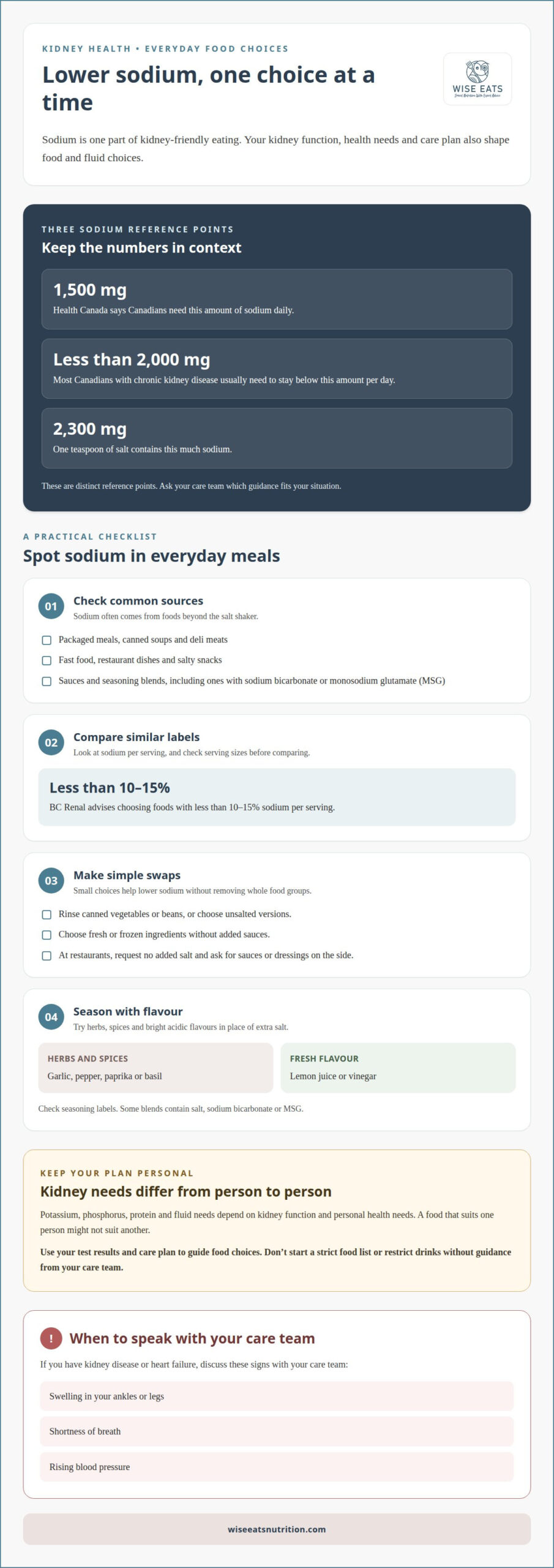
Health Canada says Canadians need 1500 mg of sodium daily. People with chronic kidney disease usually need to limit sodium intake to less than 2000 mg per day. These are distinct recommendations. Your care team can explain which advice applies to your situation.
Reducing Sodium in Everyday Foods
Lowering dietary sodium means noticing sources beyond the salt shaker. Packaged meals, canned soups, deli meats, fast food, restaurant dishes, salty snacks and sauces often contain sodium. A teaspoon of salt contains 2300 mg of sodium, so salt added during cooking and at the table adds up.
Compare nutrition labels on similar products and choose options with less sodium per serving. BC Renal advises choosing foods with less than 10-15% sodium per serving. Ingredient lists also reveal sodium bicarbonate and monosodium glutamate (MSG), which add sodium even when food doesn’t taste especially salty.
Try rinsing canned vegetables or beans, choosing unsalted versions, and using fresh or frozen ingredients without added sauces. At restaurants, request no added salt and ask for dressings or sauces on the side. These changes can lower sodium without eliminating whole food groups.
Low-Sodium Seasonings and Food Choices
Herbs, spices, lemon juice and vinegar add flavour without relying on salt. Try garlic, pepper, paprika or basil in soups, vegetables, rice or fish. Check seasoning labels, as some blends contain salt, sodium bicarbonate or MSG. These swaps bring flavour while using less sodium.
Fresh fruit and vegetables, plain rice, and fresh or frozen meat, poultry or fish without added salt are examples of lower-sodium choices. Kidney function affects potassium, phosphorus and fluid needs, so foods that suit one person may not suit another. Let your test results and care plan guide your choices, rather than following a broad avoid list.
There isn’t one kidney diet for every stage of disease. Some people need to adjust potassium, phosphorus, protein or fluids as well as sodium. Ask your doctor or dietitian which changes fit your health information. Avoid starting a strict food list on your own: unnecessary limits can make meals harder and reduce variety.
What is high blood pressure?
High blood pressure means blood pushes against artery walls with sustained force. Health professionals use repeated readings to assess it, not one measurement alone. A reading of 130/80 is a diagnosis threshold when readings stay higher across repeated health care office tests. Kidney health and protein intake matter too, since kidneys process waste produced as your body uses protein from fish, eggs and beans.
Protein Intake and Kidney Function
Protein supports muscles, tissue repair and other body functions. As your body processes protein, it produces waste products, including urea. Healthy kidneys filter urea from the blood and remove it through urine. When kidney function declines, clearing waste becomes harder. Protein intake may need attention in chronic kidney disease, as processing it adds to the kidneys’ workload.
This doesn’t mean everyone with chronic kidney disease needs the same protein limit. Kidney function, nutrition needs, other health conditions and treatment all matter. A doctor or dietitian can consider these factors when discussing an appropriate amount. Avoid sharply reducing protein on your own, since too little may make it harder to meet your nutrition needs.
Protein Amounts and Choices
Most Canadians are advised to have 2-3 servings of protein every day unless their dietitian advises otherwise. For people with kidney disease, the suitable amount depends on kidney function and overall health. A serving is often described as about the size of a deck of cards, though your meal plan might use different portions.
Protein foods include poultry, fish, eggs, tofu, beans, lentils, dairy, nuts and meat. Fresh or frozen meat, poultry or fish without added salt can be a lean option. Plant proteins such as lentils and tofu add variety. Pair protein with rice, vegetables or fruit to include a range of foods and nutrients in meals.
Reading Labels and Choosing Lean Protein
Packaged protein foods vary in sodium, saturated fat and serving size. Compare labels on deli meat, canned fish, frozen entrees and meat alternatives. Choose lower-sodium options when available, and compare serving sizes before interpreting the numbers. Canned beans also vary; rinsing them under water removes some surface sodium.
Lean choices include skinless poultry, fish, eggs and tofu. Preparation matters too: grilled fish with herbs differs from breaded fish with a salty coating. For a quick meal, try plain tofu with rice and vegetables, or an egg with whole-grain toast and fruit. These examples include protein without making meat the centre of every meal.
Blood pressure care and kidney nutrition work together, but protein targets are individual. Bring questions about portions, urea or food labels to your doctor or dietitian, especially after a change in kidney function or treatment. Nutrition advice should support adequate nourishment and reflect your health needs and everyday eating patterns.
Risk factors for high blood pressure and kidney disease
High blood pressure and kidney disease can affect each other over time. Potassium and phosphorus needs also depend on kidney function and test results.
Potassium Balance and Kidney Function
Kidneys help maintain potassium balance by removing excess potassium from the blood. With kidney disease, reduced filtering can allow potassium to build up. Levels that are too high or too low can cause muscle weakness, cramps and abnormal heartbeats, so food changes need to reflect your health information.
Potassium and phosphorus limits depend on kidney function, blood test results and other health conditions. A high potassium result may prompt your care team to review potassium-rich foods, while phosphorus results help guide decisions about phosphorus sources, including additives in packaged foods. These limits aren’t automatic for everyone with chronic kidney disease.
Milk, yogurt and other dairy foods contain minerals, including potassium and phosphorus. Your care team can consider your test results and usual intake before recommending changes. If dairy needs adjusting, discuss suitable alternatives and ways to meet your nutrition needs, rather than removing it without a plan.
Potassium-based salt substitutes replace some sodium chloride with potassium compounds. They add potassium to meals, and impaired kidney function can make excess potassium harder to remove. If you have kidney disease or take blood pressure medication, discuss a salt substitute with your care team before using it. Your medication and potassium levels help determine whether it suits your plan.
Potassium-Based Salt Substitute Risks
A potassium-based salt substitute may raise potassium intake even when a meal tastes less salty. This matters for people with kidney disease, since excess potassium in the blood can affect muscles and heart rhythm. Blood pressure medicines vary, so don’t assume a substitute is safe based on its label alone. Ask your doctor or pharmacist to review the product alongside your medication list.
Hypertension, the medical term for high blood pressure, can strain the blood vessels that support kidney function. Kidney disease can also make blood pressure harder to manage because the kidneys help regulate fluid and sodium balance. Chronic stress and poor sleep are additional factors associated with higher blood pressure. These factors can overlap, so your care team considers your overall health.
Diagnosis relies on clinical assessment, not food choices or symptoms alone. A reading of 130/80 is a threshold for diagnosis when readings stay higher across repeated health care office tests. Kidney disease assessment also considers kidney function and relevant blood tests. Share blood pressure readings, medication details and recent results with your doctor, since these details help guide next steps.
Working with a dietitian on a personalized kidney-friendly eating plan
A dietitian considers your kidney function, blood pressure, treatment, medications and food preferences. This helps shape advice around your needs instead of applying one fixed menu.
Personalizing a Kidney-Friendly Eating Plan
A dietitian reviews your usual meals, health history, blood test results and nutrition goals. This information helps identify which nutrients need attention and which foods can remain part of your routine.
For example, one person may need to watch sodium, while another also needs guidance on potassium, phosphorus, protein or fluids. Diabetes, appetite, weight changes and cultural food preferences also affect meal planning. In Canada, ask your doctor or kidney care team about connecting with a dietitian who supports people with kidney disease.
Managing Salty Snacks and Eating Out
Salty snack cravings don’t mean you need to avoid snacks altogether. Try popcorn without added salt, fruit, or unsalted crackers with a suitable topping. Herbs, lemon juice and vinegar add flavour to meals and snacks. Your own potassium and phosphorus needs still guide which options fit your plan.
At a restaurant, request no added salt and ask for sauces or dressings on the side. Choose grilled rather than fried dishes when those options suit your needs. A dietitian can help you plan for familiar meals, work shifts or travel, making eating out feel less uncertain.
DASH and Kidney Eating Plans
The DASH eating plan emphasizes fruits, vegetables, whole grains and lean proteins to support blood pressure management. A kidney-friendly plan also considers kidney function and blood test results. For people with both conditions, the plans may need adjustment, especially if potassium, phosphorus or fluid limits apply.
DASH eating plans include fruits and vegetables, but the right balance can vary. Those amounts don’t suit everyone with kidney disease. Diabetes adds another consideration, since meals need to account for blood sugar alongside kidney-related nutrition needs. For more ideas on balanced meals and planning around blood sugar, see this type 2 diabetes meal plan guide. A prediabetes diet for blood sugar management may also offer useful meal-planning guidance.
Planning a Low-Sodium Day of Meals
A sample day might include oatmeal with fruit for breakfast, a rice bowl with vegetables and unsalted protein for lunch, then baked fish with rice and vegetables for dinner. Snacks could include fruit or unsalted crackers. The best choices depend on kidney function and individual food needs.
For diabetes and kidney disease, a dietitian considers how meal timing and food choices fit blood sugar management and treatment. They also account for appetite, medications and daily routines. Bring your usual meals and questions to an appointment, then work together on practical changes that meet your nutrition needs.
Before changing your daily food or nutrient intake, consult a dietitian. Ask your doctor and dietitian whether phosphorus needs limiting, and check with a dietitian before eating foods high in phosphorus.
How high blood pressure can damage the kidneys
High blood pressure repeatedly puts force on the small blood vessels inside the kidneys. These vessels help filter waste and excess fluid from your blood. Over time, pressure can damage their walls and reduce kidney function. The kidneys may then have more difficulty balancing fluid and sodium, adding strain to blood vessels throughout the body.
Damage can affect the glomeruli, tiny filtering units inside each kidney. When these filters are injured, they may let protein pass into urine. The kidneys may also remove less waste and fluid from the blood. Urine and blood tests help your care team assess these changes alongside blood pressure readings and your medical history.
The relationship works in both directions. High blood pressure can harm kidney blood vessels, and reduced kidney function can make blood pressure harder to manage. Extra sodium and fluid can add to this cycle. Swelling in the ankles or legs, changes in urination and shortness of breath are reasons to speak with a doctor, especially if you have known kidney disease.
Food choices can support care, but they don’t replace prescribed treatment or monitoring. Lower-sodium meals help limit one source of fluid strain. For example, compare labels on canned soup and choose an option with less sodium. Season vegetables with lemon, herbs or vinegar instead of salt-heavy seasoning blends.
Kidney disease also changes how the body handles minerals and protein. Kidney function and blood test results help determine whether potassium, phosphorus or protein needs attention. Dairy products, poultry, beans and packaged foods differ in these nutrients. Avoid removing entire food groups without guidance, as broad changes can make it harder to meet your nutrition needs.
Blood pressure care involves more than food. Your care team may review medication, kidney test results, sleep, stress and other health conditions. Keep appointments and share new symptoms or medication changes. If readings remain high across repeated checks, ask your doctor what follow-up is appropriate for your situation. Don’t stop or change medication without medical advice.
A practical approach is to follow your treatment plan and make food changes suited to your kidney function. Choose lower-sodium foods, compare product labels, and ask how test results affect your meal choices. These steps connect daily eating with kidney care without assuming everyone needs the same limits.
Too much sodium can cause the body to retain water, which can raise blood pressure and place further strain on the kidneys. People with kidney disease may need to adjust protein intake because processing protein adds to the kidneys’ workload. Ask your care team whether your food choices should change as kidney function is monitored.
Wise Eats Registered Dietitians
Wise Eats Registered Dietitians can make nutrition information more practical for your health needs and daily routine. Custom Meal Planning can turn your food preferences and kidney-related nutrition needs into realistic meal ideas. The team also offers Personalized Vitamin and Mineral Supplements, with your health conditions and medications in mind.
Consider dietitian support if food advice feels conflicting, your kidney function or treatment changes, or meal planning feels difficult alongside blood pressure care. Bring questions about sodium, protein, potassium or supplements to discuss as part of your nutrition needs. A dietitian’s guidance can complement the care you receive from your doctor and other health professionals.
For support with your nutrition questions, contact Wise Eats Registered Dietitians.
Choose a next step that fits your care
Your nutrition needs can change as kidney function, medications or treatment change. Keep your eating plan flexible, and bring new questions to your care team rather than relying on old food rules. A high blood pressure kidney diet should reflect your health information and daily life, not a one-size-fits-all checklist.
If you’re unsure how to put your care team’s advice into meals, a Registered Dietitian can help translate nutrition goals into choices that work for you. Wise Eats Registered Dietitians offer Custom Meal Planning, Personalized Vitamin and Mineral Supplements, and Weight Management. This support can complement care from your doctor and other health professionals.
You deserve nutrition guidance that respects your preferences and supports your health without adding unnecessary pressure. Take the next step when you feel ready.
Small, practical changes can make the path forward clearer.
Frequently Asked Questions
What is the DASH Diet?
The DASH diet is an eating pattern designed to support blood pressure management. It features vegetables, fruits, whole grains, lean proteins, nuts and seeds. For example, a meal might pair brown rice, vegetables and baked fish. People with kidney disease need to consider kidney function and blood test results before adopting DASH, as some versions include foods that may require individual adjustments.
What diet is recommended for high blood pressure and chronic kidney disease?
No single eating plan suits everyone with both conditions. A high blood pressure kidney diet should reflect kidney function, blood pressure, medications and food preferences. For example, someone with diabetes might need meal timing and choices that support blood sugar management alongside kidney needs. Depending on health information and test results, the plan may address sodium, protein, potassium, phosphorus or fluids.
How much sodium should adults with high blood pressure or kidney disease eat per day in Canada?
Health Canada says Canadians need 1500 mg of sodium daily. For people with chronic kidney disease, the usual recommendation is to limit intake to less than 2000 mg per day. These figures serve different purposes, so your care team can explain how they apply to your situation. Packaged foods, sauces and restaurant dishes all contribute to daily sodium intake.
Which foods should people with kidney disease and high blood pressure limit or avoid?
There isn’t one universal avoid list. Many people start by limiting salty packaged meals, deli meats, instant noodles and heavily salted snacks. Potassium-rich foods, dairy products and foods with phosphorus additives need attention only when kidney function or blood test results call for it. Check labels for sodium ingredients, and discuss specific foods with your care team before making major changes.

Article by
Rachel McBryan, Dietitian
Rachel McBryan is a licenced Dietitian in British Columbia offering comprehensive nutrition counselling as virtual and/or in-person counselling sessions to suit your needs and preferences. With a Bachelor of Science in Nutrition and Food Science, Rachel has over 20 years experience helping people address their health through nutrition. She was awarded Human Nutrition and Food Science BSc.from University of Alberta followed by post-grad course work at UBC in guidance counselling.
An eating disorder is a serious mental health illness.
If you are in immediate distress or crisis, please contact emergency services by dialing 911 or calling Vancouver Island Crisis Line: 1-888-494-3888.