A prediabetes diet is an approach to eating focused on blood sugar, not a test of willpower or a demand for a perfect menu. Food choices matter, but nutrition advice often conflicts: cut carbohydrates, skip favourite meals, or follow a strict schedule. It’s understandable if these messages leave you unsure what to do next.
You deserve useful guidance without blame or pressure to change everything at once. Your routine, food preferences, culture, budget, and health needs all shape what feels practical. Supportive advice should work with these parts of your life, not ask you to ignore them.
The sections ahead explain what a prediabetes diagnosis means, how eating patterns relate to blood sugar, and how to build meal ideas around familiar foods. You’ll also find guidance on understanding test results, when to seek support, and how a dietitian may connect nutrition advice with your daily routine and broader healthcare.
Practical Steps for Prediabetes
- Use a balanced plate as a starting point: fill half with non-starchy vegetables, and divide the rest between whole grains or starchy vegetables and protein foods.
- Learn which drinks and highly processed foods to limit, and find practical swaps that suit your usual meals.
- Understand how A1C and blood sugar results relate to prediabetes, and what questions to discuss with your care team.
- Notice when eating feels restrictive, binge eating occurs, or physical symptoms arise, and seek support without judgment.
- Get meal planning support from a Wise Eats Registered Dietitian when you want ideas tailored to your food preferences and routine.
1. How does a prediabetes diet help lower blood sugar?
An eating plan for prediabetes focuses on your overall pattern, not strict food rules. Carbohydrate foods include bread, fruit, milk, and starchy vegetables. They affect blood sugar, but responses vary by person and meal. Include foods you enjoy that fit your schedule, budget, appetite, and culture. A practical approach should support everyday eating without requiring a separate menu.
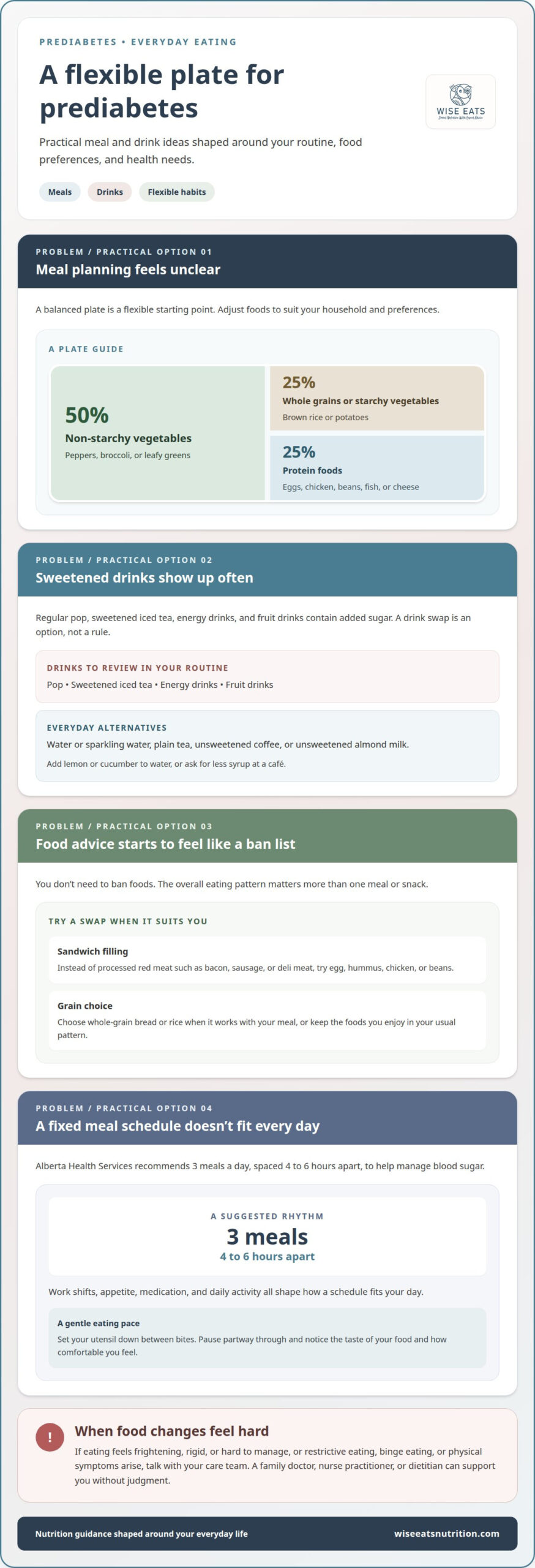
Use a plate as a flexible guide. Fill half with non-starchy vegetables, such as peppers, broccoli, or leafy greens. Set aside one quarter for whole grains or starchy vegetables, such as brown rice or potatoes. Use the remaining quarter for protein foods, such as eggs, chicken, beans, fish, or cheese. Adjust ingredients to suit your household and preferences.
No single eating pattern suits everyone with prediabetes. Mediterranean, reduced-carbohydrate, DASH, and whole-food plant-based patterns are among options supported by research. Choose an approach built around foods you like, such as lentil soup, berries with plain yogurt, or whole-grain toast with eggs. A handout recommends aiming for at least 30 grams of fibre each day. Individual needs and food choices differ.
For meal timing, Alberta Health Services recommends 3 meals a day, spaced 4 to 6 hours apart, to help manage blood sugar. Work shifts, appetite, medication, and daily activity affect how a schedule fits. Slow down during meals by setting your utensil down between bites. Pause partway through, notice the food’s taste, and check how comfortable you feel.
Talk with your healthcare provider or a dietitian after a prediabetes diagnosis, when questions about test results arise, or when food changes feel difficult alongside medication. Calgary residents seeking nutrition guidance can review local dietitian information. Bring a few examples of your usual meals and questions. This gives your care team useful context for discussing nutrition alongside your health needs.
2. Which foods and drinks should you avoid if you have prediabetes?
You don’t need to ban foods after a prediabetes diagnosis. Instead, consider which choices appear often in your routine. Sweetened drinks, processed red meat, refined grains, and many ultra-processed foods are worth reviewing. A pop with lunch or bacon at breakfast doesn’t define your health. The overall pattern matters more than one meal or snack.
Regular pop, sweetened iced tea, energy drinks, and fruit drinks contain added sugar. Try water or sparkling water as an everyday drink. Plain tea, unsweetened coffee, and unsweetened almond milk are other options. If plain water doesn’t appeal, add lemon or cucumber slices. At a café, ask for a drink without syrup or choose less sweetener.
Packaged drinks list added sugars in their nutrition information. Compare similar products and choose one suited to your taste. Changing one regular drink is a manageable place to start. Pair food choices with supportive habits, such as enjoyable activity and regular meals. Exercise doesn’t need to compensate for eating or serve as a condition for enjoying food.
Processed red meats include bacon, sausages, and deli meats. For a sandwich, try egg, hummus, chicken, or beans instead. White bread and white rice are refined grains. Choose whole-grain versions when they suit your meal, or combine them with foods you enjoy. Swaps are options, not rules for every lunch or supper.
Packaged pastries, chips, and sweet biscuits often combine refined grains with added sugar or salt. They remain part of your eating pattern if you enjoy them, without being treated as forbidden. Weight is not a measure of whether you’ve followed a health plan. If food choices feel hard to sort through, a dietitian can help relate nutrition advice to your health needs and care.
If you’d like help making realistic food changes, book nutrition support to discuss your preferences and routine.
3. Prediabetes blood sugar and A1C thresholds
Prediabetes means blood sugar levels sit above the normal range, but below the threshold for type 2 diabetes. A blood test gives your care team information about these levels. Results help them discuss next steps alongside your health history and other factors.
An A1C test reflects average blood sugar over the past three months. An A1C between 5.7% and 6.4% qualifies as prediabetes. A single result offers a snapshot of the longer period, rather than showing each rise or dip after meals. Your healthcare provider interprets the result in context.
Fasting blood sugar is another measure. The prediabetes range is 100-125. This result comes from a blood test taken after fasting. Ask your care team which test they used and what your result means. They can explain how it compares with the normal range and whether follow-up testing is appropriate.
Food choices affect blood sugar differently from person to person. Potatoes and carrots contain carbohydrates, but their effect depends on the serving, preparation, and the rest of the meal. Protein foods such as eggs, tofu, or fish contain little carbohydrate. Pairing protein with a carbohydrate food changes the meal’s composition, but doesn’t guarantee a particular blood sugar response.
For a practical example, serve roasted potatoes with salmon and carrots. Notice how the meal fits your appetite and routine rather than judging it by one reading. Stress, illness, activity, and medication also relate to blood sugar levels, so one measurement doesn’t tell the whole story.
Managing blood sugar involves using test results with everyday context. Bring questions about A1C, fasting results, or meal patterns to your next healthcare appointment. If you track readings, note the meal, timing, and activity alongside them. Those details give your care team a clearer picture than an isolated number.
When to Seek Help
Food changes after a prediabetes diagnosis sometimes create stress instead of support. Talk with your care team if eating starts to feel frightening, rigid, or hard to manage. A family doctor, nurse practitioner, or dietitian can support you in considering blood sugar care alongside your relationship with food. You deserve guidance without blame.
Notice if you regularly skip meals, avoid whole food groups, or feel anxious after eating. For example, removing bread, fruit, and potatoes all at once because of fear about blood sugar is a reason to seek support. Feeling unable to eat with family or friends is another. Share specific examples with your care team, such as skipped breakfasts or distress at restaurant meals.
Binge eating is another reason to reach out. It involves eating with a sense of losing control, followed by shame or distress. Purging, using laxatives, or exercising to compensate for food also calls for support. These behaviours are not personal failures. Tell a trusted healthcare provider what’s happening, even if explaining it feels difficult.
Physical symptoms deserve attention, too. Repeated dizziness, fainting, weakness, or difficulty keeping food down are examples to discuss with a healthcare professional. Note when symptoms occur, what you were doing, and any related meal or medication timing. Share those details with your care team and follow their guidance for your health needs.
If food rules or eating behaviours are affecting your daily life, ask your care team about nutrition counselling and eating disorder support. A dietitian with eating disorder recovery experience can work alongside your healthcare providers. You don’t need to wait for symptoms to become severe before asking for help. A calm conversation about one concern, such as skipping lunch or avoiding shared meals, is a useful first step.
4. Complex carbohydrates versus refined carbohydrates
Many carbohydrate-containing foods, including whole grains, legumes, fruit, and starchy vegetables, fit into meals. These foods provide carbohydrates alongside fibre or other nutrients. Refined options, such as white bread and white rice, have less fibre than whole-grain versions. Neither category tells you exactly how a meal will affect blood sugar. Portions, preparation, and other foods in the meal matter, too.
Try practical swaps without treating familiar foods as off-limits. Choose whole-grain bread for toast, or mix brown rice with white rice. Add lentils to soup or include beans in a favourite recipe. These small habits add variety to your meals without requiring a separate menu. Blood sugar responses still vary between people and meals.
How many carbohydrates should you eat per meal with prediabetes? There isn’t one amount for everyone. Your needs depend on your overall eating pattern, activity, medication, health needs, and the foods you enjoy. A healthcare provider or dietitian can help you decide on an approach without relying on a rigid number.
What are the risks of restrictive diets or supplements for prediabetes? Restrictive plans risk cutting out foods unnecessarily and making eating stressful or difficult to sustain. Supplements risk interacting with medication or affecting some health conditions, and they don’t replace prescribed treatment. Talk with your care team before adding a supplement, especially if you take medication.
Recipes offer an easy way to practise flexible choices. For example, add chickpeas to a vegetable curry, then serve it with rice. Or make oatmeal with berries and nuts. These meals include complex carbohydrate foods with other ingredients, but no recipe guarantees a particular blood sugar result. If a plan limits foods or raises concerns about possible disease complications, bring those concerns to your healthcare provider. A supplement review also helps you discuss products alongside your medications and health history.
5. Meal ideas for prediabetes
Meal planning feels easier when you start with familiar foods. Pick a few meals you enjoy, then add an ingredient for variety or staying power. For example, add beans to vegetable soup, or serve eggs with whole-grain toast and sliced tomatoes. One meal won’t define your health or determine your blood sugar response.
For breakfast, try plain yogurt with berries and nuts, or oatmeal with apple slices. A handout suggests sprinkling 1-2 tablespoons (15-30 mL) of high-fibre cereal containing at least 4 grams of fibre onto yogurt or applesauce. Check the label for fibre, then choose a product you like. Individual responses to meals vary.
At lunch, make a sandwich with whole-grain bread, chicken, egg, or hummus. Add cucumber, lettuce, or peppers. If you pack lunch, prepare extra vegetables at supper and store them for the next day. This small planning step makes a convenient option easier to reach during a busy workday.
For supper, a sample meal includes 2½ ounces (75 g) of baked salmon and 1 cup (250 mL) of cooked brown rice. Add vegetables such as broccoli or carrots for colour and variety. For a plant-based alternative, try beans or lentils with rice and vegetables. These are meal ideas, not a fixed prescription.
Keep snacks flexible. Fresh vegetables with hummus, nuts, seeds, low-fat dairy, or whole-grain crackers offer options between meals. Fruit with unsweetened yogurt is another example. Your appetite, schedule, medication, and activity all matter when choosing snack timing and portions.
Once a month, plan a few meals around vegetables and whole grains, then reuse ingredients across dishes. For example, roast extra vegetables for a lunch wrap. A meal plan supports daily nutrition, but no meal promises to reverse prediabetes or prevent developing type 2 diabetes. Focus on choices suited to your condition and routine.
Wise Eats Registered Dietitians
Wise Eats Registered Dietitians helps make nutrition guidance for blood sugar easier to apply to everyday life. A Registered Dietitian is available to discuss meal patterns, food preferences, health needs, and questions about prediabetes with you. The goal is practical guidance, not rigid rules or promises about test results.
If meal choices feel difficult to organize, custom meal planning offers a way to put ideas into practice. Your usual schedule, cooking comfort, budget, cultural foods, and household needs all shape a useful plan. For example, a plan might adapt familiar lunches or use ingredients across several meals, rather than asking you to start over.
Nutrition counselling also provides space to discuss how food guidance fits alongside advice from your healthcare team. Bring questions about meal timing, carbohydrate choices, or a blood sugar result. A dietitian helps consider these questions in the context of your eating habits and health needs. Medication decisions remain with your prescribing clinician.
Support also includes other nutrition concerns. Wise Eats Registered Dietitians offers Personalized Vitamin and Mineral Supplements, Weight Management, Eating Disorder Recovery, and Digestive Health Nutrition. These services are relevant when supplements, weight-related concerns, eating distress, or digestive symptoms affect your food choices. Each concern deserves respectful care, without blame or pressure to follow one standard eating pattern.
Consider reaching out if meal planning feels confusing, advice from different sources conflicts, or food rules are affecting your daily life. You don’t need to arrive with a perfect plan or a list of every meal. A few questions about your routine and priorities give the conversation a useful starting point. Nutrition support works alongside your broader healthcare, not in place of it.
Contact Wise Eats Registered Dietitians
Choose a Next Step for Your Life
Your next step doesn’t need to involve changing every meal. Choose one question or concern to bring to your next appointment. It might be how to fit meals around shift work, how a food choice relates to your care plan, or how to make eating feel less stressful. A specific starting point helps keep the conversation practical.
A workable prediabetes diet should fit your preferences, routines, and health needs. Your priorities might shift over time, and your approach shifts with them. Give yourself room to ask questions and make changes at a manageable pace. Food choices are part of care, not a measure of personal worth.
When you’re ready for support, speak with a dietitian about the questions you want to address. Start with one concern and build from there, in partnership with your wider care team.
Frequently Asked Questions
What is prediabetes?
Prediabetes describes blood glucose above the normal range, but below the level used to diagnose type 2 diabetes. A blood test identifies the range, and your healthcare provider interprets it alongside your health history and medications. The result offers a reason to discuss follow-up and supportive care. It does not mean you caused the result or type 2 diabetes is inevitable.
How does a prediabetes diet help lower blood sugar?
A prediabetes diet offers practical ways to support blood sugar management through an overall eating pattern. For example, choose water with lunch or add beans to a soup you already enjoy. Responses differ between meals and people. Discuss medication and activity patterns with your care team before changing meal timing, especially if a medicine affects your appetite or eating schedule.
Is prediabetes reversible with diet and lifestyle changes?
Some people see blood glucose return to the normal range after changes to eating and activity, but no eating plan guarantees this outcome. Focus on ongoing health habits and follow-up testing rather than expecting a permanent result. Keep appointments and discuss your results with your healthcare provider, even if a later test falls below the prediabetes range. Your care plan guides next steps.
What Helps?
Start with one change suited to your routine, such as preparing breakfast the night before or taking a short walk after dinner. Write down questions about food, movement, or test results before your next appointment. Your care team helps set priorities alongside any medicines or other health needs. If food choices feel stressful, tell them so your plan supports your wellbeing.
What Is Prediabetes?
Pre-diabetes is another way people write prediabetes. It means blood sugar is higher than normal, but not high enough for a type 2 diabetes diagnosis. It signals an opportunity to discuss monitoring and support with your healthcare provider. The next steps depend on your test results and health history, so ask what follow-up suits your care plan rather than relying on symptoms alone.
Which foods and drinks should you avoid if you have prediabetes?
You usually don’t need a list of forbidden foods. Instead, consider how often sweetened drinks appear in your week, including flavoured coffees, sweetened teas, and fruit drinks. At a café, ask for less syrup or choose an unsweetened drink if you enjoy it. Occasional treats can fit into an overall eating pattern. Your care team helps address specific concerns about your usual choices.
What foods should you eat with prediabetes?
Build meals from foods you enjoy and have access to. Pantry options such as oats, canned beans, and frozen vegetables make useful starting points. Add canned beans to a stew or stir frozen vegetables into an omelette. These choices offer flexibility when fresh ingredients aren’t on hand. For a meal plan suited to your household, consider your cooking time, cultural foods, and preferences.
Which foods and drinks should you limit or avoid with prediabetes?
Consider having processed meats, packaged pastries, and refined-grain foods less often rather than banning them. For example, alternate a deli-meat sandwich with an egg or hummus sandwich, or choose a whole-grain option when it suits you. Check packaged food labels to compare similar products. These choices are part of a flexible approach, not a pass-or-fail test for managing blood sugar.

Article by
Rachel McBryan, Dietitian
Rachel McBryan is a licenced Dietitian in British Columbia offering comprehensive nutrition counselling as virtual and/or in-person counselling sessions to suit your needs and preferences. With a Bachelor of Science in Nutrition and Food Science, Rachel has over 20 years experience helping people address their health through nutrition. She was awarded Human Nutrition and Food Science BSc.from University of Alberta followed by post-grad course work at UBC in guidance counselling.
An eating disorder is a serious mental health illness.
If you are in immediate distress or crisis, please contact emergency services by dialing 911 or calling Vancouver Island Crisis Line: 1-888-494-3888.