If you’re newly diagnosed with kidney disease, what to eat depends on your health, treatment and everyday needs. There isn’t one eating plan for everyone, and diagnosis alone doesn’t mean you need sweeping changes before you know which recommendations apply to you.
It’s understandable if food advice feels hard to sort through. Kidney disease information often lists nutrients and foods without explaining how they fit together. Because meals also need to work with your routines, preferences and other health needs, advice should be practical in real life, not just on paper.
This article covers common questions after diagnosis, including nutrition and diabetes, protein choices, and how fruits and vegetables can fit into meals. It explains why kidney-related food guidance differs from person to person. Use these points to prepare focused questions for your care team and make food decisions with more context.
Key Takeaways
- Shape food choices around your kidney function, diabetes, medications and lab results, rather than following a generic kidney diet.
- Learn how to read sodium information on food labels and spot details that can guide your choices.
- Find out why protein needs differ, and what to discuss with your care team before making major changes.
- Explore ways to include fruits and vegetables while accounting for your individual nutrient needs.
- See how personalized meal planning can fit kidney health guidance into your routine and food preferences.
Diabetes and Kidney Disease: What to Eat?
With diabetes and kidney disease, food choices need to account for blood sugar, kidney function and treatment. The right plan depends on your health information, not a universal food list.
Nutrients to consider in a kidney diet
A kidney diet considers sodium, potassium, phosphorus, protein and fluids, with attention to your health conditions and treatment. Diabetes adds meal planning for blood sugar to the picture, so your care provider considers both conditions together. Kidney function and blood test results help show which nutrients need closer attention.
These nutrients play different roles in food choices. Sodium is common in packaged meals and sauces. Potassium and phosphorus occur in many foods, including produce, grains and protein sources. Protein needs also depend on age and treatment. If you receive dialysis, your nutrition plan may include fluid guidance. Ask your care provider which changes apply to your current results.
Potassium and phosphorus limits
Potassium and phosphorus limits depend on kidney function and test results. A potassium level above your care team’s target can call for changes to food choices. For a lower-potassium example, half a cup of green cabbage contains 60 mg. For phosphorus, half a cup of green cabbage contains 9 mg.
These examples can help you compare foods, but they don’t determine your personal portions. Phosphorus also occurs in additives in some packaged products. Check ingredient lists for “phos” terms, then discuss products you eat often with your dietitian. Your care provider considers your results, usual meals and treatment together when recommending changes. For more detail, see this low phosphorus diet for kidney disease food guide.
Phosphate additives on food labels
Canadian Nutrition Facts tables show sodium per serving, while potassium and phosphorus amounts aren’t routinely listed for every food. Compare sodium values between similar products and check the serving size before comparing. According to the U.S. Food and Drug Administration, 20% Daily Value or more per serving is high in sodium.
To spot phosphorus additives, scan ingredient lists for names such as phosphoric acid or sodium phosphate. “Phos” can be a useful clue, though ingredient names vary. A product with fewer phosphate additives may fit your eating plan, depending on your blood results. With diabetes, consider the whole meal rather than relying on one label value.
Supplements and salt substitutes
Supplements and salt substitutes can affect nutrient intake, so discuss them in the context of kidney disease, medications and other relevant health conditions. Don’t start vitamins or supplements without first reviewing possible interactions with your care provider. Before that conversation, make a list of product names and questions.
Avoid potassium-based salt substitutes unless your doctor or dietitian approves them, since many contain potassium. If you’re newly diagnosed in Canada, ask your care team for a referral to a renal dietitian, especially if diabetes, dialysis or other nutrition concerns make meals harder to manage. A renal dietitian can help connect food guidance with your results and treatment plan.
How nutrition supports people with chronic kidney disease
Nutrition advice depends on chronic kidney disease stage, other health conditions and treatment. Diabetes, high blood pressure and dialysis each affect the considerations in an eating plan.
Nutrition needs across CKD stages
Nutrition needs across CKD stages reflect changes in kidney function and overall health. Early-stage guidance often focuses on supporting health while accounting for conditions such as diabetes or high blood pressure. Later-stage CKD calls for closer attention to food needs as kidney function changes. A kidney dietitian can tailor recommendations to the person, not just the stage label.
For late-stage CKD, an eating plan should take current health, appetite, medications and treatment into account. Your care team can also consider daily routines, food preferences and cultural meals to make recommendations practical. If a familiar meal is part of your routine, bring its ingredients to an appointment to discuss.
Does a kidney disease diet differ with diabetes, high blood pressure or dialysis? Yes. Diabetes adds blood sugar needs, high blood pressure affects nutrition goals, and dialysis changes the treatment context. Your care team considers these factors together instead of applying one standard diet.
Blood tests and nutrient monitoring
Blood tests help your health care team decide when your eating plan may need an update. Results show how needs can change as CKD progresses or treatment shifts. Ask which results guide your food advice and how they connect to your current plan. This is more useful than trying to interpret a lab report on your own.
Bring a short list of questions to each appointment. Ask which result prompted a recommendation, what change to make at home, and when the plan will be reviewed. Mention any new medication or health condition. Your team uses the full context, not a single result, to guide nutrition decisions.
Good nutrition supports energy, muscle strength and the body’s daily needs. Eating enough matters because your body uses food energy alongside protein to maintain muscle and tissues. If your appetite changes or meals become difficult, tell your care team. Specific examples, such as regularly leaving dinner unfinished, help explain what’s happening.
Nutrition is one part of broader CKD care. Good nutrition supports the body’s ability to prevent infection, and an eating plan suited to your stage may help slow disease progression. Food choices are part of care alongside medical treatment and monitoring. They don’t replace follow-up with your doctor or other health care professionals.
If meal decisions feel difficult to organize, a dietitian can help you discuss practical nutrition questions alongside your care team’s guidance. Book a nutrition appointment to talk through the questions affecting your daily meals.
Choosing an appropriate amount of protein
Kidney-friendly meals often combine a measured protein source, carbohydrates such as rice or bread, and unsaturated fats from olive or canola oil. The right mix depends on kidney function, blood results, diabetes and treatment.
Protein amounts and servings
Protein amounts describe how much protein you eat, while servings help you estimate it at meals. Both matter: your body needs protein, but processing it creates waste, including urea, which the kidneys filter from your blood.
Most Canadians with chronic kidney disease should have 2-3 servings of protein every day unless their dietitian advises otherwise. A serving size depends on the food, so compare portions in your usual recipes with your dietitian’s guidance. Two egg whites provide 7 grams of protein, a useful example when discussing portions.
Eating more protein than your body needs can make the kidneys work harder and may worsen chronic kidney disease. That doesn’t mean removing protein from meals. Your age, kidney condition, protein in your urine and treatment all affect how much is right for you.
Protein options and sources
Protein sources include animal foods such as eggs, fish, poultry and dairy, and plant foods such as beans, lentils and tofu. Each also provides other nutrients, including minerals, so the best fit depends on your health and lab results.
Your care provider may suggest lean or lower-fat meats, or adjusting meat or dairy portions. Some adults get more of their protein from plant foods such as beans or tofu. These are options to discuss, not rules for everyone with kidney disease.
Dialysis changes protein needs. People receiving dialysis may need more protein because treatment removes nutrients along with waste products. Ask your care team how your treatment affects portions instead of copying a meal plan designed for someone at a different stage.
Balancing protein with other nutrients
Carbohydrates provide energy, while fats add energy and flavour to meals. Rice, bread, pasta and oats are examples of carbohydrate foods. Olive or canola oil can add unsaturated fat to vegetables, grains or recipes.
Pairing these foods with protein can make meals satisfying and support daily nutrition. For example, a meal might include rice, vegetables, tofu and a little oil. Your kidney diet may call for ingredient or portion changes based on your nutrient needs.
When planning recipes, start with foods you enjoy, then review protein portions with your dietitian. If your plan calls for managing meat or dairy portions, beans, lentils or tofu might fit some meals. Blood results and treatment help guide those choices.
Keep enough food in your routine to meet your energy needs. Calories help your body use protein for muscle and tissue, rather than relying on protein alone for energy. Age matters in planning: growing children and adolescents, as well as older people, need more protein.
Kidney-friendly fruits and vegetables
Fruits and vegetables add variety, flavour and options to meals. Your kidney function and blood test results help determine which choices fit your eating plan.
Kidney-friendly food examples
Kidney-friendly choices are foods that fit your nutrient needs and personal preferences. For example, half a cup of red bell pepper contains 88 mg of potassium, and half a cup of raspberries contains 93 mg. A medium apple with skin contains 158 mg of potassium. These figures help compare foods, but your care team’s advice guides your portions.
For a phosphorus comparison, half a cup of boiled cauliflower contains 20 mg. Other foods, including grains and protein sources, also contribute nutrients to meals. Ask your dietitian how these fit your results and kidney function. A food’s suitability depends on your overall eating plan, not a single number alone.
Preparing kidney-friendly foods
Preparation offers practical ways to add produce to meals. Try sliced red pepper with a sandwich, raspberries at breakfast, or boiled cauliflower with a main dish. Fresh, frozen and canned options each offer different possibilities. For canned produce, compare sodium on the label and choose an option that fits your care team’s guidance.
Build flavour with herbs, spices, lemon or vinegar instead of relying on extra salt. For example, add garlic and herbs to roasted vegetables or lemon juice to apple slices. Avoid potassium-based salt substitutes unless your doctor or dietitian approves them. Consider the whole plate, since cooking methods and added ingredients affect a meal.
Serving size matters because nutrient amounts add up across meals and snacks. A half-cup portion of raspberries differs from a larger bowl, and your personal target depends on your kidney health. Use the portion your dietitian recommends, then include other foods that suit your needs. You don’t need to remove all fruits or vegetables unless your care team recommends a specific change.
A kidney-friendly eating plan should include foods you enjoy. Your doctor and dietitian can use blood test results, kidney function and other health needs to guide choices. Bring familiar meals to an appointment so you can discuss ingredients, portions and practical ways to fit them into your routine.
For meal resources, ask your care team for a plan suited to your results and preferences. A renal dietitian can help adapt recipes, grocery choices and serving sizes as your needs change. If a handout lists foods to limit, ask how its recommendations apply to your test results and usual meals. This connects food choices to your care instead of relying on a generic list.
Personalized eating plans for kidney disease
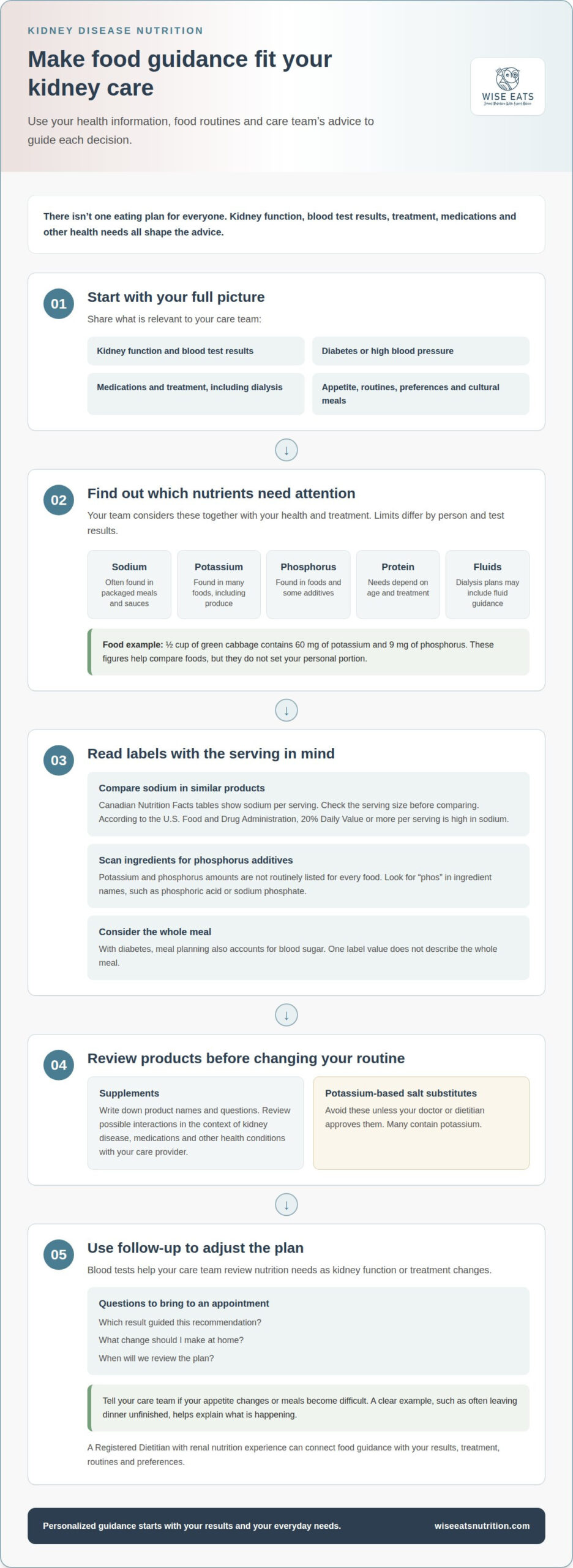
There’s no single kidney diet for everyone with chronic kidney disease. Your eating plan depends on kidney function, disease stage, other medical conditions, medications, body weight and overall health. These details help your care team decide which food changes fit your situation and which foods can stay in your usual meals.
Two people with the same diagnosis may receive different food guidance. Diabetes, for example, adds blood sugar needs to meal planning, while high blood pressure can affect sodium advice. Kidney function and blood test results also shape recommendations for potassium, phosphorus and protein. A general food list can’t account for all these factors.
Treatment matters, too. Someone not receiving dialysis has different nutrition considerations from someone whose treatment removes nutrients and waste products. People on dialysis may need more food, especially protein, and may have fluid guidance between treatments. The type of dialysis matters as well. Home hemodialysis and peritoneal dialysis usually happen more often and for longer than clinic-based treatment.
Use discussions about blood tests to understand how your plan relates to your health. Ask which results affect food choices and what changes your care team recommends. If a result changes, the team can review your eating plan. This keeps nutrition advice relevant to your kidney function and treatment instead of applying limits intended for someone else.
Your routine belongs in the plan, too. Tell your care team about the meals you cook, foods you enjoy, cultural preferences, grocery access and any difficulty eating enough. If you often make lentil soup, for example, ask how its ingredients fit your current needs. A dietitian can help adapt familiar recipes and portions while considering your health conditions.
If a plan includes several changes, ask which one to address first. You might review label choices, protein portions or meal timing for diabetes. Write down the advice and bring it to your next health care appointment. If your appetite, medications or dialysis treatment changes, tell your care team so they can reassess your plan.
A personalized eating plan should support your health and fit daily life. Your doctor, dietitian and other care team members bring relevant information, including test results, treatment details and medication considerations. Together, they can help you understand which nutrients to monitor and how to include satisfying meals without applying broad restrictions.
Wise Eats Registered Dietitians: Custom Meal Planning
Wise Eats Registered Dietitians offers Custom Meal Planning to help organize meals around your preferences, routine and nutrition guidance from your health care team. Consider this support if kidney disease, diabetes or other health needs make everyday food choices harder to manage.
Bring questions about familiar foods, meal preparation and changes recommended by your care team. A Registered Dietitian can help turn that guidance into practical meal ideas, while your medical team remains involved in decisions about kidney care. If you’re considering vitamins or minerals, discuss your health conditions and medications as part of the conversation.
For support with meal planning, contact Wise Eats Registered Dietitians when you’re ready.
Take your next food question to your care team
If you’re newly diagnosed with kidney disease, questions about what to eat deserve answers grounded in your health and daily life. You don’t need to solve every food decision at once. Start with one question that affects your routine, such as how to adapt a familiar meal or understand advice you’ve received.
Before your next appointment, note the foods you rely on, changes you find difficult and what you want to keep enjoying. Bring these notes to your care team. Discussing your real meals and preferences gives them useful context for nutrition advice alongside your kidney care.
For added support, a Registered Dietitian can help turn care guidance into practical choices. Wise Eats Registered Dietitians offers Custom Meal Planning, Personalized Vitamin and Mineral Supplements, and Weight Management. Your needs and goals can guide which kind of nutrition support fits.
Take the next step at a pace that feels manageable. You deserve clear, respectful support as you make food choices.
Frequently Asked Questions
How can I eat healthy with CKD?
Build an eating pattern around your health needs, usual meals and food preferences. Start by noting what you typically eat in a day, including snacks, drinks and meals prepared at home. Bring the record to a care appointment and ask which parts fit your current plan. This practical starting point helps focus on relevant changes instead of broad online food lists.
What aspects of nutrition are important for adults with CKD?
Adults with CKD need an eating plan that considers kidney function, other health conditions, medications and treatment. Bring questions about food portions, meal timing, appetite and supplements to your care appointment. If diabetes is part of your health picture, discuss how meal routines relate to blood sugar management. Your care team can help identify which nutrition topics to focus on first.
Why is healthy eating important for adults with CKD?
Eating well supports energy, strength and the nutrition your body needs for daily activities. Food intake matters, too, if illness or treatment affects appetite or removes nutrients. If meals have become difficult, tell your care team about specific changes, such as skipping breakfast or struggling to finish dinner. They can consider these details alongside your kidney care and other health needs.
What foods are recommended for newly diagnosed chronic kidney disease?
If you’re newly diagnosed with kidney disease, what to eat depends on your health needs and usual meals. Include familiar foods you enjoy, then discuss ingredients and portions with your care team. Bring a family recipe or typical breakfast to an appointment and ask how it fits your nutrition needs. This is more practical than starting with a long list of foods to avoid.
Which foods should people with kidney disease limit or avoid?
Limits depend on kidney function, test results and treatment, so don’t remove whole food groups without guidance. Packaged meats, instant meals and some sauces often contain substantial sodium. Check the Nutrition Facts table and compare similar products. Scan ingredient lists for phosphate additives, too, and avoid potassium-based salt substitutes unless your doctor or dietitian approves them.
How much sodium should someone with kidney disease eat per day?
People with chronic kidney disease usually need to limit sodium to less than 2,000 mg per day, though your care team sets guidance based on your kidney health. Check the sodium amount per serving on packaged foods and note how many servings you eat. Comparing two similar products, such as soups or breads, offers a simple way to spot a lower-sodium option.
Do protein needs change by stage of kidney disease?
Yes. Protein needs depend on kidney function, age, body size, protein in your urine and treatment. Someone not receiving dialysis may receive different advice from someone on dialysis, who may need more protein. Growing children and adolescents, as well as older people, need more protein. Ask your care team how your current stage affects portions and food sources.
How do potassium and phosphorus restrictions depend on kidney function and blood tests?
Kidney function and blood test results help determine whether you need to adjust potassium or phosphorus intake. Your care team reviews these results alongside medications, treatment and overall health. Ask which result prompted a food recommendation and whether it applies to one ingredient, a portion or a broader eating pattern. Understanding the reason for each change can help you avoid unnecessary food limits.

Article by
Rachel McBryan, Dietitian
Rachel McBryan is a licenced Dietitian in British Columbia offering comprehensive nutrition counselling as virtual and/or in-person counselling sessions to suit your needs and preferences. With a Bachelor of Science in Nutrition and Food Science, Rachel has over 20 years experience helping people address their health through nutrition. She was awarded Human Nutrition and Food Science BSc.from University of Alberta followed by post-grad course work at UBC in guidance counselling.
An eating disorder is a serious mental health illness.
If you are in immediate distress or crisis, please contact emergency services by dialing 911 or calling Vancouver Island Crisis Line: 1-888-494-3888.